THE CLASSIC COLLECTION✦My diaries, being a personal narrative of events 1888-1914, Part 2 (1900-1914)CLASSIC FREE BOOKS
My diaries, being a personal narrative of events 1888-1914, Part 2 (1900-1914)
Wilfrid Scawen Blunt
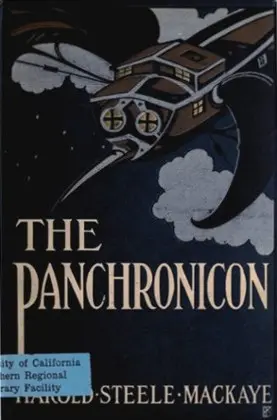
THE CLASSIC COLLECTION · 1904
"The Panchronicon" by Harold Steele MacKaye is a fictional novel written in the early 20th century. The story revolves around two sisters, Rebecca and Phoebe Wise, who find themselves entangled in the eccentric ideas of Copernicus Droop, a village reprobate with a fantastical theory about time travel. As the narrative unfolds, the characters explore themes of ambition, the passage of time, and the desire for second chances, set against the backdrop of whimsical science fiction. The opening portion of the book introduces the two sisters at their home in Peltonville Center, New Hampshire, where they engage in ordinary tasks and daily life. Rebecca, the older sister, is practical and nurturing, while Phoebe, the younger, is filled with curiosity and ambition, especially regarding her Shakespeare class. Their interactions are light yet revealing, setting the stage for the arrival of Copernicus Droop, who proposes a ludicrous plan to travel back in time using a machine he calls the Panchronicon. As their conversation unfolds, humor and absurdity intertwine, foreshadowing the extraordinary journey the characters are about to embark on. The combination of everyday life with the extraordinary speed of time travel creates a fascinating tension right from the start.
Introduction adapted from the source catalogue; source summaries may be automatically generated.
Free to read · English · 76,361 words · No account needed
MAKE TIME FOR A GOOD BOOK
On by default. Untick to stop anonymous reading totals. Each page counts after 10 seconds in view. How this works.
Anonymous counting is on unless you have switched it off.
Shakespeare was somewhat taken aback to see a developed young woman, evidently of gentle birth, where he had thought to find the mere prank-loving child of some neighboring cottager. Instantly his manner changed. Bowing courteously, he stepped forward and began in a deferential voice:
"Nay, then, fair mistress, an I had known----"
"Tut--tut!" she interrupted, astonished at her own boldness. "You thought me a chit, sir. Let it pass. Pray what think you of my lines?"
"They seemed the whisper of a present muse," he said, gayly, but with conviction in his voice. "'Twas in the very mood of Jacques, my lady--a melancholy fellow by profession----"
"Holding that light which another might presently approve"--she broke in--"and praise bestowing on ill deserts in the mere wantonness of a cynic wit! What!--doth the cap fit?"
The amazement in her companion's face was irresistible, and Phoebe burst forth into a spontaneous laugh of purest merriment.
"'A hit--a hit--a very palpable hit!'" she quoted, clapping her hands in
her glee.
"Were not witches an eldritch race," said Shakespeare, "you, mistress, might well lie under grave suspicion."
"What--what! Do I not fit the wizened stamp of Macbeth's sisters
three?"
Shakespeare flung out his arms with a gesture of despair.
"Yet more and deeper mystery!" he cried. "My half-formed plots--half-finished scraps--the clear analysis of souls whose only life is here!" he tapped his forehead. "Say, good lady, has Will Shakespeare spoken, perchance, in sleep--yet e'en so, how could----"
He broke off and coming to her side, spoke earnestly in lowered tones.
"Tell me. Have you the fabled power to read the soul? Naught else
explains your speech."
"Tell me, sir, first the truth," said Phoebe. "In all sadness, Master Shakespeare, have you had aught from Francis Bacon? I mean by way of aid in writing--or e'en of mere suggestion?"
"Bacon--Francis Bacon," said he, evidently at a loss. "There was one
Nicholas Bacon----"
"Nay, 'tis of his son I speak."
"Then, in good sooth, I can but answer 'No,' mistress; since that I knew not even that this Nicholas had a son."
Phoebe heaved a sigh of relief and then went on with a partial return
of her former spirit.
"Then all's well!" she exclaimed. "I am a muse well pleased; and now, an you will, I'll teach you straight more verses for your play."
"As you like it," said Shakespeare, bowing, half-amused and wholly
mystified.
"Good!" she retorted, brightly. "'As You Like It' shall you name the piece, that henceforth this our conversation you may bear in mind."
Smiling, he took up his papers and wrote across the top of one of them "As You Like It" in large characters.
Your reading position is saved on this browser. Take it to another device with a library code. Reading pages adapt to text, rather than matching a printed edition.
BEHIND THE BOOK
This eBook is for the use of anyone anywhere in the United States and most other parts of the world at no cost and with almost no restrictions whatsoever. You may copy it, give it away or re-use it under the terms of the Project Gutenberg License included with this eBook or online at www.gutenberg.org. If you are not located in the United States, you will have to check the laws of the country where you are located before using this eBook. Read the source licence.
The original source file, including credits and licence, is retained by this library. Request an original-format copy at no charge. Please include the book title and Project Gutenberg identifier #27682.
KEEP YOUR CURIOSITY GOING
Wilfrid Scawen Blunt
Wilfrid Scawen Blunt

E. W. (Edgar Watson) Howe
Coulson Kernahan

Maurice Baring
Frances Wright