THE CLASSIC COLLECTION✦My diaries, being a personal narrative of events 1888-1914, Part 2 (1900-1914)CLASSIC FREE BOOKS
My diaries, being a personal narrative of events 1888-1914, Part 2 (1900-1914)
Wilfrid Scawen Blunt
THE CLASSIC COLLECTION · 1904
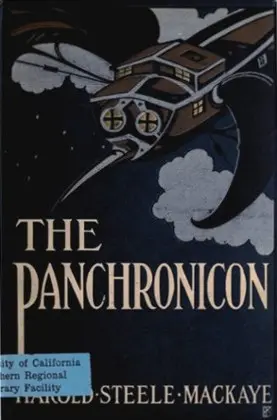
"The Panchronicon" by Harold Steele MacKaye is a fictional novel written in the early 20th century. The story revolves around two sisters, Rebecca and Phoebe Wise, who find themselves entangled in the eccentric ideas of Copernicus Droop, a village reprobate with a fantastical theory about time travel. As the narrative unfolds, the characters explore themes of ambition, the passage of time, and the desire for second chances, set against the backdrop of whimsical science fiction. The opening portion of the book introduces the two sisters at their home in Peltonville Center, New Hampshire, where they engage in ordinary tasks and daily life. Rebecca, the older sister, is practical and nurturing, while Phoebe, the younger, is filled with curiosity and ambition, especially regarding her Shakespeare class. Their interactions are light yet revealing, setting the stage for the arrival of Copernicus Droop, who proposes a ludicrous plan to travel back in time using a machine he calls the Panchronicon. As their conversation unfolds, humor and absurdity intertwine, foreshadowing the extraordinary journey the characters are about to embark on. The combination of everyday life with the extraordinary speed of time travel creates a fascinating tension right from the start.
Introduction adapted from the source catalogue; source summaries may be automatically generated.
Free to read · English · 76,361 words · No account needed
MAKE TIME FOR A GOOD BOOK
On by default. Untick to stop anonymous reading totals. Each page counts after 10 seconds in view. How this works.
Anonymous counting is on unless you have switched it off.
There was the head so familiar to us all--the domelike brow, the long hair hanging over the ears. This she could see, but of his face only the outline of his left cheek was visible. Strange and unexpected to herself was the light-hearted calm with which, now that she really saw him, she could contemplate the great poet.
He ceased writing and leaned against the back, gazing straight ahead.
"The third age past, what then? Why the soldier, i' faith--the
soldier----"
"Full of strange oaths"
came a mischievous whisper from an invisible source--
"and bearded like the pard.
Jealous in honor, sudden and quick in quarrel,
Seeking the bubble reputation
Even in the cannon's mouth."
For a moment the poet sat as though paralyzed with astonishment. Then rising, he turned and faced the daring girl.
Now she saw the face so well remembered and yet how little known before. Round it was and smooth, save for the small, well-trimmed mustache above the beautifully moulded mouth and chin--sensitive yet firm. But above all, the splendid eyes! Eyes of uncertain color that seemed to Phoebe mirrors of universal life, yet just now full of a perplexed admiration.
For she was herself the centre of a picture well fitted to arrest a poet's attention. Her merry face was peering over the smooth white stone, with four pink finger-tips on each side clinging for greater security. Behind her a cherry-tree was dropping its snowy blossoms, and two or three had fallen unheeded upon her wavy brown hair, making a charming frame for the young eyes and tender lips whose smiling harmony seemed to sing with arrant roguishness.
With a trilling laugh, half-suppressed, she spoke at last.
"A penny for your thoughts, Master Shakespeare!" she said.
The mood of the astonished player had quickly yielded to the girl's compelling smile, and his fine lips opened upon a firm line of teeth.
"'Show me first your penny,'" he quoted.
"I'll owe you it."
He laughed and shook his head.
"That would I not my thoughts, damsel."
"Pay them, then. Pay straightway!" she pouted, "and see the account be
fair."
"Nay, then," he replied, bowing half-mockingly, "an the accountant be so passing fair, must not the account suffer in the comparison?"
The face disappeared for a moment, and then Phoebe emerged from behind the stone rampart, dusting her hands off daintily one against the other.
"Did not your wit exceed your gallantry, sir," she said, courtesying slightly, "I had had my answer sooner."
Your reading position is saved on this browser. Take it to another device with a library code. Reading pages adapt to text, rather than matching a printed edition.
BEHIND THE BOOK
This eBook is for the use of anyone anywhere in the United States and most other parts of the world at no cost and with almost no restrictions whatsoever. You may copy it, give it away or re-use it under the terms of the Project Gutenberg License included with this eBook or online at www.gutenberg.org. If you are not located in the United States, you will have to check the laws of the country where you are located before using this eBook. Read the source licence.
The original source file, including credits and licence, is retained by this library. Request an original-format copy at no charge. Please include the book title and Project Gutenberg identifier #27682.
KEEP YOUR CURIOSITY GOING
Wilfrid Scawen Blunt
Wilfrid Scawen Blunt

E. W. (Edgar Watson) Howe
Coulson Kernahan

Maurice Baring
Frances Wright