THE CLASSIC COLLECTION✦My diaries, being a personal narrative of events 1888-1914, Part 2 (1900-1914)CLASSIC FREE BOOKS
My diaries, being a personal narrative of events 1888-1914, Part 2 (1900-1914)
Wilfrid Scawen Blunt
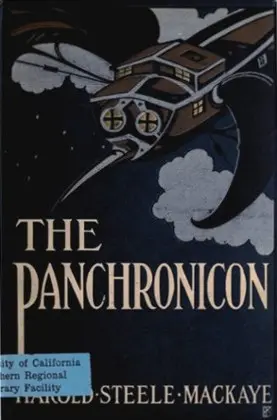
THE CLASSIC COLLECTION · 1904
"The Panchronicon" by Harold Steele MacKaye is a fictional novel written in the early 20th century. The story revolves around two sisters, Rebecca and Phoebe Wise, who find themselves entangled in the eccentric ideas of Copernicus Droop, a village reprobate with a fantastical theory about time travel. As the narrative unfolds, the characters explore themes of ambition, the passage of time, and the desire for second chances, set against the backdrop of whimsical science fiction. The opening portion of the book introduces the two sisters at their home in Peltonville Center, New Hampshire, where they engage in ordinary tasks and daily life. Rebecca, the older sister, is practical and nurturing, while Phoebe, the younger, is filled with curiosity and ambition, especially regarding her Shakespeare class. Their interactions are light yet revealing, setting the stage for the arrival of Copernicus Droop, who proposes a ludicrous plan to travel back in time using a machine he calls the Panchronicon. As their conversation unfolds, humor and absurdity intertwine, foreshadowing the extraordinary journey the characters are about to embark on. The combination of everyday life with the extraordinary speed of time travel creates a fascinating tension right from the start.
Introduction adapted from the source catalogue; source summaries may be automatically generated.
Free to read · English · 76,361 words · No account needed
MAKE TIME FOR A GOOD BOOK
On by default. Untick to stop anonymous reading totals. Each page counts after 10 seconds in view. How this works.
Anonymous counting is on unless you have switched it off.
Pale and weak with dread, the boatman pulled as well as he could toward the splendid vessel ahead, while Rebecca resumed her seat, quite satisfied that all was as it should be.
A few strokes of the oars brought them to the barge's side, and Rebecca's waterman threw a rope to one of the crew.
A young man in uniform glowered down upon them, and to him the waterman turned, pulling off his cap and speaking with the utmost humility.
"The jade is moon-struck, your worship!" he exclaimed, eagerly. "I would not for a thousand pound----"
"Moon-struck!" snapped the lieutenant. "Who gave thee commission to
ferry madmen, fellow?"
The poor waterman, at his wits' end, was about to reply when Rebecca
interposed.
"Young man," she said, standing up, "I'll thank you to 'tend to business. Is Mrs. Victoria Tudor at home?"
At this moment a young gentleman, magnificently apparelled, stepped forth from the after cabin and approached the man in uniform.
"Lieutenant," he said, "her Majesty commands that the woman be brought before her in person. As for you," he continued, turning to the waterman, "return whence you came, and choose your fares better henceforth."
Two of the barge's crew extended each a hand to Rebecca.
"Bend onto that, Poll!" said one, grinning.
"Well, I declare!" exclaimed Rebecca. "I never see sech impident help in all my born days! Ain't ye got any steps for a body to climb?"
A second gorgeously dressed attendant backed hastily out of the cabin.
"Look alive!" he said, peremptorily. "Her Majesty waxes impatient. Where
is the woman?"
"Ay, ay, sir!" replied the sailors. "Here she be!"
They leaned far forward and, grasping the astonished Rebecca each by a shoulder, lifted her quickly over the rail.
The first gentleman messenger beckoned to her and started toward the
cabin.
"Follow me!" he said, curtly.
Rebecca straightened her skirt and bonnet, shook her umbrella, and turned quietly to the rail, fumbling with the catch of her bag.
"I pity yer manners, young man!" she said, coldly. Then, with some
dismay:
"Here you, mister, don't ye want yer money?"
But the waterman, only too glad to escape at all from being involved in her fate, was pulling back to the northern shore as fast as his boat would go.
"Suit yourself," said Rebecca, simply. "Saves me a dime, I guess."
Turning then to the impatient gentleman waiting at the door:
"Guess you're one o' the family, ain't ye? Is your ma in, young man?"
Fortunately her full meaning was not comprehended, and the person addressed contented himself with drawing aside the heavy curtain of cloth of gold and motioning to Rebecca to precede him.
Your reading position is saved on this browser. Take it to another device with a library code. Reading pages adapt to text, rather than matching a printed edition.
BEHIND THE BOOK
This eBook is for the use of anyone anywhere in the United States and most other parts of the world at no cost and with almost no restrictions whatsoever. You may copy it, give it away or re-use it under the terms of the Project Gutenberg License included with this eBook or online at www.gutenberg.org. If you are not located in the United States, you will have to check the laws of the country where you are located before using this eBook. Read the source licence.
The original source file, including credits and licence, is retained by this library. Request an original-format copy at no charge. Please include the book title and Project Gutenberg identifier #27682.
KEEP YOUR CURIOSITY GOING
Wilfrid Scawen Blunt
Wilfrid Scawen Blunt

E. W. (Edgar Watson) Howe
Coulson Kernahan

Maurice Baring
Frances Wright