THE CLASSIC COLLECTION✦My diaries, being a personal narrative of events 1888-1914, Part 2 (1900-1914)CLASSIC FREE BOOKS
My diaries, being a personal narrative of events 1888-1914, Part 2 (1900-1914)
Wilfrid Scawen Blunt
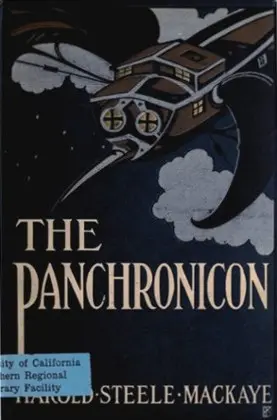
THE CLASSIC COLLECTION · 1904
"The Panchronicon" by Harold Steele MacKaye is a fictional novel written in the early 20th century. The story revolves around two sisters, Rebecca and Phoebe Wise, who find themselves entangled in the eccentric ideas of Copernicus Droop, a village reprobate with a fantastical theory about time travel. As the narrative unfolds, the characters explore themes of ambition, the passage of time, and the desire for second chances, set against the backdrop of whimsical science fiction. The opening portion of the book introduces the two sisters at their home in Peltonville Center, New Hampshire, where they engage in ordinary tasks and daily life. Rebecca, the older sister, is practical and nurturing, while Phoebe, the younger, is filled with curiosity and ambition, especially regarding her Shakespeare class. Their interactions are light yet revealing, setting the stage for the arrival of Copernicus Droop, who proposes a ludicrous plan to travel back in time using a machine he calls the Panchronicon. As their conversation unfolds, humor and absurdity intertwine, foreshadowing the extraordinary journey the characters are about to embark on. The combination of everyday life with the extraordinary speed of time travel creates a fascinating tension right from the start.
Introduction adapted from the source catalogue; source summaries may be automatically generated.
Free to read · English · 76,361 words · No account needed
MAKE TIME FOR A GOOD BOOK
On by default. Untick to stop anonymous reading totals. Each page counts after 10 seconds in view. How this works.
Anonymous counting is on unless you have switched it off.
Rebecca's new plan was therefore to appeal at once to this benign sovereign for aid, entreat her to command the Burtons to release Phoebe and to order Copernicus Droop to carry both sisters back to their New England home. This course recommended itself strongly to the strictly honest Rebecca, because it eliminated at once all necessity for "humoring" Phoebe's madness, with its implied subterfuges and equivocations. The moment was propitious for making an attempt which could at least do no harm, she thought. She determined to carry out the plan which had occurred to her.
Standing up in the boat: "What's the Queen's last name?" she asked.
"Be seated, woman!" growled the waterman, who was growing uneasy at sight of the increasing eccentricity of his fare. "The Queen's name is Elizabeth, as well ye know," he concluded, more gently. He hoped to soothe the woman's frenzy by concessions.
"Now, mister," said Rebecca, severely, "don't you be sassy to me, fer I won't stand it. Of course, I don't want her first name--she ain't hired help. What's the Queen's family name--quick!"
The waterman, now convinced that his fare was a lunatic, could think of naught better than to use soothing tones and to reply promptly, however absurd her questions. "I' faith," he said, in a mild voice, "I' faith, mistress, her Gracious Majesty is of the line of Tudor. Methought----"
But he broke off in horror.
Waving her umbrella high above her head, Rebecca, still standing upright in the boat, was calling at the top of her voice:
"Hallo there! Mrs. Tudor! Stop the ship, will ye! I want to speak to
Mrs. Tudor a minute!"
All nature seemed to shiver and shrink in silence at this enormous breach of etiquette--to use a mild term. Involuntarily the ten pairs of oars in the royal barge hung in mid-air, paralyzed by that sudden outrage. The great, glittering structure, impelled by momentum, glided forward directly under the bows of Rebecca's boat and not a hundred yards away.
Again Rebecca's cry was borne shrill and clear across the water.
"Hallo! Hallo there! Ain't Mrs. Tudor on the ship? I want to speak to her!" Then, turning to the stupefied and trembling waterman:
"Why don't you row, you? What's the matter, anyway? Don't ye see they've stopped to wait fer us?"
Someone spoke within the after cabin. The command was repeated in gruff tones by a man's voice, and the ten pairs of oars fell as one into the water and were held rigid to check the progress of the barge.
"Wherry, ahoy!" a hail came from the deck.
"Ay, ay, sir!" the waterman cried.
"Come alongside!"
"Ay, ay, sir!"
Your reading position is saved on this browser. Take it to another device with a library code. Reading pages adapt to text, rather than matching a printed edition.
BEHIND THE BOOK
This eBook is for the use of anyone anywhere in the United States and most other parts of the world at no cost and with almost no restrictions whatsoever. You may copy it, give it away or re-use it under the terms of the Project Gutenberg License included with this eBook or online at www.gutenberg.org. If you are not located in the United States, you will have to check the laws of the country where you are located before using this eBook. Read the source licence.
The original source file, including credits and licence, is retained by this library. Request an original-format copy at no charge. Please include the book title and Project Gutenberg identifier #27682.
KEEP YOUR CURIOSITY GOING
Wilfrid Scawen Blunt
Wilfrid Scawen Blunt

E. W. (Edgar Watson) Howe
Coulson Kernahan

Maurice Baring
Frances Wright