The Four Seasons
Carl Ewald
THE CLASSIC COLLECTION · 1908
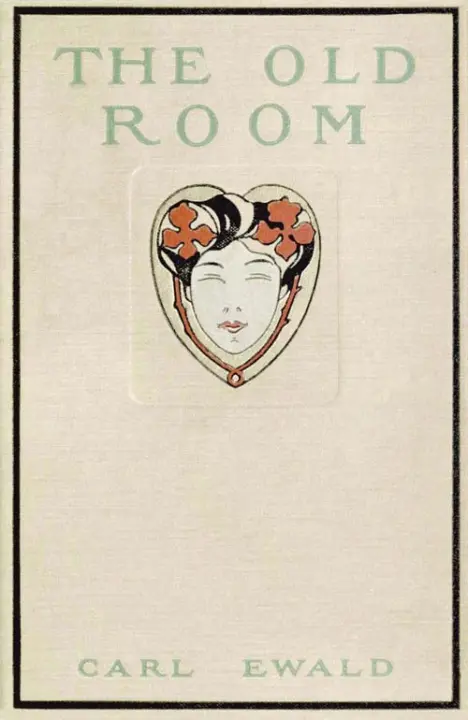
"The Old Room" by Carl Ewald is a novel written in the early 20th century. The story unfolds within the confines of a mysterious and grand room in a home, primarily focusing on the intertwined lives of its owners, Cordt and his wife, Fru Adelheid. The book explores themes of love, marriage, and the complexities of emotional intimacy, reflecting on how personal desires can conflict with societal expectations. At the start of the narrative, readers are introduced to the titular room, a richly decorated chamber that serves as a secret and sacred space for the couple. This opening portion sets a tone of introspection, revealing the struggles within Cordt and Adelheid's marriage as they navigate their feelings about love, fidelity, and societal roles. As they prepare for an evening out, tension arises between their desires for independence and the bonds of their relationship. The vivid descriptions of the room emphasize its significance as both a physical and symbolic space for the couple, illustrating their inner conflicts and the weight of tradition on their modern lives.
Introduction adapted from the source catalogue; source summaries may be automatically generated.
Free to read · English · 44,218 words · No account needed
MAKE TIME FOR A GOOD BOOK
On by default. Untick to stop anonymous reading totals. Each page counts after 10 seconds in view. How this works.
Anonymous counting is on unless you have switched it off.
Fru Adelheid laid her hands over Cordt’s book:
“May I talk to you a little? May I tell you something? May I tell you that what you are doing is madness?”
He moved her hands from his book and looked up:
“Sit down, Adelheid,” he said wearily. “Sit down in that chair.”
But she took the book from him and threw it on the floor:
“You are ill, Cordt. You have become ill up here in this dreadful room.”
“Have you a household remedy?” he asked.
“How can you have the heart to make a jest of it?”
“It would be a bitter jest, if it were one,” he said. “But it was not a jest. I believe in the old household remedies.”
Fru Adelheid sat down in her chair and stared helplessly before her:
“Of course you do,” she said. “And in old books and in everything that has ceased to exist.”
He said nothing, but yawned wearily.
“And God shall be set on His throne again and I shall sit at the spinning-wheel and we shall enjoy a blessed married life and be happy ever after.”
Cordt crossed his legs and looked at his nails:
“Yes ... that is my programme,” he said quietly. “Something like that. And you have stated it in your usual affectionate manner.”
“Cordt, how can you have the heart?”
She swung her body to and fro; her hands lay folded in her lap, her eyes were moist. She wanted to say something, but could not, because the tears prevented her. She could not understand that he did not help her. Then she said:
“Things are going badly with us, Cordt.”
And, as he was still silent, she pulled herself together with an effort and spoke with closed eyes, constantly rocking to and fro:
“We must obey the law under which we were born ... must we not, Cordt? After all, we are modern people ... both of us. Tired, empty people, if you like. But we do think and feel otherwise than people did when ... when they were the sort of people whom you like. And we cannot alter ourselves. But we can be as happy as it is possible to be ... nowadays, being what we are. Why should we not be happy, Cordt?”
“I am not happy.”
“Oh, Cordt!”
She pressed her hands together and wrung them and bent over them so that her tears fell upon them. Then she turned her wet face to him and asked, softly:
“Then am I no longer pretty, Cordt?”
He stood up and kissed her white forehead:
“That you are,” he said. “But that won’t help us any longer.”
Your reading position is saved on this browser. Take it to another device with a library code. Reading pages adapt to text, rather than matching a printed edition.
BEHIND THE BOOK
This eBook is for the use of anyone anywhere in the United States and most other parts of the world at no cost and with almost no restrictions whatsoever. You may copy it, give it away or re-use it under the terms of the Project Gutenberg License included with this eBook or online at www.gutenberg.org. If you are not located in the United States, you will have to check the laws of the country where you are located before using this eBook. Read the source licence.
The original source file, including credits and licence, is retained by this library. Request an original-format copy at no charge. Please include the book title and Project Gutenberg identifier #62883.
KEEP YOUR CURIOSITY GOING
Coulson Kernahan

Maurice Baring
Frances Wright
Cécile Tormay

Frederic Jesup Stimson

W. H. P. (William Henry Pope) Jarvis