
The Truth About an Author
Arnold Bennett
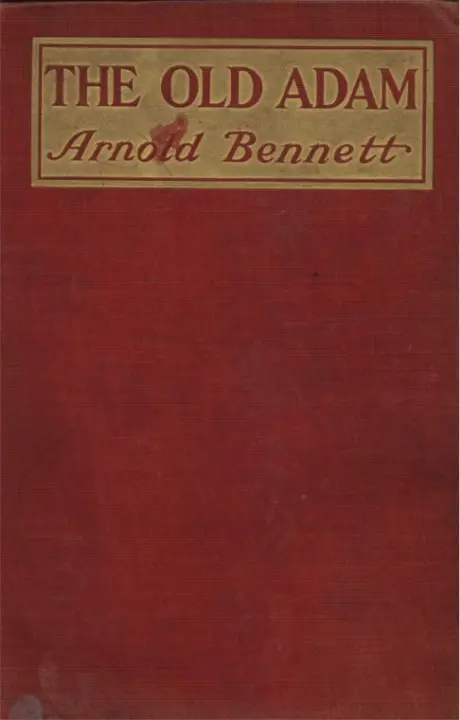
THE CLASSIC COLLECTION · 1913
"The Old Adam: A Story of Adventure" by Arnold Bennett is a novel written in the early 20th century. The story follows Edward Henry Machin, a man grappling with the mundane aspects of life despite recent financial success through stock market speculation. Throughout the opening chapters, Edward navigates complex relationships with his wife, Nellie, and their family, against the backdrop of his self-reflections on wealth and happiness. The beginning of the novel introduces Edward Henry Machin as he returns home, struck by a sense of melancholy despite a recent windfall from his investments. As he enters a domestic space filled with the trappings of both comfort and chaos, Edward reflects on the burdens of his life, such as perceived negligence from his wife and children. The narrative quickly escalates into a familial crisis when his son suffers a minor dog bite, which escalates Nellie's worries about potential rabies, prompting Edward’s internal conflict about duty and desire for escapism. This opening sets the tone for a blend of familial dynamics and self-exploration as Edward seeks both change and reassurance within his relationships and financial endeavors.
Introduction adapted from the source catalogue; source summaries may be automatically generated.
Free to read · English · 85,382 words · No account needed
MAKE TIME FOR A GOOD BOOK
On by default. Untick to stop anonymous reading totals. Each page counts after 10 seconds in view. How this works.
Anonymous counting is on unless you have switched it off.
He caught her eye guiltily.
"Behold the alderman!" she murmured with grimness.
That was all. But the three words took thirty years off his back, snatched the half-crown cigar out of his hand, and reduced him again to the raw, hungry boy of Brougham Street. And he knew that he had sinned gravely in not coming up-stairs very much earlier.
"Is that you, Father?" called the high voice of Robert from the back of
the screen.
He had to admit to his son that it was he.
The infant lay on his back in Maisie's bed, while his mother sat lightly on the edge of nurse's bed near-by.
"Well, you're a nice chap!" said Edward Henry, avoiding Nellie's glance, but trying to face his son as one innocent man may face another, and not perfectly succeeding. He never could feel like a real father somehow.
"My temperature's above normal," announced Robert proudly, and then added with regret, "but not much!"
There was the clinical thermometer--instrument which Edward Henry despised and detested as being an inciter of illnesses--in a glass of water on the table between the two beds.
"Father!" Robert began again.
"Well, Robert?" said Edward Henry cheerfully.
He was glad that the child was in one of his rare loquacious moods, because the chatter not only proved that the dog had done no serious damage,--it also eased the silent strain between himself and Nellie.
"Why did you play the Funeral March, Father?" asked Robert; and the question fell into the tranquillity of the room rather like a bomb that had not quite decided whether or not to burst.
For the second time that evening Edward Henry was dashed.
"Have you been meddling with my music-rolls?"
"No, Father. I only read the labels."
This child simply read everything.
"How did you know I was playing a funeral march?" Edward Henry demanded.
"Oh, I didn't tell him!" Nellie put in, excusing herself before she was accused. She smiled benignly, as an angel woman, capable of forgiving all. But there were moments when Edward Henry hated moral superiority and Christian meekness in a wife. Moreover, Nellie somewhat spoiled her own effect by adding with an artificial continuation of the smile, "You needn't look at me!"
Edward Henry considered the remark otiose. Though he had indeed ventured to look at her, he had not looked at her in the manner which she implied.
"It made a noise like funerals and things," Robert explained.
"Well, it seems to me, you have been playing a funeral march," said
Edward Henry to the child.
Your reading position is saved on this browser. Take it to another device with a library code. Reading pages adapt to text, rather than matching a printed edition.
Arnold Bennett

Arnold Bennett
Arnold Bennett
Arnold Bennett
BEHIND THE BOOK
This eBook is for the use of anyone anywhere in the United States and most other parts of the world at no cost and with almost no restrictions whatsoever. You may copy it, give it away or re-use it under the terms of the Project Gutenberg License included with this eBook or online at www.gutenberg.org. If you are not located in the United States, you will have to check the laws of the country where you are located before using this eBook. Read the source licence.
The original source file, including credits and licence, is retained by this library. Request an original-format copy at no charge. Please include the book title and Project Gutenberg identifier #40168.
KEEP YOUR CURIOSITY GOING
Coulson Kernahan

Maurice Baring
Frances Wright
Cécile Tormay

Frederic Jesup Stimson

W. H. P. (William Henry Pope) Jarvis