THE CLASSIC COLLECTION✦My diaries, being a personal narrative of events 1888-1914, Part 2 (1900-1914)CLASSIC FREE BOOKS
My diaries, being a personal narrative of events 1888-1914, Part 2 (1900-1914)
Wilfrid Scawen Blunt
THE CLASSIC COLLECTION · 1915
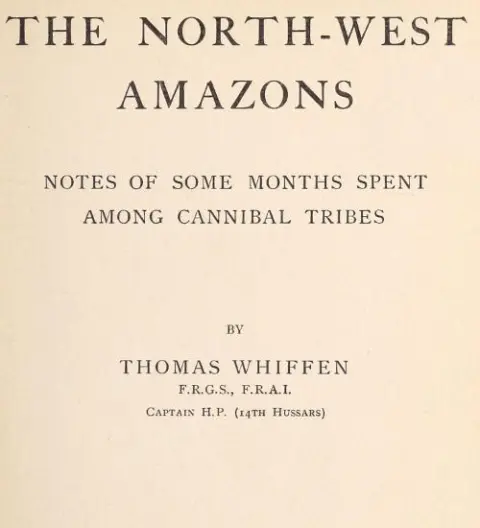
"The North-West Amazons: Notes of some months spent among cannibal tribes" by Thomas Whiffen is a historical account written in the early 20th century. The work details the author's months spent exploring the remote regions near the upper Amazon River, specifically focusing on the cannibal tribes and their cultures. Whiffen shares his observations of the tribes' customs, daily life, and interactions with nature, providing readers with an ethnographic glimpse into a largely untouched world. At the start of the narrative, Whiffen recounts his motivations for embarking on this journey following a period of unemployment due to ill health. He reflects on previous travel experiences and the influence of Dr. Alfred Russel Wallace's writings, which inspired him to explore the Amazon. Arriving in Manaos, he quickly realizes the challenges of accessing the interior and securing a reliable party, and the narrative unfolds with his detailed accounts of the difficulties faced in navigating the forest, river routes, and the dynamics with local tribes. The opening section sets the stage for an immersive exploration of the Amazonian wilderness and the indigenous peoples residing there, capturing both the allure and the difficulties of his expedition.
Introduction adapted from the source catalogue; source summaries may be automatically generated.
Free to read · English · 110,454 words · No account needed
MAKE TIME FOR A GOOD BOOK
On by default. Untick to stop anonymous reading totals. Each page counts after 10 seconds in view. How this works.
Anonymous counting is on unless you have switched it off.
Axe Chovema
Blow-pipe Obidiake
Fish-hook Fakawasi
Knife Chovefa, chovetera
Drum Hugwe
Drum mallet Quaki
Pan pipes Piabami
Sword Chovega
Trap, animal Iregi
Weapons, stones, shot Chowefi, jowefi, chowefei
Signal-drum Ware
Afternoon Nawipe
Morning Wiremoni
Morning, early Monanyeno
Night Nagona
Night, last Nago, hahe nago
Night before last Beinawife
To-day Beiruido
To-morrow Wiremonei (see Morning)
To-morrow, day after Dawire
Twilight Naruide, nagona-yakate
Yesterday Nawire
Yesterday, day before Beinawire
All Nana
Before Fuere
Before (position) Uikota
Before (long time) Heiyei
Behind Moina
Behind (position) Moina
Enough Asirete
Farther Beife
For Mero
Full, carefully, good measure Einue
Full Moniteidi, monite
Here Benomo
How many? Nigama?
How much? Niga?
Much Eijo
Much, enough Monome
Nobody Buna
Now Monokoi
Only Dama
Then, afterwards Achue
There Batinomo
This Pie
Together Fofona (?)
Well? Mei?
What? Nifote?
Where? Ninomo?
Who? Bu?
Why? Nibaji, nibeiji?
No Damaita
Not Inyete
Yes Huhh, U (ventral)
I Kwe
Thou O
He, she, him Afima
We Koko
You Omei
They, them Afimaki
Bad Figonigete
Big Eijue
Bitter Neimenete
Black Ituide
Cold Rosirete
Cool Maneide
Dark Hitirite
Dead Teide
Deeper Nane efarite
Dry Daherede
Good Figora
Hard Agarrite
Heavy Merete
Hot Usirete
Light (sun) Hite
Light (weight) Fekote
Long Are
Red Larede
Short Hiannare
Small, little Yewrete
Soft Itieide
Straight Huchinyete
Strong Agarrite
Thick Herie
Thin Henite
Twisted Huchite
Well (in health) Gagritte
White Userede
Early, soon Ono
Slowly Puiya
Soon Reiri
To bathe Noise
To bring Ate
To carry Ui
To come down Anabi
To come up Kifobi
To cool Rosirete
To cry Ede
To dry Nokitenyete, nohipuinyete
To eat Oko, gunyo
To go down Anahei
To go quickly Reiri maka
To go up Kifohei
To hear, listen, understand Kekate
To heat Usirete
To hurt Isirete
To like, love, desire (persons) Dwere-uite
To like, love, desire (things) Oyakate
To know Onote
To make Nenyo, fuiho
To rain Nokitede, nokipuite
To sit down Anarana
To sleep Mei-ine
To speak Naitode
To stay Fuipire
To take Gweipi
To urinate Chowei, pochite
To wait Anafue
To wash Hokoa
To work Biefono
I am Iti kwe
Thou art Iti-o
He is Afima ite
We are Iti koko
You are Iti omoi
They are Afimaki ite
I was Kwe ia
Thou wert Ia o
He was Afima ia
We were Koko ia
You were Ia omoi
They were Afimaki ia
One Dahe
Two Mena
Three Dahe-amene
Four Menahere
Five Dapekwiro
Ten Nagapekwiro
Ask me Kwemohikka
Give me Kweme
Give me food Eka
A few days ago Tika irue
It is dark Nawite
It is going to rain { Teyakate
{ Puiyakate
What tribe do you belong to? { O Komweine?
{ O Memeka bu?
Move along! { Hei!
{ Ifo!
Come! Bi!
It is very far { Hikka Ite
{ Hikka Are
Your reading position is saved on this browser. Take it to another device with a library code. Reading pages adapt to text, rather than matching a printed edition.
BEHIND THE BOOK
This eBook is for the use of anyone anywhere in the United States and most other parts of the world at no cost and with almost no restrictions whatsoever. You may copy it, give it away or re-use it under the terms of the Project Gutenberg License included with this eBook or online at www.gutenberg.org. If you are not located in the United States, you will have to check the laws of the country where you are located before using this eBook. Read the source licence.
The original source file, including credits and licence, is retained by this library. Request an original-format copy at no charge. Please include the book title and Project Gutenberg identifier #55540.
KEEP YOUR CURIOSITY GOING
Wilfrid Scawen Blunt
Wilfrid Scawen Blunt

E. W. (Edgar Watson) Howe
Cécile Tormay

Moritz Busch
John L. Ransom