THE CLASSIC COLLECTION✦My diaries, being a personal narrative of events 1888-1914, Part 2 (1900-1914)CLASSIC FREE BOOKS
My diaries, being a personal narrative of events 1888-1914, Part 2 (1900-1914)
Wilfrid Scawen Blunt
THE CLASSIC COLLECTION · 1915
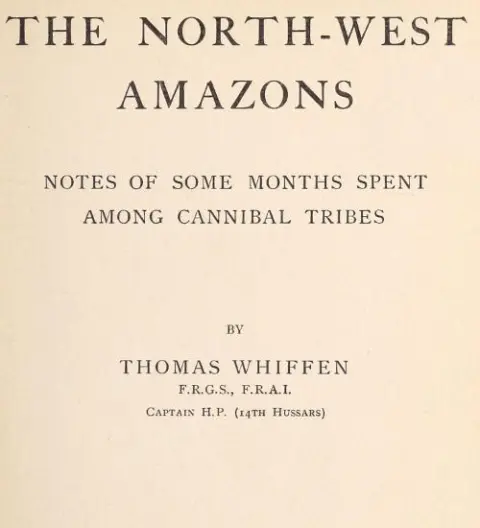
"The North-West Amazons: Notes of some months spent among cannibal tribes" by Thomas Whiffen is a historical account written in the early 20th century. The work details the author's months spent exploring the remote regions near the upper Amazon River, specifically focusing on the cannibal tribes and their cultures. Whiffen shares his observations of the tribes' customs, daily life, and interactions with nature, providing readers with an ethnographic glimpse into a largely untouched world. At the start of the narrative, Whiffen recounts his motivations for embarking on this journey following a period of unemployment due to ill health. He reflects on previous travel experiences and the influence of Dr. Alfred Russel Wallace's writings, which inspired him to explore the Amazon. Arriving in Manaos, he quickly realizes the challenges of accessing the interior and securing a reliable party, and the narrative unfolds with his detailed accounts of the difficulties faced in navigating the forest, river routes, and the dynamics with local tribes. The opening section sets the stage for an immersive exploration of the Amazonian wilderness and the indigenous peoples residing there, capturing both the allure and the difficulties of his expedition.
Introduction adapted from the source catalogue; source summaries may be automatically generated.
Free to read · English · 110,454 words · No account needed
MAKE TIME FOR A GOOD BOOK
On by default. Untick to stop anonymous reading totals. Each page counts after 10 seconds in view. How this works.
Anonymous counting is on unless you have switched it off.
It is near Hiannare
It is very near Hikka-iannare
It is very much farther Hikka-fe
Be quick Reiri
Be slow { Pwia hei
{ Pwia ifo
You do not want me Kwena dueruenyeteo I am about to punish you O feitakkwe What do you want? Nifote oyakateo How much do you want? Niga oyakateo I want to see Eroi yakatekwe I want to eat Okoyakatekwe I want to sleep Iniyakatekwe I do not want to sleep Iniyakanyetekwe Let us sleep Meikoko ini Let us walk Manyakoko maketchi Let us bathe Manya koko noi Go and wash Hokorise What are you doing? Nefoteo nia? What are they doing? Nefoteo nietimeke? What have you done? Nefoteo nieteo? What have you others done? Nefoteo omoi nieteo? Are you sick? { O seicha? { Tuiko teiteo? What is the matter with you? Neisoi o icha? What pains you? O nino isiritte? He is dead Ei e teide He is well again Ei e hichoet Put water to boil Heinoi kokoita We are nearly there Duki-eikateki We have not arrived Duki nieteke It is a long way yet Nia areiti It is a very long way Nia are are are It is very short Wei iannare Put on more wood Nane rege honne Fill it full Nue oruita Be careful not to break it Chitesai Remove the leaves Rape honne Open it carefully Nue ekonotta Cook only manioc and plantains Dama seteo meika ogoto Eat the skins Igore ine Take some crushed maize Pechato tuta hisano ui How many women are there? Niga rinyona hisa ite? From what cause has your brother died? Nipeiche tio teide? Why did you leave the child outside? It will be eaten by the dogs Nipeiche hito hino o fuaka ia daria Go soon and guard the women Mei rieri rinyona hofona ipeise Do not do it again Mene amanyete omoi An unmoral Indian woman Rinyo Rei-irage An immoral Indian woman Rinyo Kachirete With whom have you been having intercourse? Bu tika beriteo? How many husbands have you had? Nigama bettora-o? Are you (a virgin) married? Nia rutanyega-o? Who ravished you? Bu-o rutaka? You are blind (a fool) O ui nirite Do not delay Fwepi neri Give me something Feka Do not give anything Fekanyete Walk Mekkate Do not walk Mekanyete I do not understand Kehanyete That’s my business (common expression without intention of rudeness) Pia My body aches Kwe apui isirete Let me go Kwe-mosueta Hold me Kwe-mojeno Turn round Jireno Do not move Weihoi Why do you shout? Nipeiche kicheteyo? It is big Ei ichwe It is small { Hurete { Eichonyete It is not good Fogonyete Do you like it? Kimmarueteo? Do you not like it? Kimmaruenyeteo? You are pretty Nuen otego You are ugly Nuenonyeteo You are dirty Oapwi gagrette I want you Ona dueruetckwe I do not want you Ona dueruenetckwe Tie well (the cross poles) Nue kwina Tie higher Keifofe kwina Take care not to break Titeise Well done, you thatch well Mei omoi ita Is everything clean? Nana ganino fuinore? That is dirty, I shall punish you Vie gagrette a kioiteo o feitikwe It is very sweet Eicho nimerettega I do not like it hot Usirete ittinyetekwe I like it warm Chiei maneide ittitekwe Look well in front of you Nue oroi The plantation is a good one Nue akafo icha The plantation is a bad one Akafo fogonyete Let us go and build a house Manya ofo koko fuinoche There are not sufficient palisades Nia amena nana inyete All of you bring timber Omoi amena atiche You make the thatches Are niite omoi These boys will bring canes Bie hettanitino are gweichi These others will bring palm leaves Bimeke ererite Those will make holes Bimeichino iffweirakte I do not want it there Batinomo ittinyetekwe Open it here Benomo ekkono Send me the small boy Urettema kwemo hito Go and throw away that water Mei ba i heinoi dota Wash it well Nue hokorii Do not delay Are enyeno bi You are dirty Nia gagrette Put it there Batinomo honne Put it here Benomo honne Put it yonder One honne Do not put it over there Batinomo honne nieno Why are you sad? Nipeiche sure iteo? Who hurt you? Bu o faga? When did you come? Nirueteo viteo? When did you go? Nirueteo heito? It is so firm I cannot move it Are agagrette ekkononyette Bring the wood Itofie nue omoi ire Do not throw them away Oni tinyeno nue ofitare I am going to see A chimitekwe If you do not bring them, I shall punish you Omoi pweya fachiomoi Plant them carefully Nue omoi haire Go and clean up Mei omoi reitiseiri Place all the sticks together Reitekinyo nue omoi ofitare You have left the plantation untidy Akkafo gagritte omoi fueka Why don’t you bring it? Nipeiche atinyeta omoi? Make enough cassava Eichwe tano fuinore Let it be good Nuere finoiche Bring a little Yewre atitomoi Not enough Dutenyete It is soft Itieide What are you doing? Nifote niecomoi? What are you eating? Nifote okoteomoi? Where are they--the rest of you? Ninomo iteomoi? Why have they (the others) gone without telling me? Nipeiche kwe jonyeno heite omoi? Bring it to the light Useritenomo ate To-morrow go and see the tribe and then return here together Weirimoni dama komweine hoke teiteo nana fofona orerire Split it with the knife Chovefa do ekkono Take out the cane early Monanyano kononwe ono It is rich Kei maritte Wash the pot well before boiling water in it I chiko nue hoko heinowei hoku-itechi Do not put much fruit in it Eicho rie dotenyino It is very inconvenient Y otirette I am unable { Kwe mona { Hitinyete I shall carry it Diuitikwe Do not carry it Uinyetekwe I am tired Aeeiontekwe You are going to carry manioc Meika omoi ui
Your reading position is saved on this browser. Take it to another device with a library code. Reading pages adapt to text, rather than matching a printed edition.
BEHIND THE BOOK
This eBook is for the use of anyone anywhere in the United States and most other parts of the world at no cost and with almost no restrictions whatsoever. You may copy it, give it away or re-use it under the terms of the Project Gutenberg License included with this eBook or online at www.gutenberg.org. If you are not located in the United States, you will have to check the laws of the country where you are located before using this eBook. Read the source licence.
The original source file, including credits and licence, is retained by this library. Request an original-format copy at no charge. Please include the book title and Project Gutenberg identifier #55540.
KEEP YOUR CURIOSITY GOING
Wilfrid Scawen Blunt
Wilfrid Scawen Blunt

E. W. (Edgar Watson) Howe
Cécile Tormay

Moritz Busch
John L. Ransom