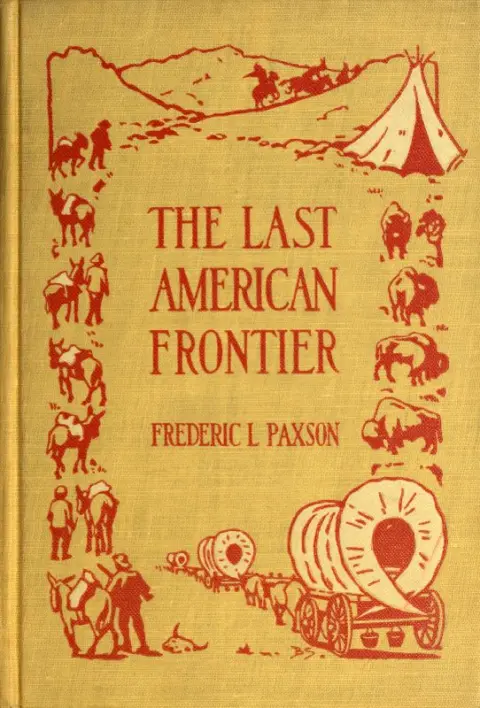
The Last American Frontier
Frederic L. (Frederic Logan) Paxson
THE CLASSIC COLLECTION · 1912
"The New Nation" by Frederic L. Paxson is a historical account written in the early 20th century. The book explores the profound changes that occurred in the United States following the Civil War, addressing the political, economic, and social transformations that shaped the nation during that period. Paxson examines how the nation's identity evolved amidst post-war reconstruction, financial upheaval, and the rise of industrial society, providing insights into the shifting dynamics between state and federal authority. The opening of "The New Nation" discusses the aftermath of the Civil War, emphasizing the complexity of the political landscape and the challenges faced by the United States in maintaining unity and governance. Paxson highlights the rise of the Republican Party and the efforts of leaders like Abraham Lincoln to foster a cohesive national identity while navigating the political turmoil of the time. The text delves into the implications of economic advancements and the changing social fabric, setting the stage for a broader analysis of how these elements defined the American experience in the decades that followed.
Introduction adapted from the source catalogue; source summaries may be automatically generated.
Free to read · English · 87,263 words · No account needed
MAKE TIME FOR A GOOD BOOK
On by default. Untick to stop anonymous reading totals. Each page counts after 10 seconds in view. How this works.
Anonymous counting is on unless you have switched it off.
New South, the, has but one political party of consequence, 192;
dissatisfied farmer vote in, 193;
disintegration of plantations, 194;
oppressed by its agricultural system, 195;
practically disfranchises negroes, 196-200;
education in, 201, 202;
border traits of, 202;
a modern industrial community, 203;
development of cities, 205.
Nez Perces, outbreak of, 86.
Nicaragua Canal, 134, 286.
North, S.N.D., and the Dingley Bill, 254.
North Dakota, admitted to Union, 152.
Northern Pacific Railroad, 143, 295;
and panic of 1873, 63, 65;
finished under direction of Henry Villard, 144.
Northern Securities Company, 296, 299.
Oklahoma, Indians colonized in, 151;
opened to white settlers, 151;
becomes a State, 319.
Olney, Richard, 230, 231.
Oregon, the, spectacular voyage of, 274, 286.
Overproduction, menace of, 96.
Palmer, John M., 238.
Panama, Republic of, 288.
Panama Canal, begun by De Lesseps, 144, 286;
determined on by Congress and President Roosevelt, 287, 288;
Panama grants concession, 289;
first boats pass through, 289;
dispute over sea-level and lock systems, 316-17.
Pan-American Conference at Rio de Janeiro, 318.
Pan-American Congress, 106, 109.
Panic of 1857, the, 6, 7, 9, 11, 12.
Panic of 1873, the, 62-74;
Jay Cooke's connection with, 62-65;
real causes of, 64, 65;
reduces revenues, 115;
often attributed to low rates of Wilson Bill, 254.
Parker, Judge Alton B., Democratic candidate for President (1904), 305;
defeated, 306.
Payne, Sereno E., 326.
Peabody, George, creates fund to relieve negro illiteracy, 201.
Pendleton, George H., 30, 31.
Penrose, Boies, 253, 342.
Pension Bureau, 137;
important through alliance with the soldiers, 172.
Pensions, influence of soldier vote on, 136;
for service only, 137;
amounts spent on, 137, 138;
system criticized by Southern farmers, 178;
used millions of the national surplus, 216.
People's Party. 184;
to right all wrongs of the plain people, 186, 187;
becomes a finished organization, 208, 209;
demands of, 210.
Petroleum trust, 164, 165.
Philippine Islands, ceded to United States, 273;
revolt in, under Aguinaldo, 278.
Pierpont, Francis A., 47.
Pike, James S., author of The Prostrate State, 51.
Pinchot, Gifford, 328.
Pious Fund dispute, the, 283.
Platt, Thomas C., resigns from Senate, 103;
claims promise of Secretaryship under Harrison, 172;
offended by Harrison, 213;
Senator from New York, 253;
opposes nomination of Roosevelt for governor, 277;
aids Roosevelt boom for Vice-Presidency, 280.
Polygamy, in Utah, 154.
Populism, origin of, 208.
Populists, demands of, 210;
carry four States in Presidential election (1892), 216;
caricatures of, 223;
fuse with Democrats, 237, 238;
favor direct legislation, 249, 250.
Porto Rico, invaded by United States troops, 272;
ceded to United States, 273;
Territorial government provided, 278.
Post-office, the, corruption in, 103, 104, 105, 113, 114.
Potter, Bishop Henry C., 246.
Powderly, Terence V., 121, 122, 135.
Practical politics, 110.
Preemption Law, the, 21, 155, 156.
Presidential Succession Act, 105.
Primaries, direct, 249, 335.
Progressive Republicans, revolt, 329;
organize a League, 330;
principles of, 333;
oppose renomination of Taft, 334;
urge Roosevelt to run, 335;
organize Progressive Party, 336;
nominate Roosevelt and Johnson, 337;
popular vote of, 338;
influence negligible in 1914, 342.
Protection, in Republican platform (1888), 170, 171;
earnestly discussed by both parties, 170;
enlarged by McKinley Bill, 174, 176;
of unborn industries, 175;
strongest in East, 177;
rampant spirit for, in 1897, 254.
Pure food movement, 313, 314, 328.
Quay, Matthew S., chairman of Harrison campaign committee, 170, 171, 174; offended by Harrison, 213; completes partnership of manufacturers and voters, 232; selects Penrose for Senator, 253.
Your reading position is saved on this browser. Take it to another device with a library code. Reading pages adapt to text, rather than matching a printed edition.
Frederic L. (Frederic Logan) Paxson
BEHIND THE BOOK
This eBook is for the use of anyone anywhere in the United States and most other parts of the world at no cost and with almost no restrictions whatsoever. You may copy it, give it away or re-use it under the terms of the Project Gutenberg License included with this eBook or online at www.gutenberg.org. If you are not located in the United States, you will have to check the laws of the country where you are located before using this eBook. Read the source licence.
The original source file, including credits and licence, is retained by this library. Request an original-format copy at no charge. Please include the book title and Project Gutenberg identifier #27953.
KEEP YOUR CURIOSITY GOING
Cécile Tormay

Moritz Busch
John L. Ransom
Frances Wright
Cécile Tormay

Mabel Potter Daggett