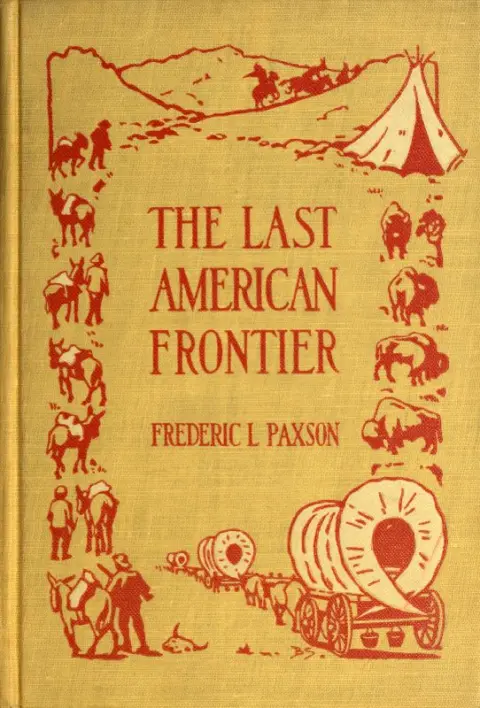
The Last American Frontier
Frederic L. (Frederic Logan) Paxson
THE CLASSIC COLLECTION · 1912
"The New Nation" by Frederic L. Paxson is a historical account written in the early 20th century. The book explores the profound changes that occurred in the United States following the Civil War, addressing the political, economic, and social transformations that shaped the nation during that period. Paxson examines how the nation's identity evolved amidst post-war reconstruction, financial upheaval, and the rise of industrial society, providing insights into the shifting dynamics between state and federal authority. The opening of "The New Nation" discusses the aftermath of the Civil War, emphasizing the complexity of the political landscape and the challenges faced by the United States in maintaining unity and governance. Paxson highlights the rise of the Republican Party and the efforts of leaders like Abraham Lincoln to foster a cohesive national identity while navigating the political turmoil of the time. The text delves into the implications of economic advancements and the changing social fabric, setting the stage for a broader analysis of how these elements defined the American experience in the decades that followed.
Introduction adapted from the source catalogue; source summaries may be automatically generated.
Free to read · English · 87,263 words · No account needed
MAKE TIME FOR A GOOD BOOK
On by default. Untick to stop anonymous reading totals. Each page counts after 10 seconds in view. How this works.
Anonymous counting is on unless you have switched it off.
Labor, tariff supposed to protect, 119;
Commissioner of, 122;
Bureau of, 135;
danger from European pauper, 139;
becomes better united, 299.
See also Knights of Labor, Strikes.
La Follette, Robert M., defeated for Congress, 185;
works out a system of primaries, 249;
in the Senate debate on railroads, 315;
leader of Insurgent Republicans, 329;
possible Presidential candidate, 330, 335, 336.
Lamar, L.Q.C., 133.
Land grants, to railroads, 22, 24, 148, 156;
discontinued, 143.
Land laws, difficulty in enforcing, 155, 156.
Lawson. Thomas W., 310.
Lawton, Gen. Henry W., 271.
Liberal Republicans, secede in 1872 and nominate Greeley and Brown, 56; platform of, 56, 57; in Garfield's administration, 102; favor civil service reform and tariff revision, 112, 116, 126; put Edmunds forward for Presidential candidate (1884), 128.
Lincoln, Abraham, his view in regard to the spoils system, 2;
aims to develop a Union sentiment, 2, 3;
aided by excesses of Democrats, 4, 5;
his use of offices, 111, 112.
Literature in United States, 187, 188;
periodical, 189, 190;
religious, 190.
Lloyd, Henry D., 116, 166, 167.
Lodge, Henry Cabot, as an independent, 128;
supports Blaine, 130;
approves the Force Bill, 200, 201.
Logan, John A., 128.
Lorimer, William, 330.
Lowell, James Russell, quoted, 54, 59;
on Cleveland, 134.
McClellan, Gen. George B., 3, 5.
McClure, S.S., 311.
McCulloch, Hugh, 28, 29.
McEnery, Samuel D., 254.
McKinley, William, his Tariff Bill, 172, 173, 174, 175;
accepts principle of reciprocity, 175;
defeated for Congress, 185;
Governor of Ohio, 214;
"advance agent of prosperity," 232, 241;
a tactful Congressman, 233;
nominated for President (1896), 234;
makes no personal campaign, 239;
elected, 240;
his election a victory for sound money, 241;
calls special session of Congress for new tariff, 242;
inaugurated as President, 251;
his theory of the office, 252;
action in the Cuban matter, 262, 264;
reelected President, 280;
murdered, 282.
McKinley Bill, the, 173, 174, 215, 216;
sugar clause a notable feature of, 175;
opposition to, 184.
MacVeagh, Wayne, 102.
Machinery, influence of, 15, 16, 95.
Mahone, William, 109.
Maine, the, blown up in Havana harbor, 264.
Marshall, Thomas R., nominated by Democrats for Vice-Presidency, 337.
Merritt, Gen. Wesley, 267.
Mexico, revolutions in, 331, 340.
Miles, Gen. Nelson A., on the results of drought, 182;
commander of army in Spanish War, 269;
invades Porto Rico, 272.
Mills, Roger Q., tariff leader, 139.
Mills Bill, the, 139, 140, 169, 170.
Mining camps, rapid development of, 20, 21, 22.
Mississippi, the process of reconstruction in, 46, 47;
disqualifies negroes, 198, 199.
Mississippi River Commission, 206.
Mitchell, John, 300.
"Molly Maguires," 94, 121.
Monroe Doctrine, in Venezuela case, 230, 231, 284.
Montana, created a Territory, 21;
becomes a State, 152.
Morgan, J. Pierpont, 295, 321.
Mormons, 20;
make a prosperous Territory in Utah, 154.
Morton, Levi P., Vice-President with Harrison, 169.
Morton, Oliver P., war Governor of Indiana, 81.
Muck-raking, 315, 316.
Mugwumps, 129, 130.
Mulligan letters, the, 82.
Murchison letter, the, 170, 171.
Nast, Thomas, cartoonist, 50, 57, 86, 132.
National Labor Union, 208.
National Planters' Association, 203.
Navy, of the United States, at outbreak of Spanish War, 265; sent round the world without mishap, 319.
Negro, the, would not work at close of war, 40;
a social and economic problem, 41, 42;
made a voter by Congress, 43, 45, 48;
elimination of control by, 51, 52, 54;
a factor in Republican national convention, 98, 99;
becomes a farm owner, 194;
suppressed outside the law, 196;
bad qualities of, 198;
practically disfranchised in South, 199, 200;
advances in literacy, 202;
distribution of, 202, 203;
Roosevelt's attitude toward, 289, 290.
Newlands Reclamation Act, 291.
New Mexico, 152, 154;
becomes a State, 330.
Your reading position is saved on this browser. Take it to another device with a library code. Reading pages adapt to text, rather than matching a printed edition.
Frederic L. (Frederic Logan) Paxson
BEHIND THE BOOK
This eBook is for the use of anyone anywhere in the United States and most other parts of the world at no cost and with almost no restrictions whatsoever. You may copy it, give it away or re-use it under the terms of the Project Gutenberg License included with this eBook or online at www.gutenberg.org. If you are not located in the United States, you will have to check the laws of the country where you are located before using this eBook. Read the source licence.
The original source file, including credits and licence, is retained by this library. Request an original-format copy at no charge. Please include the book title and Project Gutenberg identifier #27953.
KEEP YOUR CURIOSITY GOING
Cécile Tormay

Moritz Busch
John L. Ransom
Frances Wright
Cécile Tormay

Mabel Potter Daggett