The Making of the Great West, 1512-1883
Samuel Adams Drake
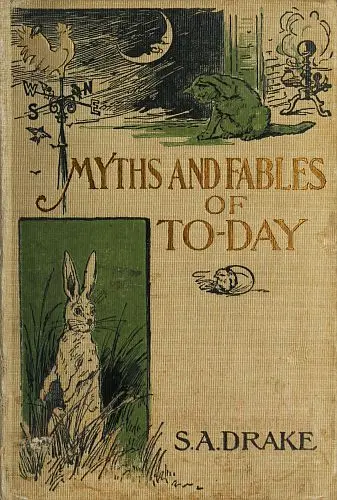
THE CLASSIC COLLECTION · 1900
"The Myths and Fables of To-Day" by Samuel Adams Drake is a historical collection focused on contemporary superstitions and their origins, written in the late 19th century. The book explores the persistence and influence of mythology and superstition in modern life, examining cultural practices and beliefs that have been passed down through generations. The opening portion sets the stage for a compelling analysis of how deeply ingrained superstitions continue to shape human behavior and consciousness. At the start of the text, Drake engages readers with a discussion of superstition as a constant presence in human history, arguing that it remains influential even in an enlightened age. He challenges the notion that superstition is solely a relic of the past, illustrating its continued relevance through examples from folklore, childhood stories, and rituals. By invoking significant cultural references, he highlights how common practices, like the celebration of Christmas and the telling of nursery tales, provide insight into the enduring nature of myth and the human penchant for the supernatural. This opening establishes a thought-provoking premise, inviting readers to reconsider the myths that persist in their own lives.
Introduction adapted from the source catalogue; source summaries may be automatically generated.
Free to read · English · 45,444 words · No account needed
MAKE TIME FOR A GOOD BOOK
On by default. Untick to stop anonymous reading totals. Each page counts after 10 seconds in view. How this works.
Anonymous counting is on unless you have switched it off.
Closely related to the above is the belief that a sick person will not die until ebb tide. When that goes out, the life goes with it. I have often heard this said in some seaports in Maine.
These popular notions, concerning the influence of the tides, be it said, have come down to us from a remote antiquity. The Pythagorean philosopher, indeed, stoutly affirmed that the ebbing and flowing of the sea was nothing less than the respiration of the world itself, which was supposed to be a living monster, alternately drawing in water, instead of air, and heaving it out again.
Again, an old salt, who had perhaps heard of Galileo’s theory, once tried to illustrate to me the movement of the tides by comparing it to that of a man turning over in bed, and dragging the bedclothes with him, his notion being that as the world turned round, the waters of the ocean were acted upon in a like manner.
To resume the catalogue:--
A bee was never caught in the rain--that is, if the bee scents rain, it keeps near the hive. If, on the contrary, it flies far, the day will be fair. The ancients believed this industrious little creature possessed of almost human intelligence.
When the squirrels lay in a greater store of nuts than usual, expect a
cold winter.
If the November goose-bone be thick, so will the winter weather be unusually severe. This prediction appears as regularly as the return of the seasons.
Many meteors falling presage much snow.
“If it rains before seven,
It will clear before eleven.”
“You can tell before two.
What it’s going to do.”
There will be as many snow-storms in a winter as there are days remaining in the month after the first fall of snow.
Children are told, of the falling snow, that the old woman, up in the sky, is shaking her feather-bed.
High tides on the coast of Maine are considered a sign of rain.
When the muskrat builds his nest higher than usual, it is a sign of a wet spring, as this means high water in the ponds and streams.
“A winter fog
Will kill a dog,”
which is as much as to say that a thaw, with its usual accompaniments of fog and rain, is invariably productive of much sickness.
Winter thunder is to old folks death, and to young folks plunder.
“Sound, travelling far and wide,
A stormy day will betide.”
Your reading position is saved on this browser. Take it to another device with a library code. Reading pages adapt to text, rather than matching a printed edition.
Samuel Adams Drake
Samuel Adams Drake
Samuel Adams Drake
Samuel Adams Drake
BEHIND THE BOOK
This eBook is for the use of anyone anywhere in the United States and most other parts of the world at no cost and with almost no restrictions whatsoever. You may copy it, give it away or re-use it under the terms of the Project Gutenberg License included with this eBook or online at www.gutenberg.org. If you are not located in the United States, you will have to check the laws of the country where you are located before using this eBook. Read the source licence.
The original source file, including credits and licence, is retained by this library. Request an original-format copy at no charge. Please include the book title and Project Gutenberg identifier #44177.
KEEP YOUR CURIOSITY GOING
Cécile Tormay

Moritz Busch
John L. Ransom

Maurice Baring
Frances Wright
Cécile Tormay