The Making of the Great West, 1512-1883
Samuel Adams Drake
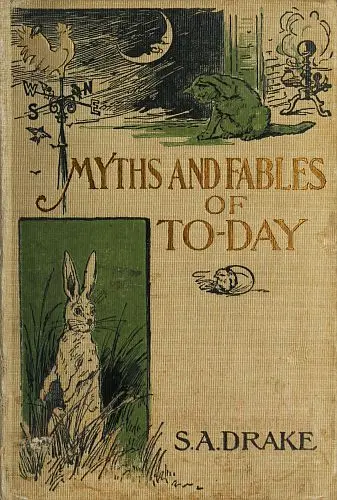
THE CLASSIC COLLECTION · 1900
"The Myths and Fables of To-Day" by Samuel Adams Drake is a historical collection focused on contemporary superstitions and their origins, written in the late 19th century. The book explores the persistence and influence of mythology and superstition in modern life, examining cultural practices and beliefs that have been passed down through generations. The opening portion sets the stage for a compelling analysis of how deeply ingrained superstitions continue to shape human behavior and consciousness. At the start of the text, Drake engages readers with a discussion of superstition as a constant presence in human history, arguing that it remains influential even in an enlightened age. He challenges the notion that superstition is solely a relic of the past, illustrating its continued relevance through examples from folklore, childhood stories, and rituals. By invoking significant cultural references, he highlights how common practices, like the celebration of Christmas and the telling of nursery tales, provide insight into the enduring nature of myth and the human penchant for the supernatural. This opening establishes a thought-provoking premise, inviting readers to reconsider the myths that persist in their own lives.
Introduction adapted from the source catalogue; source summaries may be automatically generated.
Free to read · English · 45,444 words · No account needed
MAKE TIME FOR A GOOD BOOK
On by default. Untick to stop anonymous reading totals. Each page counts after 10 seconds in view. How this works.
Anonymous counting is on unless you have switched it off.
[9] It is deemed lucky to be born with a caul or membrane over the face. In France être né coiffée signifies that a person is extremely fortunate. It is believed to be an infallible protection against drowning, and under that idea is frequently advertised for sale in the newspapers and purchased by seamen. If bought by lawyers they become as eloquent as Demosthenes or Cicero, and thereby get a great deal of practice.--FIELDING.
[10] Edward Winslow makes use of this word in speaking of an Indian who had been taken prisoner at Plymouth, and confined in the fort newly built there. “So he was locked in a chain to a staple in the court of guard and there kept. Thus was our fort handselled, this being the first day, as I take it, that ever any watch was there kept.”--Winslow’s “Relation.”
[11] Mr. Coxe.
[12] More concerning throwing the shoe will be found under “Marriage.”
[13] Note the poetical reference in another chapter.
[14] Boston Transcript, February 13, 1899.
[15] In “Farmer and Moore’s Collections,” i., 136.
[16] Another way, laid down by some authorities, was that any unmarried woman fasting on Midsummer Eve, and at midnight laying a clean cloth with bread, cheese, and ale, and sitting down as if going to eat--the street door being left open--the person whom she is afterwards to marry will come into the room and drink to her by bowing, afterwards fill the glass, make another bow, and retire.--Fielding.
[17] A reference to this is found in Cooper’s “Spy.”
[18] Quetelet, on the calculation of probabilities.
[19] May Martin was made to touch the face of her dead child (murdered by her to prevent a discovery), the fresh blood came forth, “whereupon she confessed.”
[20] For more about these places see “New England Legends.”
[21] Partly taken from Felt’s “Annals of Ipswich,” partly from the
relations of others.
[22] The rule, as laid down by Cotton Mather in “More Wonders” was this: “When there has been a murder committed, an apparition of the slain party accusing of any man, altho’ such apparitions have oftner spoke true than false, is not enough to convict the man of that murder; but yet it is a sufficient occasion for Magistrates to make a particular inquiry,” etc.
[23] “Forty-one Years in India.”
[24] An apple bough also is made use of in some cases.
[25] According to the prophecy in Joel ii, 10, and Matthew xxiv, 29, then “shall the sun be darkened, and the moon shall not give her light.”
[26] In “Nooks and Corners of the New England Coast.”
[27] For more about her, see “New England Legends and Folk-Lore.”
Transcriber's note:
Your reading position is saved on this browser. Take it to another device with a library code. Reading pages adapt to text, rather than matching a printed edition.
Samuel Adams Drake
Samuel Adams Drake
Samuel Adams Drake
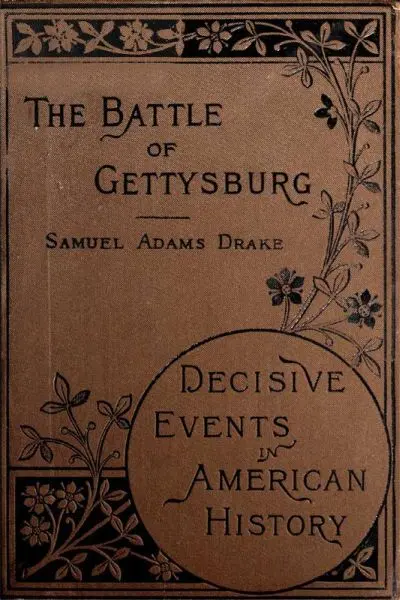
Samuel Adams Drake
BEHIND THE BOOK
This eBook is for the use of anyone anywhere in the United States and most other parts of the world at no cost and with almost no restrictions whatsoever. You may copy it, give it away or re-use it under the terms of the Project Gutenberg License included with this eBook or online at www.gutenberg.org. If you are not located in the United States, you will have to check the laws of the country where you are located before using this eBook. Read the source licence.
The original source file, including credits and licence, is retained by this library. Request an original-format copy at no charge. Please include the book title and Project Gutenberg identifier #44177.
KEEP YOUR CURIOSITY GOING
Cécile Tormay

Moritz Busch
John L. Ransom

Maurice Baring
Frances Wright
Cécile Tormay