THE CLASSIC COLLECTION✦Letters on LiteratureCLASSIC FREE BOOKS
Letters on Literature
Andrew Lang
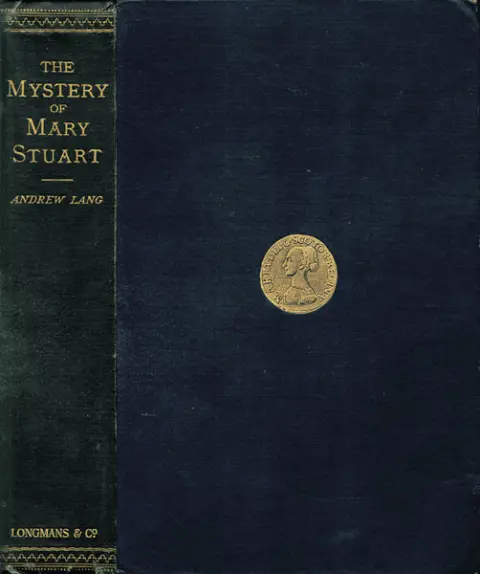
THE CLASSIC COLLECTION · 1901
"The Mystery of Mary Stuart" by Andrew Lang is a historical account written in the late 19th century. It explores the complexities surrounding the life and reign of Mary Stuart, Queen of Scots, particularly focusing on her trials, enemies, and the controversial "Casket Letters" which implicated her in various conspiracies. Lang aims to unravel the truth behind the historical events that led to her downfall, scrutinizing both her character and the motives of those around her. The opening of the text introduces the intricate web of personalities involved in the tragic story of Mary Stuart, providing a rich prelude to her struggles for power amidst political intrigue and personal betrayal. Lang illustrates the historical setting, emphasizing the socio-political climate of Scotland during Mary’s reign and the pivotal figures that shaped her narrative, including her husbands, noble adversaries, and loyal aides. The insight into her characterized traits, motives, and the events leading up to her troubles, including the infamous murder of her second husband, Darnley, sets a compelling stage for a deeper exploration of her life. The reader is invited to reflect on the multifaceted interactions of these historical figures and the enduring debate over Mary Stuart's guilt or innocence in the eyes of history.
Introduction adapted from the source catalogue; source summaries may be automatically generated.
Free to read · English · 123,454 words · No account needed
MAKE TIME FOR A GOOD BOOK
On by default. Untick to stop anonymous reading totals. Each page counts after 10 seconds in view. How this works.
Anonymous counting is on unless you have switched it off.
[229] Already, on July 16, Mary had offered verbally, by Robert Melville, to the Lords, to make Moray Regent: or, failing him, to appoint a Council of Regency, Châtelherault, Huntly, Argyll, Atholl, Lennox, and, ‘with much ado,’ Morton, Moray, Mar, and Glencairn. But she would not abandon Bothwell, as she was pregnant. Throckmorton does not say that she now promised to sign an abdication. A letter of Mary’s, to Bothwell’s captain in Dunbar, was intercepted, ‘containing matter little to her advantage.’ It never was produced by her prosecutors (Throckmorton, July 18. Bain, ii. 355,356). Robert Melville, visiting her, declined to carry such a letter to Bothwell. See his examination, in Addit. MSS. British Museum, 33531, fol. 119 et seq.
[230] Bain, ii. 367.
[231] Bain, ii. 328.
[232] Ibid. i. 346-348.
[233] Bain, ii. 346.
[234] Ibid. 354. July 16.
[235] Alava to Philip, July 17. Teulet, v. 29.
[236] De Silva, July 26, August 2. Spanish Calendar, i. 662, 665. I have occasionally preferred the Spanish text to Major Hume’s translations. See also Hosack, i. 215, 216.
[237] Froude, iii. 118. 1866.
[238] Lennox MSS.
[239] The words within inverted commas are autograph additions by Lennox
himself.
[240] Ogilvy of Boyne, who married his old love, Lady Bothwell, after the death of her second husband, the Earl of Sutherland. See pp. 26, 27, supra.
[241] A Lost Chapter in the History of Mary Stuart.
[242] Throckmorton to Elizabeth, July 18. Bain, ii. 355.
[243] Throckmorton to Elizabeth, July 31, 1567. Bain, ii. 370.
[244] Maitland Miscellany, vol. iv. part i. p. 119.
[245] Teulet, ii. 255, 256.
[246] Labanoff, ii. 106.
[247] Bain, ii. 423.
[248] Ibid. 441, 442.
[249] I do not know where the originals of these five letters now are. They were among the Hamilton Papers, having probably been intercepted by the Hamiltons before they reached Moray, Lethington, Crawford, and the others.
[250] Bain, ii. 514.
[251] Ibid. 523, 524.
[252] For. Eliz. viii. 478, 479. Bain, ii. 426, 427.
[253] Bowton’s confession. Laing, ii. 256, 257.
[254] Cal. For. Eliz. viii. 331.
[255] Cal. For. Eliz. viii. 363.
[256] Moray, Morton, Glencairn, Errol, Buchan, Home, Ruthven, Semple, Glamis, Lindsay, Gray, Graham, Ochiltree (Knox’s father-in-law), Innermeith, the treacherous Bishop of Orkney, Sir James Balfour (deeply involved in the murder), Makgill, Lethington, Erskine of Dun, Wishart of Pitarro, Kirkcaldy of Grange, and others of less note.
[257] Nau, pp. 71-73.
[258] Teulet, ii. 247.
[259] Act in Henderson, 177-185.
[260] Nau, 74, 75.
[261] Goodall, ii. 361. B. M. Titus, c. 12, fol. 157 (olim 175). ‘And gif it beis allegit, yat hir ma{tz} wretting producit in pliamẽt, sould proiff hir g, culpable. It maybe ansrit yat yäre is na plane mentione maid in it, be ye quhilk hir hienes may be convict Albeit it wer hir awin hand wreitt, as it is not And als the same is cuttit (cullit?) be yame selfis in sum principall & substantious clausis.’
[262] Sepp, Tagebuch, Munich, 1882.
[263] Bain, ii. 441, 442.
[264] Maitland Club Miscellany, iv. 120, 121.
[265] Teulet, ii. 248.
[266] Bain, ii. 517.
[267] Bain, ii. 434.
[268] Nov. 8, 1571. Murdin, p. 57.
[269] State Trials, i. 978.
Your reading position is saved on this browser. Take it to another device with a library code. Reading pages adapt to text, rather than matching a printed edition.
Andrew Lang
Andrew Lang
Andrew Lang

Andrew Lang
BEHIND THE BOOK
This eBook is for the use of anyone anywhere in the United States and most other parts of the world at no cost and with almost no restrictions whatsoever. You may copy it, give it away or re-use it under the terms of the Project Gutenberg License included with this eBook or online at www.gutenberg.org. If you are not located in the United States, you will have to check the laws of the country where you are located before using this eBook. Read the source licence.
The original source file, including credits and licence, is retained by this library. Request an original-format copy at no charge. Please include the book title and Project Gutenberg identifier #42910.
KEEP YOUR CURIOSITY GOING
Cécile Tormay

Moritz Busch
John L. Ransom
Frances Wright
Cécile Tormay

Mabel Potter Daggett