THE CLASSIC COLLECTION✦Letters on LiteratureCLASSIC FREE BOOKS
Letters on Literature
Andrew Lang
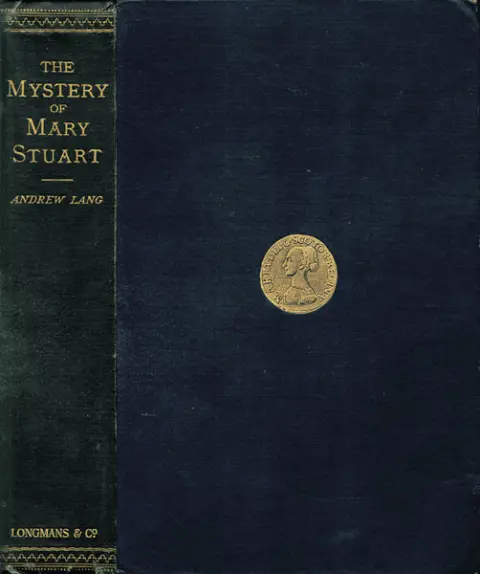
THE CLASSIC COLLECTION · 1901
"The Mystery of Mary Stuart" by Andrew Lang is a historical account written in the late 19th century. It explores the complexities surrounding the life and reign of Mary Stuart, Queen of Scots, particularly focusing on her trials, enemies, and the controversial "Casket Letters" which implicated her in various conspiracies. Lang aims to unravel the truth behind the historical events that led to her downfall, scrutinizing both her character and the motives of those around her. The opening of the text introduces the intricate web of personalities involved in the tragic story of Mary Stuart, providing a rich prelude to her struggles for power amidst political intrigue and personal betrayal. Lang illustrates the historical setting, emphasizing the socio-political climate of Scotland during Mary’s reign and the pivotal figures that shaped her narrative, including her husbands, noble adversaries, and loyal aides. The insight into her characterized traits, motives, and the events leading up to her troubles, including the infamous murder of her second husband, Darnley, sets a compelling stage for a deeper exploration of her life. The reader is invited to reflect on the multifaceted interactions of these historical figures and the enduring debate over Mary Stuart's guilt or innocence in the eyes of history.
Introduction adapted from the source catalogue; source summaries may be automatically generated.
Free to read · English · 123,454 words · No account needed
MAKE TIME FOR A GOOD BOOK
On by default. Untick to stop anonymous reading totals. Each page counts after 10 seconds in view. How this works.
Anonymous counting is on unless you have switched it off.
[186] Keith knew a copy in the Scots College at Paris, attested by Sir James Balfour as ‘the authentick copy of the principall band.’ This copy Sir James sent to Mary, in January, 1581, after Morton’s arrest. The names of laymen are Huntly, Argyll, Morton, Cassilis, Sutherland, Errol, Crawford, Caithness, Rothes, Boyd, Glamis, Ruthven, Semple, Herries, Ogilvy, Fleming. John Read’s memory must have been fallacious. There are eight prelates in Balfour’s band, including Archbishop Hamilton, the Bishop of Orkney, who joined in prosecuting Mary, and Lesley, Bishop of Ross (Keith, ii. 562-569). On the whole subject see a discussion by Mr. Bain and Mr. Hay Fleming, in The Genealogist, 1900-1901. Some copies are dated April 20. See Fraser, The Melvilles, i. 89.
[187] Spanish Calendar, i. 662.
[188] Cal. For. Eliz. viii. 213.
[189] Bain, ii. 323, 324.
[190] Melville, p. 177.
[191] Melville, p. 178.
[192] Drury to Cecil, Cal. For. Eliz. viii. 222.
[193] Cal. For. Eliz. viii. 223-224.
[194] May 6, Drury to Cecil.
[195] Drury to Cecil, May 6. Cal. For. Eliz. viii. 223, 224.
[196] Undated letter in Bannatyne, of 1570-1572.
[197] See Stewart’s Lost Chapter in the History of Queen Mary for the illegalities of the divorce. The best Catholic opinion is agreed on the subject.
[198] Melville, 182. Teulet, ii. 153, 170.
[199] Cal. For. Eliz. viii. 235.
[200] Drury to Cecil, Cal. For. Eliz. viii. 240.
[201] Dates from James Beaton’s letter of June 17. Laing, ii. 106, 115.
[202] Nau, 46-48.
[203] Laing, i. 113. June 17, 1567.
[204] Melville, p. 183.
[205] Teulet, ii. 179.
[206] Teulet, ii. 169, 170. June 17.
[207] Bannatyne’s Memorials, p. 126.
[208] Nau, 50-54.
[209] Laing, ii, 115.
[210] Bannatyne, Journal, 477, 482.
[211] Chalmers, Life of Mary, Queen of Scots (1818), ii. 486, 487, note. I do not understand Randolph to bring these charges merely on the ground of Mary’s word. That he only adds as corroboration, I think, of facts otherwise familiar to him.
[212] Mr. Froude has observed that the Lords, ‘uncertain what to do, sent one of their number in haste to Paris, to the Earl of Moray, to inform him of the discovery of the Letters, and to entreat him to return immediately.’ Mr. Hosack says that Mr. Froude owes this circumstance ‘entirely to his imagination.’ This is too severe. The Lords did not send ‘one of their number’ to Moray, but they sent letters which Robert Melville carried as far as London, and, seventeen days later, they did send a man who, if not ‘one of their number,’ was probably Moray’s agent, John Wood (Hosack, i. 352).
[213] Cal. For. Eliz. viii. p. 261.
[214] Spanish Calendar, i. 657.
[215] Cal. For. Eliz. ix. pp. 354, 355.
[216] Fénelon, Dépêches (1838), i. 19, 20.
[217] Fénelon, i. 22. To this point we shall return.
[218] La Mothe Fénelon, vii. 275-276.
[219] Cal. Span. i. 659.
[220] Bain, ii. 336.
[221] Bain, ii. 338.
[222] Bain, ii. 339.
[223] Bain, ii. 341.
[224] Melville to Cecil, July 1. Bain, ii. 343.
[225] Bain, ii. 350, 351.
[226] Bain, ii. 322, 360.
[227] Ibid. 358.
[228] Cal. For. Eliz. viii. 297, 298. Keith, ii. 694, 700.
Your reading position is saved on this browser. Take it to another device with a library code. Reading pages adapt to text, rather than matching a printed edition.
Andrew Lang
Andrew Lang
Andrew Lang

Andrew Lang
BEHIND THE BOOK
This eBook is for the use of anyone anywhere in the United States and most other parts of the world at no cost and with almost no restrictions whatsoever. You may copy it, give it away or re-use it under the terms of the Project Gutenberg License included with this eBook or online at www.gutenberg.org. If you are not located in the United States, you will have to check the laws of the country where you are located before using this eBook. Read the source licence.
The original source file, including credits and licence, is retained by this library. Request an original-format copy at no charge. Please include the book title and Project Gutenberg identifier #42910.
KEEP YOUR CURIOSITY GOING
Cécile Tormay

Moritz Busch
John L. Ransom
Frances Wright
Cécile Tormay

Mabel Potter Daggett