THE CLASSIC COLLECTION✦Letters on LiteratureCLASSIC FREE BOOKS
Letters on Literature
Andrew Lang
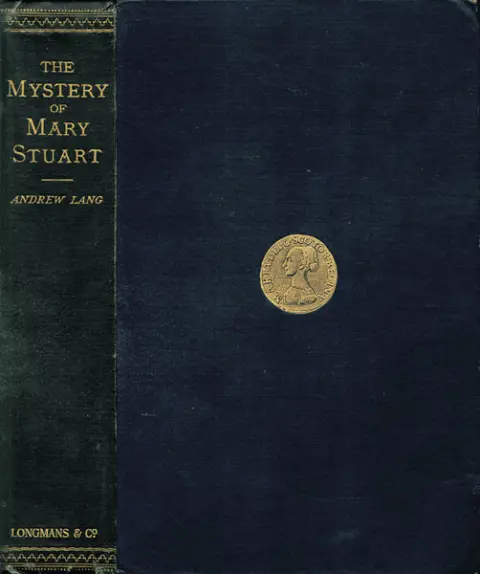
THE CLASSIC COLLECTION · 1901
"The Mystery of Mary Stuart" by Andrew Lang is a historical account written in the late 19th century. It explores the complexities surrounding the life and reign of Mary Stuart, Queen of Scots, particularly focusing on her trials, enemies, and the controversial "Casket Letters" which implicated her in various conspiracies. Lang aims to unravel the truth behind the historical events that led to her downfall, scrutinizing both her character and the motives of those around her. The opening of the text introduces the intricate web of personalities involved in the tragic story of Mary Stuart, providing a rich prelude to her struggles for power amidst political intrigue and personal betrayal. Lang illustrates the historical setting, emphasizing the socio-political climate of Scotland during Mary’s reign and the pivotal figures that shaped her narrative, including her husbands, noble adversaries, and loyal aides. The insight into her characterized traits, motives, and the events leading up to her troubles, including the infamous murder of her second husband, Darnley, sets a compelling stage for a deeper exploration of her life. The reader is invited to reflect on the multifaceted interactions of these historical figures and the enduring debate over Mary Stuart's guilt or innocence in the eyes of history.
Introduction adapted from the source catalogue; source summaries may be automatically generated.
Free to read · English · 123,454 words · No account needed
MAKE TIME FOR A GOOD BOOK
On by default. Untick to stop anonymous reading totals. Each page counts after 10 seconds in view. How this works.
Anonymous counting is on unless you have switched it off.
[270] As to ‘the subtlety of that practice,’ which puzzled Mr. Froude, Laing offers a highly ingenious conjecture. Mary was to do the Scots translations, procured for her by Lethington, into her own French, omitting the compromising portions. Lethington was next ‘privately to substitute or produce the Queen’s transcript instead of the originals, with the omission of those criminal passages, which might then be opposed as interpolated in the translation.’ But in that case ‘some variance of phrase’ by Mary could bring nothing ‘to light,’ for there would be no originals to compare. Lethington, while slipping Mary’s new transcript into the Casket (Laing, i. 145, 146), would, of course, remove the original letters in French, leaving the modified transcript in their place. ‘Variance of phrase’ between an original and a translation could prove nothing. Moreover, if Lethington had access to the French letters, it was not more dangerous for him to destroy them than to substitute a version which Moray, Morton, Buchanan, and all concerned could honestly swear to be false. The Bishop of Ross did, later, manage an ingenious piece of ‘palming’ letters on Cecil, but, in the story of ‘palming’ fresh transcripts into the Casket there is no consistency. Moreover Melville’s word is at least as good as Lesley’s, and Melville denies the truth of Lesley’s confession.
[271] British Museum Addit. MSS. 33531, fol. 119, et seq. The MS. is
much injured.
[272] Murdin, pp. 52, 58.
[273] Bain, ii. 524.
[274] Addit. MSS. ut supra.
[275] Goodall, ii. 111.
[276] Bain, ii. 518, 519.
[277] Ibid. 519.
[278] Bain, ii. 524.
[279] Lennox MSS.
[280] Bain, ii. 520, 521.
[281] Goodall, ii. 140.
[282] The production is asserted, Goodall, ii. 87.
[283] Calderwood, iii. 556.
[284] For the Ainslie Band, and the signatories, see Bain, ii. 322, and Hay Fleming, p. 446, note 60, for all the accounts.
[285] Hosack, i. 543.
[286] There are two sets of extracts (Goodall, ii. 148-153): one of them is in the Sadleyr Papers, edited by Sir Walter Scott, and in Haynes, p. 480. This is headed ‘A brief Note of the chief and principal points of the Queen of Scots Letters written to Bothwell for her consent and procurement of the murder of her husband, as far forth as we could by the reading gather.’ The other set is in Scots, ‘Notes drawin furth of the Quenis letters sent to the Erle Bothwell.’ If this were, as Miss Strickland supposed, an abstract made and shown in June-July, it would prove, of course, that Letter II. was then in its present shape, and would destroy my hypothesis. But Cecil endorses it. ‘sent October 29.’ I think it needless to discuss the notion that Lethington and his companions showed only the Scots texts, and vowed that they were in Mary’s handwriting! They could not conceivably go counter, first, to Moray’s statement (June 22, 1568) that the Scots versions were only translations. Nor could they, later, produce the Letters in French, and pretend that both they and the Scots texts were in Mary’s hand. Doubtless they showed the French (though we are not told that they did), but the English Commissioners, odd as it seems, preferred to send to Elizabeth extracts from the Scots.
Your reading position is saved on this browser. Take it to another device with a library code. Reading pages adapt to text, rather than matching a printed edition.
Andrew Lang
Andrew Lang
Andrew Lang

Andrew Lang
BEHIND THE BOOK
This eBook is for the use of anyone anywhere in the United States and most other parts of the world at no cost and with almost no restrictions whatsoever. You may copy it, give it away or re-use it under the terms of the Project Gutenberg License included with this eBook or online at www.gutenberg.org. If you are not located in the United States, you will have to check the laws of the country where you are located before using this eBook. Read the source licence.
The original source file, including credits and licence, is retained by this library. Request an original-format copy at no charge. Please include the book title and Project Gutenberg identifier #42910.
KEEP YOUR CURIOSITY GOING
Cécile Tormay

Moritz Busch
John L. Ransom
Frances Wright
Cécile Tormay

Mabel Potter Daggett