THE CLASSIC COLLECTION✦Letters on LiteratureCLASSIC FREE BOOKS
Letters on Literature
Andrew Lang
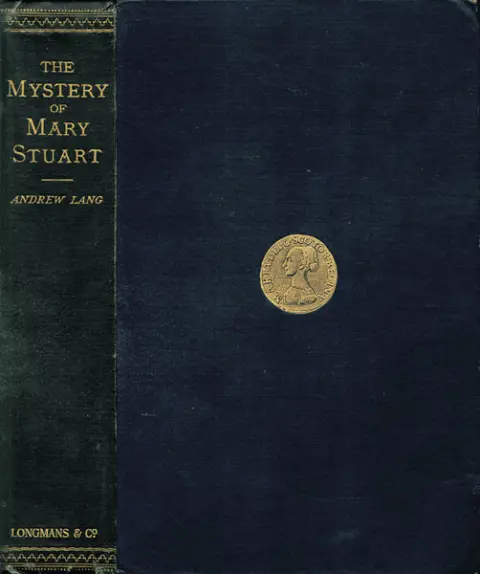
THE CLASSIC COLLECTION · 1901
"The Mystery of Mary Stuart" by Andrew Lang is a historical account written in the late 19th century. It explores the complexities surrounding the life and reign of Mary Stuart, Queen of Scots, particularly focusing on her trials, enemies, and the controversial "Casket Letters" which implicated her in various conspiracies. Lang aims to unravel the truth behind the historical events that led to her downfall, scrutinizing both her character and the motives of those around her. The opening of the text introduces the intricate web of personalities involved in the tragic story of Mary Stuart, providing a rich prelude to her struggles for power amidst political intrigue and personal betrayal. Lang illustrates the historical setting, emphasizing the socio-political climate of Scotland during Mary’s reign and the pivotal figures that shaped her narrative, including her husbands, noble adversaries, and loyal aides. The insight into her characterized traits, motives, and the events leading up to her troubles, including the infamous murder of her second husband, Darnley, sets a compelling stage for a deeper exploration of her life. The reader is invited to reflect on the multifaceted interactions of these historical figures and the enduring debate over Mary Stuart's guilt or innocence in the eyes of history.
Introduction adapted from the source catalogue; source summaries may be automatically generated.
Free to read · English · 123,454 words · No account needed
MAKE TIME FOR A GOOD BOOK
On by default. Untick to stop anonymous reading totals. Each page counts after 10 seconds in view. How this works.
Anonymous counting is on unless you have switched it off.
Lindsay, Sir David, pardoned, 112; the Lords send him to Loch Leven to induce Mary to abdicate, 204; challenges Herries to combat on Moray’s account, 285; appointed Lyon King at Arms, 376
Livingstone, Lord, member of council, 172; his knowledge of Mary’s amour with Bothwell, 253
Livingstone, Mary (Queen Mary’s attendant), 4;
wife of John Sempil, 356;
on ill terms with Mary, 356
Loch Leven, Mary imprisoned at, 192;
Lindsay sent to, to extort her abdication, 204;
Mary’s escape from, 242
Logan of Restalrig, treasure-finding, 375
Lords, Scots, of the Privy Council, banded against Mary, 185;
success at Carberry Hill, 195;
Casket Letters in their possession, 196, 201;
summons against Bothwell, 202;
their mixed character, motives, and statements, 203, 204;
demand of Mary her abdication, 204;
formulate charges against her, 205;
extort from her a consent to their proposals, 205;
vacillations with regard to the Letters, 206, 207;
obtain Mary’s signature to her abdication, 206;
forward copies of Casket Letters to Moray, 212;
publish their Declaration, 238;
accuse Mary of being privy to Darnley’s murder, 239;
on Mary’s handwriting, 241;
cause of their action against Mary, 355
Luzarche, M. Victor, his Coffret de Bijoux, 365
Maitland of Lethington. See Lethington
Mameret, Roche (Mary’s confessor), on the character of the Queen, 210
Mar, Earl of, entertains Mary at Alloa, 80;
deprived of the custody of Edinburgh Castle, 172;
confederated against Bothwell, 181
Marryat, Mr. Horace, and the body of Bothwell, 373
Mary of Gueldres, 45
Mary of Guise, Regent, 19;
her secretary Lethington, 23;
deserted by her nobles, 47;
Bothwell espouses her cause, 47
Mary Stuart Queen of Scotland: the Morton portrait, 3; periwig, 3 note; midnight revels and masculine energy, 4, 5, 8; her ‘four Maries,’ 4; costumes and jewels and their donors, 5; moods, spirit, and gratitude, 5, 6, 7; brow-beaten by Knox, 7; causes provoking hardness of heart, 8; centre of intrigue, 8, 9; Elizabeth’s rival, 9; disposition to yield to masterful men, 9; Bothwell’s defects instanced against her, 15; presented by Ruthven with a ring as an antidote to poison, 17, 36; pensions the assassin of Moray, 22; kindness to Lethington, 24; Morton her prosecutor, 31; virulence of the Preachers of Righteousness against her, 35, 36; ‘bewitched’ by Bothwell, 36; social condition of Scotland when she became queen, 43; informed by Arran of Bothwell’s plot to seize her, 51; political position during her first years in Scotland, 52, 53, 54; her compromise between Catholicism and Protestantism, 52; suspected by the Protestant party of favouring Bothwell, 53; intercedes with Elizabeth to allow Bothwell to go to France, 54; efforts to fix her as Elizabeth’s successor, 55; sees Darnley and admires him, 12, 55; action in Bothwell’s outlawry, 56; weds Darnley, 13, 57; summons Bothwell from France against her opponents, 57; estrangement from Darnley, 13, 57; political use made of her intimacy with Riccio, 58; twitted with favouring Riccio and Bothwell, 59; anger against Moray, 56; amour with Riccio not credible, 60, 63; removes Darnley from her Council, 60; illness, 61; letter to Pius V., 63, 64; arranges Bothwell’s marriage with Lady Jane Gordon, 64; insists on free Mass for all men, 65; schemes for killing Riccio in her presence, 68; rescued by Bothwell, Huntly, and Atholl after Riccio’s murder, 69; at Dunbar, 69, 70, 71; seeks to quiet the country, 71; growing hatred of Darnley, 71; threatens that a fatter than Riccio should soon lie anear him, 72; pardon of the rebel Lords demanded of her, 72; befriends Moray, 73; represented by Lennox as trying to induce Darnley to make love to Moray’s wife, 74; her bequests to Darnley, 75; allows Moray and Argyll to be at the Castle during her accouchement, 75; gives birth to James VI., 75; protects Moray from Darnley and Bothwell, 77; Darnley’s jealousy of her favour to Moray, 77; increasing dislike to Darnley, 78, 80; passion for Bothwell, 18, 26, 79; conduct at Alloa and Stirling, 80; gift of a bed to Darnley, 81; reconciles Lethington and Bothwell, 81; Buchanan’s account of her amour with Bothwell, 82, 83; this legend supported by Sonnet IX. and Dalgleish’s confession, 84; strained relations with Darnley, 84, 85; in Jedburgh at a Border session, 93; visits wounded Bothwell at Hermitage Castle, 93, 94; illness at Jedburgh, 94; returns to Craigmillar Castle, 95; letter from Darnley, 95; divorce proposed, 96; Buchanan insinuates her desire to involve Moray in the Darnley murder, 97; Lennox’s statement that she would have Darnley in ward after James’s baptism, 100, 102; arrests Hiegait, Walker, Laird of Minto, Cauldwell, 103; festivities at the baptism of her child at Stirling, 105; baptizes him by the Catholic rite, 105; Bedford’s advice, 106; treatment of Darnley at Stirling, 107; anxiety concerning Darnley’s projects, 108, 109; warned by Beaton and the Spanish ambassador of Darnley’s intention to kidnap James VI., 109; causes Hiegait and Walker to be questioned before the Council, 110; distress of mind, 111; at Drummond Castle, Tullibardine, Callendar, and Holyrood, 112; letter to Beaton, 110, 114; offers to visit sick Darnley at Glasgow, 112; Crawford’s account of her visit to Darnley, 113; induces Darnley to return with her to Edinburgh, 113, 119; brings him to Kirk o’ Field, 115; aware of the plot against Darnley, 116, 117; refuses a written warrant asked for by the conspirators, 118; hypotheses for her conduct, 120, 121; her shift of beds at Kirk o’ Field, 134, 162; story drawn from a Casket Letter, 135, 136, 142; visits Darnley on the eve of the explosion, 135; at the marriage of her servant Sebastian that same night, 135, 136, 173; curious anecdote respecting her, 137; at supper with the Bishop of Argyle on the night of the murder, 161; Paris’s evidence as to familiarities between her and Bothwell, 162; Bothwell asks for the key of her room at Kirk o’ Field, 163, 164, 165; said to have endeavoured to incite her brother Lord Robert Stuart against Darnley, 135, 165, 166, 323-328, 353; dying confessions regarding her participation, 167, 169, 170; theory of her accusers, 170; conduct after Darnley’s murder, 171; her letters from and to Beaton, 173; inference which her letters were meant to suggest, 174; makes no effort to avenge Darnley, 175, 176; seized by Bothwell and conveyed to Dunbar, 179; evidence of the Casket Letters as to her collusion, 179; Lethington’s attitude towards her, 182; creates Bothwell Duke of Orkney and is married to him, 183; her distrust of Huntly, 185; appeals to the loyalty of her subjects, 185; surrenders to Kirkcaldy at Carberry Hill, 186; parting with Bothwell, 187; conditions of her surrender, 187; interview with Lethington, 188, 189; complains of being parted from Bothwell, 188, 194; denounces Lethington and the members of the Darnley murder band, 189; incarcerated in Loch Leven Castle, 192; reported to have prematurely given birth to twins, 194; motives of the Lords against her, 194; the compromising Casket Letters, 195, 196, 197, 198, 199, 200, 201, 202, 203, 205, 206, 207 (see Casket Letters); communication from Elizabeth respecting Melville, 202; her abdication demanded by the Council, and charges formulated against her, 204, 205; signs the deeds of her abdication, 207; her confessor’s opinion of her, 210; the Glasgow Letter, 135, 162, 168, 211, 212, 213, 214, 225, 229, 255; complains to Elizabeth of Lady Lennox, 225; the Glasgow Letter as rendered in the Lennox Papers, 234, 235; her love for Bothwell as presented in the Casket Sonnets, 235; the Glasgow Letter discredited, 236; the Lords’ specific charge against her, 239; demands to be heard in the Parliament at Edinburgh, 240; escapes from Loch Leven, 242; claims the right of confronting her accusers, 243; her line of defence, 243, 245; on the handwriting of her accusers, 244; letter to Lesley, 245; Lesley’s details of an interview with her at Bolton, 248; copies of the letters forwarded to her by Lethington, 248, 249; theory of her translation of Scots copies into French, 249 note; arrival of her commissioners at York, 250; assents to Moray’s compromise, 251; attitude at York, 257; consents to the removal of inquiry from York to London, 260; terms of her compromise, 260, 262, 265; change in her plan of defence, 262; plea for a hearing before Elizabeth, 267, 268; injury done to her cause by friends’ renewed efforts for a compromise, 269, 270; withdrawal of her commissioners from Westminster, 275; refuses to acknowledge Elizabeth as a judge, 282; her letter from Bolton, 283; asks to see the copies and originals of the Casket Letters, 284; makes their delivery a condition of her production of charges and proofs, 286, 287; causes of her detestation of Lethington, 288; her submissive attitude to both Bothwell and Norfolk, 315; suggestion of marriage with Norfolk, 155; distrusts Huntly, 330; trusts him, 331; her excuses for marrying Bothwell, addressed to the French Court, 331, 332; sends Bothwell a symbolic mourning ring, 337; letter to Norfolk from Coventry, 337 and note; contract of marriage with Bothwell, 338; receives betrothal ring from Bothwell(?), 340; hypothesis of her contest in literary excellence with Lady Bothwell, 350; tone of her letters to Norfolk, 351; suspicions of Lethington in her instructions to her commissioners, 356; coincidence between Letter VII. and her instructions to the Bishop of Dunblane, 331, 359, 360; facsimiles of her own and imitated handwriting, 363, 364; date of her visit to Glasgow, 379, 380; charges Balfour, Morton and Lethington with complicity in Darnley’s murder, 189, 382
Your reading position is saved on this browser. Take it to another device with a library code. Reading pages adapt to text, rather than matching a printed edition.
Andrew Lang
Andrew Lang
Andrew Lang

Andrew Lang
BEHIND THE BOOK
This eBook is for the use of anyone anywhere in the United States and most other parts of the world at no cost and with almost no restrictions whatsoever. You may copy it, give it away or re-use it under the terms of the Project Gutenberg License included with this eBook or online at www.gutenberg.org. If you are not located in the United States, you will have to check the laws of the country where you are located before using this eBook. Read the source licence.
The original source file, including credits and licence, is retained by this library. Request an original-format copy at no charge. Please include the book title and Project Gutenberg identifier #42910.
KEEP YOUR CURIOSITY GOING
Cécile Tormay

Moritz Busch
John L. Ransom
Frances Wright
Cécile Tormay

Mabel Potter Daggett