THE CLASSIC COLLECTION✦Letters on LiteratureCLASSIC FREE BOOKS
Letters on Literature
Andrew Lang
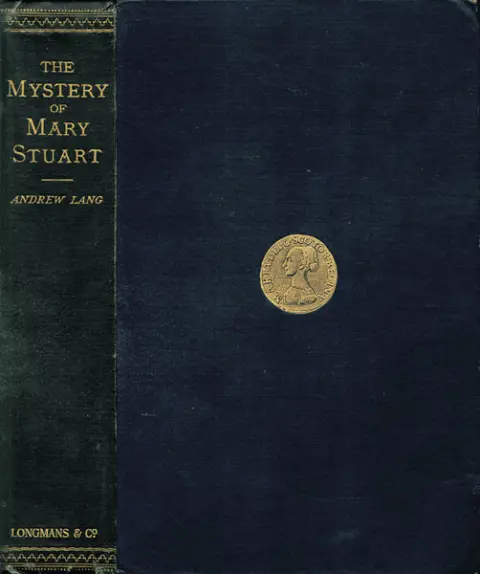
THE CLASSIC COLLECTION · 1901
"The Mystery of Mary Stuart" by Andrew Lang is a historical account written in the late 19th century. It explores the complexities surrounding the life and reign of Mary Stuart, Queen of Scots, particularly focusing on her trials, enemies, and the controversial "Casket Letters" which implicated her in various conspiracies. Lang aims to unravel the truth behind the historical events that led to her downfall, scrutinizing both her character and the motives of those around her. The opening of the text introduces the intricate web of personalities involved in the tragic story of Mary Stuart, providing a rich prelude to her struggles for power amidst political intrigue and personal betrayal. Lang illustrates the historical setting, emphasizing the socio-political climate of Scotland during Mary’s reign and the pivotal figures that shaped her narrative, including her husbands, noble adversaries, and loyal aides. The insight into her characterized traits, motives, and the events leading up to her troubles, including the infamous murder of her second husband, Darnley, sets a compelling stage for a deeper exploration of her life. The reader is invited to reflect on the multifaceted interactions of these historical figures and the enduring debate over Mary Stuart's guilt or innocence in the eyes of history.
Introduction adapted from the source catalogue; source summaries may be automatically generated.
Free to read · English · 123,454 words · No account needed
MAKE TIME FOR A GOOD BOOK
On by default. Untick to stop anonymous reading totals. Each page counts after 10 seconds in view. How this works.
Anonymous counting is on unless you have switched it off.
Lennox, Lady, Mary complains to Elizabeth of her, 225
Lesley (Bishop of Ross), considers Bothwell a handsome man, 18; wishes Mary to put Moray in ward, 75; Huntly’s statement to, respecting Mary’s counter accusations, 96; member of council, 172, 178; asserts the Letters were not signed, 198; on unsigned Letters attributed to Mary, 212; one of Mary’s commissioners at York, 246; share in the schemes of the Duke of Norfolk, 246; report of an interview with Mary at Bolton, 247; confession contradicted by Melville’s, 250; conference with Lethington about the Letters, 258; pleads for Mary to be heard in person before Elizabeth, 267; protests against Moray’s production of the Letters, 270; Elizabeth’s three choices to him, 283; charge against Moray and the Lords, 285; curious letter to John Fitzwilliam, 286 note; on counterfeiters of Mary’s handwriting, 356
Lethington, Sir Richard (father of Maitland of Lethington), 23
Lethington (William Maitland, the younger), early life and culture, 23; arguments with Knox, 23, 24; Secretary to Mary of Guise, 23; desires the union of the crowns of England and Scotland, 23; friendly advances to Mary before her arrival in Scotland, 24; character, 24; allied by marriage with the Earl of Atholl, 24; love affair with Mary Fleming, 24; in every scheme against Darnley, 25; dislikes and is hated by Bothwell, 25; joins Mary’s enemies, 25; nicknamed Michael Wylie (Machiavelli), 26; political principles, 52; counsels drastic measures against Riccio, 66; reconciled by Mary to Bothwell, 81; concerned in the murder ‘band’ against Darnley, 88, 90; his method of dealing with Darnley, which Parliament would support, 98, 99, 103; favours a project of marriage between Norfolk and Mary, 155; charged with complicity in the Darnley murder, 155, 156, 159; refuses to aid Moray in betraying Norfolk, 156; in attendance on Mary, 179; prisoner at Dunbar, 179, 180, 181; declares that Mary means to marry Bothwell, 181; escapes from Bothwell, 182; question of friendship for or enmity to Mary, 182; flies to confederated Lords, 185; persuades Sir J. Balfour to surrender Edinburgh Castle, 186; interview with Mary, 188, 189; reasons for his treachery to Mary, 190, 191, 192; statement to Throckmorton respecting his conduct towards her, 204; Randolph accuses him of advising Mary’s death, 204; statement to Throckmorton about the letters, 205; Mary’s documentary charge against him, 243, 244; conduct at the York Conference, 246, 252; accused of stealing the Casket Letters, and having them copied by his wife, 248; explains the reason for Mary’s abduction, 255; his privy disclosure of the Letters, 257; shakes Norfolk’s belief in same, 258; discriminating attitude between private and public exhibition of Letters, 287; writes letter to be presented to the French Court concerning Mary’s marriage with Bothwell, 331; directs the scheme of garbling the Casket Letters, 353; (?) despatches Melville to Cecil on the day of the finding of the Casket Letters, 355; privately hints that he had counterfeited Mary’s handwriting, 357, 358; case against him, 358, 359; ‘Instructions’ drawn by him, 360; Randolph hints at his tampering with the Letters, 361; Herr Bresslau’s inferences of tampering, 387
Liddesdale reivers, the, 180
Your reading position is saved on this browser. Take it to another device with a library code. Reading pages adapt to text, rather than matching a printed edition.
Andrew Lang
Andrew Lang
Andrew Lang

Andrew Lang
BEHIND THE BOOK
This eBook is for the use of anyone anywhere in the United States and most other parts of the world at no cost and with almost no restrictions whatsoever. You may copy it, give it away or re-use it under the terms of the Project Gutenberg License included with this eBook or online at www.gutenberg.org. If you are not located in the United States, you will have to check the laws of the country where you are located before using this eBook. Read the source licence.
The original source file, including credits and licence, is retained by this library. Request an original-format copy at no charge. Please include the book title and Project Gutenberg identifier #42910.
KEEP YOUR CURIOSITY GOING
Cécile Tormay

Moritz Busch
John L. Ransom
Frances Wright
Cécile Tormay

Mabel Potter Daggett