THE CLASSIC COLLECTION✦Letters on LiteratureCLASSIC FREE BOOKS
Letters on Literature
Andrew Lang
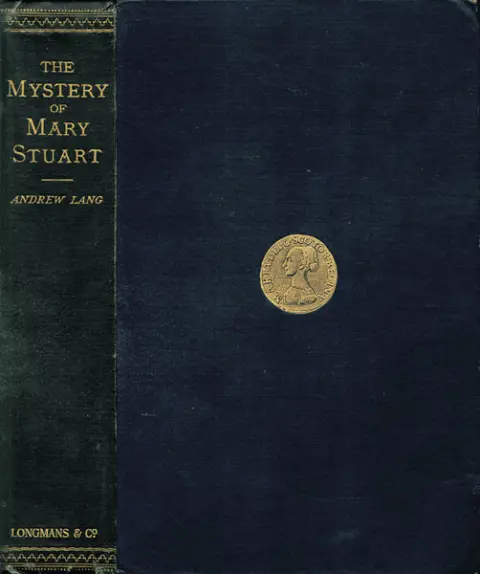
THE CLASSIC COLLECTION · 1901
"The Mystery of Mary Stuart" by Andrew Lang is a historical account written in the late 19th century. It explores the complexities surrounding the life and reign of Mary Stuart, Queen of Scots, particularly focusing on her trials, enemies, and the controversial "Casket Letters" which implicated her in various conspiracies. Lang aims to unravel the truth behind the historical events that led to her downfall, scrutinizing both her character and the motives of those around her. The opening of the text introduces the intricate web of personalities involved in the tragic story of Mary Stuart, providing a rich prelude to her struggles for power amidst political intrigue and personal betrayal. Lang illustrates the historical setting, emphasizing the socio-political climate of Scotland during Mary’s reign and the pivotal figures that shaped her narrative, including her husbands, noble adversaries, and loyal aides. The insight into her characterized traits, motives, and the events leading up to her troubles, including the infamous murder of her second husband, Darnley, sets a compelling stage for a deeper exploration of her life. The reader is invited to reflect on the multifaceted interactions of these historical figures and the enduring debate over Mary Stuart's guilt or innocence in the eyes of history.
Introduction adapted from the source catalogue; source summaries may be automatically generated.
Free to read · English · 123,454 words · No account needed
MAKE TIME FOR A GOOD BOOK
On by default. Untick to stop anonymous reading totals. Each page counts after 10 seconds in view. How this works.
Anonymous counting is on unless you have switched it off.
Meggatdale, Mary and Darnley at, 81
Melville, Robert, against Mary, 185; sent to Elizabeth with news of the discovery of the Casket Letters, 196, 201, 320, 355; acting for the Lords, 202; denies his visit to Mary at Bolton before going to commissioners at York, 249, 250; Lesley’s confession contravened by his, 250; Moray sends him to Bolton to compromise with Mary, 251; negotiates with Mary on a compromise, 259; his statement, 261; sent by Lethington on ‘sudden despatch’ to Cecil, 354, 355; friendly efforts in Mary’s behalf, 355; suspects Kirkcaldy of Grange of counterfeiting Moray’s handwriting, 361
Melville, Sir James, on George Buchanan’s veracity as a historian, 34; dissuades Mary from putting Moray in ward, 75; on Darnley’s murder, 140; on Bothwell’s behaviour in the Queen’s chamber, 181; at the York conference, 259
Mertine, Barbara, encounters the murderers of Darnley, 147
Middlemore, Mary’s statement to him regarding her accusers, 245
Minto, Laird of, arrested by Mary, 103;
working in Lennox’s interests, 111;
cited, 150
Moray, Regent (natural son of James V.), an enigma, 19; Protestant and warrior, 19; acquisitiveness, 19, 20; secures the Buchan estates in spite of the legal rights of Christian Stewart, 20; marries Agnes Keith, 20; ambition, 20; treachery and caution, 21, 22; alibis, 21; as Regent, 22; Mr. Froude’s estimate of him, 22; his secretary, John Wood, 33; believes that Ruthven gave Mary a ring with magical properties, 36; urged by the preachers to burn witches, 36; political bias and theological tenets, 52; tells Mary that either he or Bothwell must quit Scotland, 56; his rising to prevent Mary marrying Darnley, 59; seeks for the restoration of Morton and Ruthven, 72; in favour with Mary, 73, 76, 121; permitted by Mary to reside in the Castle during her accouchement, 75; said to be banded against Darnley, 89, 90, 91, 92, 98; denies that any unlawful ends were mooted at Craigmillar, 98; winks at the conspiracy against Darnley, 116, 122; account of the numbers engaged in Darnley’s murder, 141; laxity in their prosecution, 144, 145; gives records of examinations to English commissioners, 145; reasons for not summoning Paris as witness, 154, 155; opposes marriage between Mary and Norfolk, 155; takes the evidence of Paris, 155; delays in forwarding it to Cecil, 156; seeks to betray Norfolk, 156; story of his presence at a wrangle between Darnley and Lord Robert Stuart, 166, 323, 327; informed of the Casket Letters, 196 note; his sources of information as to Mary’s correspondence, 208; from friend becomes enemy of Mary, 209, 210; reports a guilty letter from Mary to Bothwell, 211, 213; his additions to and differences from the Glasgow letter, 216 et seq.; common source of his and Lennox’s reports, 221; ‘not capable’ of employing a forged document, 234; ‘most loth’ to accuse Mary, 242; Scots translations and French originals of Casket Letters, 242; treats for a compromise with Mary at York, 251; seeks to know the powers of the English commissioners at York, 253; exhibits ‘privately’ to them the Casket Letters and other papers, 254; confers with Norfolk at York, 259; puts in his proofs at Westminster, 266, 270, 271, 272, 273; complains of being slandered by Mary’s commissioners, 285; Mary’s joy at the news of his murder, 22
Your reading position is saved on this browser. Take it to another device with a library code. Reading pages adapt to text, rather than matching a printed edition.
Andrew Lang
Andrew Lang
Andrew Lang

Andrew Lang
BEHIND THE BOOK
This eBook is for the use of anyone anywhere in the United States and most other parts of the world at no cost and with almost no restrictions whatsoever. You may copy it, give it away or re-use it under the terms of the Project Gutenberg License included with this eBook or online at www.gutenberg.org. If you are not located in the United States, you will have to check the laws of the country where you are located before using this eBook. Read the source licence.
The original source file, including credits and licence, is retained by this library. Request an original-format copy at no charge. Please include the book title and Project Gutenberg identifier #42910.
KEEP YOUR CURIOSITY GOING
Cécile Tormay

Moritz Busch
John L. Ransom
Frances Wright
Cécile Tormay

Mabel Potter Daggett