THE CLASSIC COLLECTION✦Letters on LiteratureCLASSIC FREE BOOKS
Letters on Literature
Andrew Lang
THE CLASSIC COLLECTION · 1901
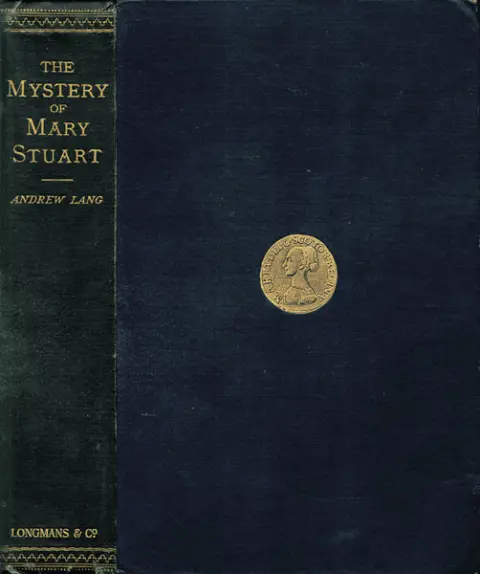
"The Mystery of Mary Stuart" by Andrew Lang is a historical account written in the late 19th century. It explores the complexities surrounding the life and reign of Mary Stuart, Queen of Scots, particularly focusing on her trials, enemies, and the controversial "Casket Letters" which implicated her in various conspiracies. Lang aims to unravel the truth behind the historical events that led to her downfall, scrutinizing both her character and the motives of those around her. The opening of the text introduces the intricate web of personalities involved in the tragic story of Mary Stuart, providing a rich prelude to her struggles for power amidst political intrigue and personal betrayal. Lang illustrates the historical setting, emphasizing the socio-political climate of Scotland during Mary’s reign and the pivotal figures that shaped her narrative, including her husbands, noble adversaries, and loyal aides. The insight into her characterized traits, motives, and the events leading up to her troubles, including the infamous murder of her second husband, Darnley, sets a compelling stage for a deeper exploration of her life. The reader is invited to reflect on the multifaceted interactions of these historical figures and the enduring debate over Mary Stuart's guilt or innocence in the eyes of history.
Introduction adapted from the source catalogue; source summaries may be automatically generated.
Free to read · English · 123,454 words · No account needed
MAKE TIME FOR A GOOD BOOK
On by default. Untick to stop anonymous reading totals. Each page counts after 10 seconds in view. How this works.
Anonymous counting is on unless you have switched it off.
Knollys, his estimate of the character of Mary, 3;
Mary’s accusation against him, 245;
on Mary at the York Conference, 257
Knox, John, denounces the fripperies of women, 4; in argument on the Mass with Maitland of Lethington, 23, 24; credited with winning a bride by witchcraft, 37; patches up a reconciliation between Bothwell and Arran, 50; Arran reveals to him Bothwell’s plot to seize Mary, 51; on Bothwell’s escape from Edinburgh Castle, 53; on Darnley’s sporting tastes, 60; his drastic advice in the case of Mary, 66; witch story concerning Lady Reres related to him, 82
Koot Hoomi’s (Blavatsky case) correspondence, cited, 278, 279
La Forest (French ambassador), reports the existence of letters proving Mary’s complicity in the death of Darnley, 197; his copies and the published Letters, 200
La Mothe Fénelon (French ambassador), on the Lords’ possession of Letters written and signed by Mary, 198, 199; on their publication in ‘Detection,’ 200; pleads for Mary to be allowed to see originals or copies of Casket Letters, 284; opinion of the Casket Sonnets, 344, 345
Laing, Malcolm (historian), on Letter III., 325, 326;
on the Hamilton Casket, 367
Lennox, Earl of (Darnley’s father), 10; forfeited estates restored, 55; complains of Mary’s intimacy with Riccio, 58; a competitor for the Scottish crown, 62; wishes to see Darnley at Peebles, 62, 63; schemes to get the crown for Darnley, 66; accuses Mary of threatening to avenge Riccio with her own hands, 72; avers that improper relations began between Mary and Bothwell soon after the birth of James VI., 79; on Mary’s behaviour at Stirling, 80; warned of a plot to put Darnley in ward, 100; ‘Discourse’ prepared by him for York conference, 101; ‘Brief Discourse’ put in at Westminster, 102; on a second conference at Craigmillar, 103; not present at James VI.’s baptism, 105; sends men to guard Darnley at Stirling, 107, 110, 111; Minto, Walker, and Hiegait working in his interests, 111; denies that either Darnley or himself suspected foul play from Mary, 113; Darnley’s letter to him respecting Mary, 133; urges the collection of the sayings and reports of all Mary’s servants, 138; account of his son’s murder, 141; asks for the deposition of the priest of Paisley, 150; states that Mary caused a hagbut to be fired as a signal for the Kirk o’ Field explosion, 173; describes Mary’s conduct at Seton, 175; asks for the arrest of Bothwell, 176; flight after his son’s death, 180; his account of the Glasgow Letter tallies with Moray’s, 214, 215; his additions to and differences from that Letter, 216 et seq.; marginal note to Sonnet IV., 217, 218; common source of his and Moray’s reports, 221; proposed co-regency, 223; collects extraneous evidence regarding Mary, 224, 226; avers that Wood knows the murderers of Darnley, 227; knowledge of the contents of the Casket Letters, 227, 228; his indictments against Mary, 222, 223, 229, 230; cites Letter II., 231; activity in getting up evidence against Mary before the York Commissioners, 253; attitude at Westminster, 266; on Crawford’s talk with Mary, 311, 312 note; seeks to prove that the Kirk o’ Field plan was arranged between Bothwell and Mary before Mary met Darnley at Glasgow, 316; Papers, quoted, 58, 59, 74
Your reading position is saved on this browser. Take it to another device with a library code. Reading pages adapt to text, rather than matching a printed edition.
Andrew Lang
Andrew Lang
Andrew Lang

Andrew Lang
BEHIND THE BOOK
This eBook is for the use of anyone anywhere in the United States and most other parts of the world at no cost and with almost no restrictions whatsoever. You may copy it, give it away or re-use it under the terms of the Project Gutenberg License included with this eBook or online at www.gutenberg.org. If you are not located in the United States, you will have to check the laws of the country where you are located before using this eBook. Read the source licence.
The original source file, including credits and licence, is retained by this library. Request an original-format copy at no charge. Please include the book title and Project Gutenberg identifier #42910.
KEEP YOUR CURIOSITY GOING
Cécile Tormay

Moritz Busch
John L. Ransom
Frances Wright
Cécile Tormay

Mabel Potter Daggett