THE CLASSIC COLLECTION✦Letters on LiteratureCLASSIC FREE BOOKS
Letters on Literature
Andrew Lang
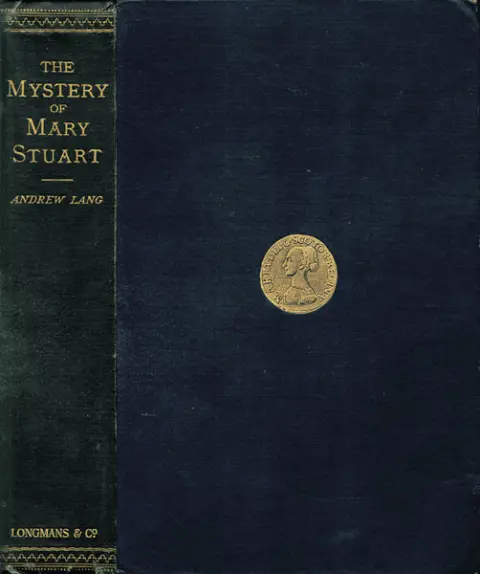
THE CLASSIC COLLECTION · 1901
"The Mystery of Mary Stuart" by Andrew Lang is a historical account written in the late 19th century. It explores the complexities surrounding the life and reign of Mary Stuart, Queen of Scots, particularly focusing on her trials, enemies, and the controversial "Casket Letters" which implicated her in various conspiracies. Lang aims to unravel the truth behind the historical events that led to her downfall, scrutinizing both her character and the motives of those around her. The opening of the text introduces the intricate web of personalities involved in the tragic story of Mary Stuart, providing a rich prelude to her struggles for power amidst political intrigue and personal betrayal. Lang illustrates the historical setting, emphasizing the socio-political climate of Scotland during Mary’s reign and the pivotal figures that shaped her narrative, including her husbands, noble adversaries, and loyal aides. The insight into her characterized traits, motives, and the events leading up to her troubles, including the infamous murder of her second husband, Darnley, sets a compelling stage for a deeper exploration of her life. The reader is invited to reflect on the multifaceted interactions of these historical figures and the enduring debate over Mary Stuart's guilt or innocence in the eyes of history.
Introduction adapted from the source catalogue; source summaries may be automatically generated.
Free to read · English · 123,454 words · No account needed
MAKE TIME FOR A GOOD BOOK
On by default. Untick to stop anonymous reading totals. Each page counts after 10 seconds in view. How this works.
Anonymous counting is on unless you have switched it off.
Hamilton Casket, the, doubts as to its being the true Casket, 369
Hamilton, present Duke of, the Casket in his possession, 367, 368
Hamilton House, 115, 116, 131, 149
Hamilton, John, singular death of, 37
Hamilton, Lord Claude (Gloade), 149
Hampton Court, 264, 279
Handwriting, problems of, 363, 364
Hay, the Younger, of Tala, his complicity in Darnley’s murder, 35, 90,
143, 144, 145, 146, 157, 160, 165, 169, 328;
confession, 278;
execution, 139, 280
Henderson, quoted, on Letter II. and Crawford’s Deposition, 310, 312
note;
his text of the Casket Letters, 387
Henri II. of France, 5
Hepburn of Riccartoun (Bothwell’s agent), 56, 57
Hepburn, Patrick (Bishop of Moray), Bothwell’s great-uncle, 14
Hepburn, Patrick (parson of Kynmoir), evidence to a plot to kill Moray, 375, 376, 377, 378
Hepburns, the, character of, 45, 46
Hermitage Castle, Bothwell visited by Mary at, 39, 54, 93, 94
Herries, Lord, on Mary’s abduction, 241;
at the York Conference, 251;
at Westminster, 267;
challenged to battle by Lindsay, 285
Hiegait, William (Town Clerk of Glasgow), arrested by Mary, 103; his tale of Darnley’s scheme to kidnap James VI., 108, 109, 110; denies same before the Council, 110, 111; cited, 301
Holy Island, Bothwell prisoner at, 54
Holyrood, fable of secret passage between it and Kirk o’ Field, 115, 116;
its environs, 124;
Sebastian’s marriage, 136
Hosack, Mr., on the authenticity of Letter II., 232;
on Glasgow Letter, 296
Hubert, Nicholas, his dying confession, 166
Hume, on Hubert’s confession, 166
Hume, Major Martin, on the Casket Letters, 197
Hunter, Michael, slain by the Black Laird of Ormistoun, 35, 36
Huntly, Earl of (Cock of the North), Mary’s chief Catholic supporter, 52; dies in battle against her, 53
Huntly, Earl of (son of the Cock of the North; Bothwell’s
brother-in-law), influences his sister Lady Jane in her marriage
to and divorce from Bothwell, 53;
rescues Mary from prison after Riccio’s murder, 69;
complicity in Darnley’s murder, 90, 167, 168;
at Craigmillar, 98;
evidence against him suppressed, 143;
on the Council, 172;
Mary distrusts him, 330;
trusts him, 331;
manner of his death, 37, 38
James V. of Scotland, 18
James VI. of Scotland (I. of England), birth of, 59, 75;
baptism, 105;
his godmother Queen Elizabeth’s gift, 105;
crowned, 222
James Stuart (Mary’s great-great-grandson), 3
Jedburgh, Mary at, 93, 94, 95, 96
Jhone a Forret (? John Wood), supposed bearer of copies of Casket Letters to Moray and Cecil, 209, 212, 219, 226, 233, 321 note
Joachim (a servant of Mary), cited, 298, 299
Jordan, Sandy (Earl of Morton’s servant), bearer of the Casket to
Gowrie, 366
Jusserand, M., on the corpse of Bothwell, 14 note; on Bothwell’s remains and burial place, 371 et seq.
Keith, Agnes (daughter of the Earl Marischal), married to Moray, 20
Ker, Andrew, of Faldonside (one of Riccio’s murderers), 101, 152 note
Killigrew, his report of the Darnley case, 171
Kirk o’ Field (St. Mary in the Fields), 41, 124;
house prepared for Darnley, 115, 140, 141, 142;
blown up, 140;
site, situation, and environs, 123-132;
map of 1647 and chart of 1567, 127, 128, 129, 130, 131;
interior of the house, 132, 133;
cited in Letter II., 316, 317
Kirkcaldy of Grange, 34;
action against Mary, 184, 185;
Mary’s surrender to him at Carberry Hill, 187;
letter to Cecil, 359
Your reading position is saved on this browser. Take it to another device with a library code. Reading pages adapt to text, rather than matching a printed edition.
Andrew Lang
Andrew Lang
Andrew Lang

Andrew Lang
BEHIND THE BOOK
This eBook is for the use of anyone anywhere in the United States and most other parts of the world at no cost and with almost no restrictions whatsoever. You may copy it, give it away or re-use it under the terms of the Project Gutenberg License included with this eBook or online at www.gutenberg.org. If you are not located in the United States, you will have to check the laws of the country where you are located before using this eBook. Read the source licence.
The original source file, including credits and licence, is retained by this library. Request an original-format copy at no charge. Please include the book title and Project Gutenberg identifier #42910.
KEEP YOUR CURIOSITY GOING
Cécile Tormay

Moritz Busch
John L. Ransom
Frances Wright
Cécile Tormay

Mabel Potter Daggett