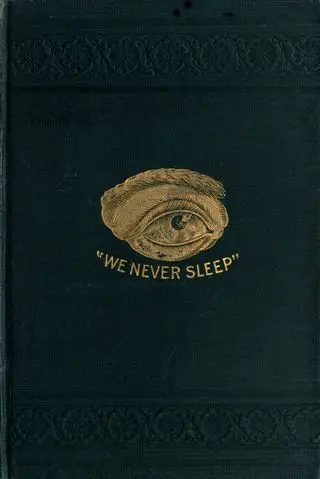
Mississippi Outlaws and the Detectives Don Pedro and the Detectives; Poisoner and the Detectives
Allan Pinkerton
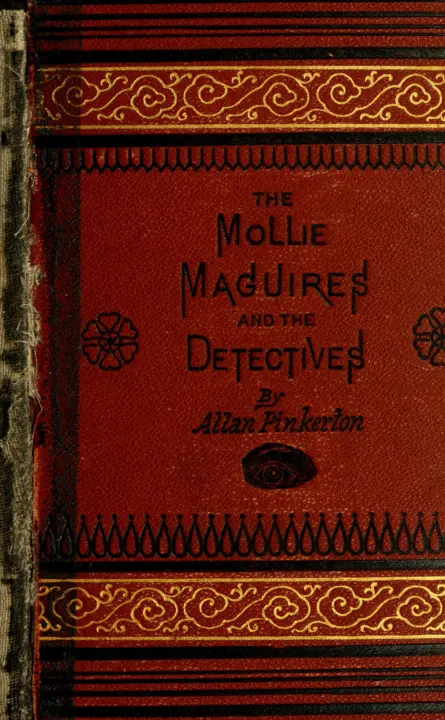
THE CLASSIC COLLECTION · 1877
"The Molly Maguires and the detectives" by Allan Pinkerton is a nonfiction investigative account written in the late 19th century. It chronicles Pinkerton’s covert campaign against the secretive Molly Maguires in Pennsylvania’s anthracite coal region, undertaken at the request of railroad executive Franklin B. Gowen, and follows undercover operative James McParlan (alias James McKenna) as he works to infiltrate the organization amid labor strife, violence, and political intrigue. The opening of the book sets Pinkerton’s pledge to tell a factual, unvarnished story of the coal fields and a violent secret society that, he argues, has evaded justice. Gowen solicits Pinkerton to penetrate the Mollies, whose alibis, intimidation, and sway over local politics have thwarted prosecutions, and Pinkerton accepts with strict conditions of secrecy and a plan to embed an Irish Catholic operative. Pinkerton then selects James McParlan, sketches his background and disguise, and launches him under the alias “James McKenna.” McKenna begins by tramping through towns like Port Clinton, Schuylkillhaven, Tremont, Tower City, and Minersville, posing as a job-seeking laborer while building contacts: he’s refused lodging by a drunken landlord, sheltered by an Irish family (with a comic drunk blocking a door), and quietly probes opinions by discussing scathing newspaper pieces on the Mollies with men like the switchman Fitzgibbons. He cultivates leads through saloon talk (including a former member’s hints that Mahanoy City is fertile ground), descends into a working mine to learn the setting, endures a snowbound stage ride and shabby lodging, and finally settles into a modest boarding house, using evenings in bars and card rooms to deepen his cover and map the society’s haunts.
Introduction adapted from the source catalogue; source summaries may be automatically generated.
Free to read · English · 181,288 words · No account needed
MAKE TIME FOR A GOOD BOOK
On by default. Untick to stop anonymous reading totals. Each page counts after 10 seconds in view. How this works.
Anonymous counting is on unless you have switched it off.
He met Pat Hester, Peter McHugh and Ned Skivington at Big Mine Run, in Barney Dolan’s place, on the sixteenth of October, 1868, the day preceding that of the murder. Hester was on his way, he said, down the mountain with Skivington, but had missed the train and returned to Dolan’s, where all had something to drink. Afterward they walked to Ashland, and entered Donahue’s saloon. There Hester informed the witness that he had lost something by not going down the mountain that day, adding, “But there is a good thing to be had to-morrow, for Rae will go to Bell’s Tunnel, and there is money in it for us!” It was then agreed that Hester, McHugh, Tully, Skivington, Brian Campbell, Jim Bradley, Billy Muldowney and Dan Kelly should go and rob Rae. Roger Lafferty, alias Johnstone, went across the street and procured some powder and bullets, returned and loaded the pistols, each one of the persons named having a weapon. After this they had more liquor and stayed there all night. All but Lafferty went out in the morning to meet and rob Rae. But when they got as far as Germantown, Muldowney left, saying that he was too lame to keep on. After they got above the toll-gate, Hester and Skivington left, and Hester handed witness, Kelly, his pistol, saying: “Kelly, your pistol is no good! Take mine! for I know it’s sure!” And he remarked that he would go to Shamokin, to purchase hair to mix with lime to make mortar for plastering. Skivington was off also, wanting to go to work in the mine to throw aside suspicion from the rest. All the others went as far as the water-barrel, and remained there. They then begun talking about Rae and his son, and finally concluded that, if the lad should chance to be riding with his father that morning, as he often did, they would send the boy home with the horse, if they had to shoot Rae. The object was plunder, not murder, unless the latter was necessary to secure the money. Bradley, who was not known in Centralia, went and procured a quart of whisky and some crackers. When he got back all hands drank and ate. Five of the number present did not know Rae if they saw him, so Dalton, who was acquainted with him, walked out on the road to signal the others should their victim arrive. Soon a man came along in a wagon, but as Dalton did not shake his hat the person was allowed to pass. Still another man moved up while the assassins waited in ambush, driving a horse attached to a light wagon, and he was permitted to go his way unharmed, as Dalton again failed to give the notice. He presently stepped out into the road to see who was coming and returned to his former position. Quickly afterward a buggy hove in view and the assassins saw that Dalton was standing in plain sight, shaking his hat, and they knew that the driver was Alex. Rae. When the vehicle reached the watering-trough, all jumped out upon their victim. Rae alighted from the buggy when the men ordered him to, and quickly handed his watch and pocket-book to Kelly, the witness, but said nothing. He was confronted by a squad of heavily armed ruffians. What was there for him to say? Kelly asked McHugh what should be done with the man? McHugh replied: “I won’t be hunted around the world by any living man,” when the shooting began. Rae ran toward the woods, and Tully went up to him, put his pistol to his head, and shot him near the ear. Seeing that the man was sure to die, all ran up the mountain, where they divided the money, about sixty dollars, and the witness remembered that Dalton received a ten dollar bill with a corner torn off. Tully and McHugh and Kelly got in at Graham’s some time that day, and in the afternoon witness drove to Locust Gap with a beer-seller. He got home at half-past three. They killed Rae at about nine o’clock. He struck the ground upon his face, and they left him where he fell, after putting the horse and buggy out of sight in the wood. Kelly acknowledged that he fired two shots, but could not say how many the others fired. Dalton did not shoot at all. All of the rest discharged their weapons at the man. He was sure he saw Tully fire. One shot hit Rae in the cheek. He left Hester’s pistol at Graham’s and had given his own to Bradley. Hester’s weapon was a sort of navy pistol and held five cartridges. It was loaded at Donahue’s house. Dalton had a small pistol and McHugh’s was not as large as Kelly’s. McHugh had a seven-shooter. Hester met him the same night in Graham’s, at about nine o’clock, when the rest were there. The next he saw of Hester was three days later, when he rode in his wagon with him from the Gap to Ashland. Hester received none of the money taken from Rae. It was Hester’s idea that Ray would have eighteen or nineteen thousand dollars with him, but when he heard how small a sum had been realized he said it was not worth dividing, so took none of it. About the seventeenth of November, after Donahue and Duffy had been arrested, Jack Smith told Hester of the capture, and he remarked it was about time for him to go, and he did go, without telling his confederates where he went. They all separated, remained away a month or two, and returned. When they got back Hester was in jail. He said he had been to Illinois, but it would look better to go back, as he might be taken there. A woman got Rae’s pocket-book. The watch—a gold one—witness gave to Mike Graham, to keep for him. He took it from him afterward and left it with Con Garrah for ten dollars. Garrah restored it, when Kelly gave it to McGuire for ten dollars and turned the money over to Garrah. The watch was subsequently broken up with rocks and thrown into a creek, for fear it might lead to trouble.
Your reading position is saved on this browser. Take it to another device with a library code. Reading pages adapt to text, rather than matching a printed edition.
Allan Pinkerton
Allan Pinkerton
Allan Pinkerton
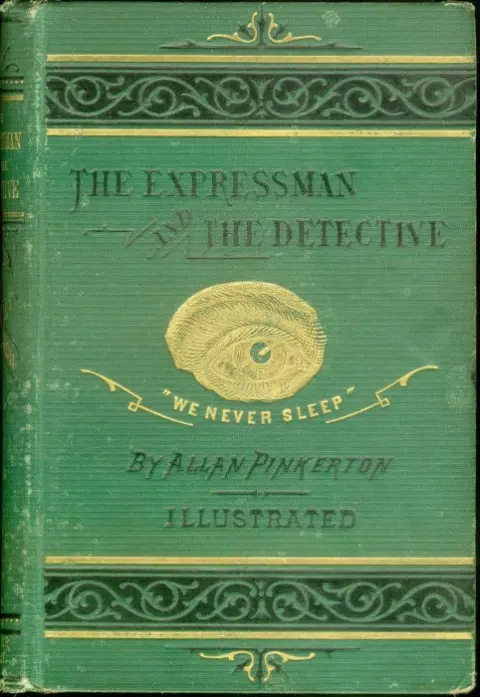
Allan Pinkerton
BEHIND THE BOOK
This eBook is for the use of anyone anywhere in the United States and most other parts of the world at no cost and with almost no restrictions whatsoever. You may copy it, give it away or re-use it under the terms of the Project Gutenberg License included with this eBook or online at www.gutenberg.org. If you are not located in the United States, you will have to check the laws of the country where you are located before using this eBook. Read the source licence.
The original source file, including credits and licence, is retained by this library. Request an original-format copy at no charge. Please include the book title and Project Gutenberg identifier #76641.
KEEP YOUR CURIOSITY GOING
Cécile Tormay

Moritz Busch
John L. Ransom
Frances Wright
Cécile Tormay

Mabel Potter Daggett