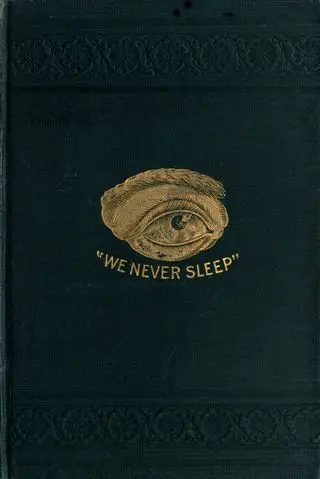
Mississippi Outlaws and the Detectives Don Pedro and the Detectives; Poisoner and the Detectives
Allan Pinkerton
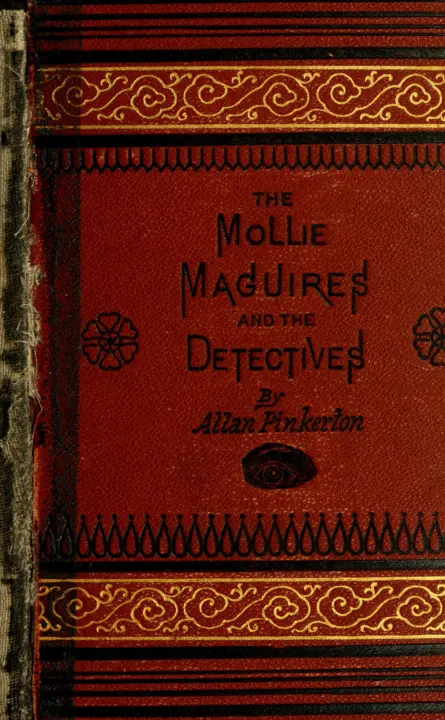
THE CLASSIC COLLECTION · 1877
"The Molly Maguires and the detectives" by Allan Pinkerton is a nonfiction investigative account written in the late 19th century. It chronicles Pinkerton’s covert campaign against the secretive Molly Maguires in Pennsylvania’s anthracite coal region, undertaken at the request of railroad executive Franklin B. Gowen, and follows undercover operative James McParlan (alias James McKenna) as he works to infiltrate the organization amid labor strife, violence, and political intrigue. The opening of the book sets Pinkerton’s pledge to tell a factual, unvarnished story of the coal fields and a violent secret society that, he argues, has evaded justice. Gowen solicits Pinkerton to penetrate the Mollies, whose alibis, intimidation, and sway over local politics have thwarted prosecutions, and Pinkerton accepts with strict conditions of secrecy and a plan to embed an Irish Catholic operative. Pinkerton then selects James McParlan, sketches his background and disguise, and launches him under the alias “James McKenna.” McKenna begins by tramping through towns like Port Clinton, Schuylkillhaven, Tremont, Tower City, and Minersville, posing as a job-seeking laborer while building contacts: he’s refused lodging by a drunken landlord, sheltered by an Irish family (with a comic drunk blocking a door), and quietly probes opinions by discussing scathing newspaper pieces on the Mollies with men like the switchman Fitzgibbons. He cultivates leads through saloon talk (including a former member’s hints that Mahanoy City is fertile ground), descends into a working mine to learn the setting, endures a snowbound stage ride and shabby lodging, and finally settles into a modest boarding house, using evenings in bars and card rooms to deepen his cover and map the society’s haunts.
Introduction adapted from the source catalogue; source summaries may be automatically generated.
Free to read · English · 181,288 words · No account needed
MAKE TIME FOR A GOOD BOOK
On by default. Untick to stop anonymous reading totals. Each page counts after 10 seconds in view. How this works.
Anonymous counting is on unless you have switched it off.
“That conviction forced itself indelibly upon my mind. A man, who for two years acts as District Attorney in this county, prosecuting criminals who are brought before the court, must be either very obtuse or wilfully blind, if he could close his eyes to the existence of a fact as perceptible as this was then to me. I left this county with that settled conviction, and circumstances that occurred time and again, long after I withdrew from the prosecution of criminals, still more deeply fastened this conviction in my mind. Murder, violence, and arson, committed without detection, and apparently without motive, attested the correctness of that belief, and when the time arrived that I became so much interested in the prosperity of this county, and in the development of its mineral wealth, that I saw that it was a struggle between the good citizen and the bad citizen as to which should obtain the supremacy, I made up my mind that if human ingenuity, if long suffering and patient care, and toil that stopped at no obstacle, and would confront every danger, could succeed in exposing this secret organization to light of day, and bringing to well-earned justice the perpetrators of these awful crimes, I would undertake the task.
“I knew that it could only be done by secret detectives, and I had had enough experience, both as a lawyer, and as the head of a very large corporation, to know that the public municipal detectives employed by the police authorities of the cities, who operate only for rewards, are the last persons to whom you could trust a mission and an enterprise such as this. It was as important for us to know who was innocent as it was to know who was guilty.
“The detective who operates for rewards, who is only paid upon his conviction of the offender, has a motive to incite him to action which I would be the last man in the world to arouse. I knew, for I had had experience before of the National Detective Agency of Allan Pinkerton, of Chicago, which was established by an intelligent and broad-minded Scotchman, established upon the only basis on which a successful detective agency can be established, and I applied to Mr. Pinkerton. His plan was simply this: ‘I will secure an agent, or an officer,’ said he, ‘to ferret out the existence of this society. Whoever I get is to be paid so much a week, no matter if he finds out nothing. He is bound to me, never, under any circumstances, to take a reward for his services, from anybody, and, if he spends five years and obtains nothing in the way of information, he must have every month or every week exactly the same compensation as if every week he had traced a new murder and every month had discovered a new conspiracy. He is never to gain pecuniarily by the success of his undertaking; but as a man who goes into this organization, as a detective, takes his life in his own hands, I will send no man on this mission of yours, Mr. Gowen, unless it be agreed, beforehand, and I can tell him so, that he never is to be known in connection with the enterprise.’ Upon these terms this man, James McParlan, was selected. A young Irishman and a Catholic, but six or seven years in this country, eminently qualified by his peculiar Irish accomplishments to ingratiate himself with those to whom he was sent, he came here in the fall of 1873, and within six months he had so far won the confidence of the class of people who constituted this order that he was admitted as a member. Remember, now, here—and I advert to it lest I might forget it—that he came here pledged that he should not be used as a witness. Therefore, the only object of his coming was to put us upon the track, so that we could discover the crime when it was being perpetrated, and this is the best answer that can possibly be made to the charge that he wilfully withheld his knowledge when he might have saved human life. His only object here was to get knowledge. He never was to be used as a witness. His only desire was to find out when a murder was to be committed, to be with the perpetrators if he could, and to give notice to Captain Linden, who had an armed police force ready, so that they might be waiting at the very spot, and not only save the life of the intended victim, but arrest every man engaged in the perpetration of the offense, in order that there could be abundant evidence of their guilt. That was his whole object. Almost every night he made his report; and how well he has performed his duty, the security of human life and property in this county, to-day, as compared with what it was six months ago, is the best commentary I can make upon the subject.
Your reading position is saved on this browser. Take it to another device with a library code. Reading pages adapt to text, rather than matching a printed edition.
Allan Pinkerton
Allan Pinkerton
Allan Pinkerton
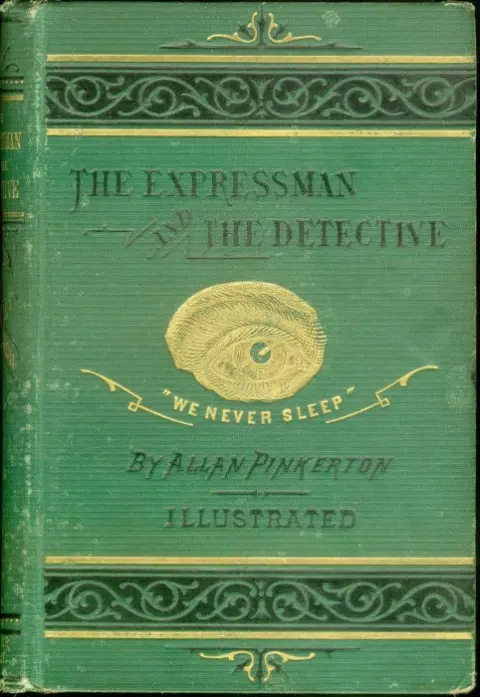
Allan Pinkerton
BEHIND THE BOOK
This eBook is for the use of anyone anywhere in the United States and most other parts of the world at no cost and with almost no restrictions whatsoever. You may copy it, give it away or re-use it under the terms of the Project Gutenberg License included with this eBook or online at www.gutenberg.org. If you are not located in the United States, you will have to check the laws of the country where you are located before using this eBook. Read the source licence.
The original source file, including credits and licence, is retained by this library. Request an original-format copy at no charge. Please include the book title and Project Gutenberg identifier #76641.
KEEP YOUR CURIOSITY GOING
Cécile Tormay

Moritz Busch
John L. Ransom
Frances Wright
Cécile Tormay

Mabel Potter Daggett