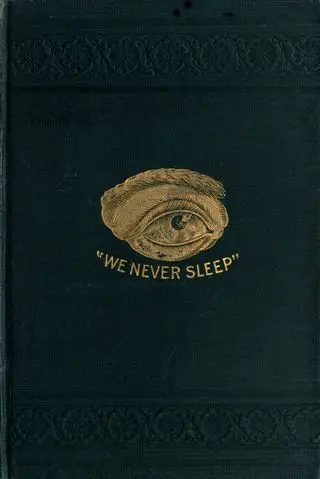
Mississippi Outlaws and the Detectives Don Pedro and the Detectives; Poisoner and the Detectives
Allan Pinkerton
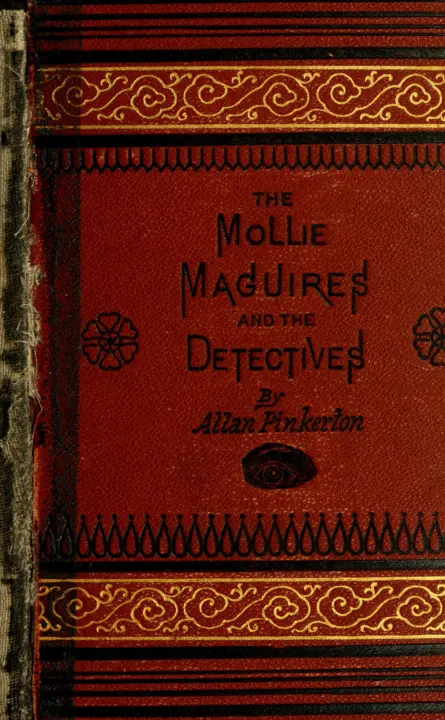
THE CLASSIC COLLECTION · 1877
"The Molly Maguires and the detectives" by Allan Pinkerton is a nonfiction investigative account written in the late 19th century. It chronicles Pinkerton’s covert campaign against the secretive Molly Maguires in Pennsylvania’s anthracite coal region, undertaken at the request of railroad executive Franklin B. Gowen, and follows undercover operative James McParlan (alias James McKenna) as he works to infiltrate the organization amid labor strife, violence, and political intrigue. The opening of the book sets Pinkerton’s pledge to tell a factual, unvarnished story of the coal fields and a violent secret society that, he argues, has evaded justice. Gowen solicits Pinkerton to penetrate the Mollies, whose alibis, intimidation, and sway over local politics have thwarted prosecutions, and Pinkerton accepts with strict conditions of secrecy and a plan to embed an Irish Catholic operative. Pinkerton then selects James McParlan, sketches his background and disguise, and launches him under the alias “James McKenna.” McKenna begins by tramping through towns like Port Clinton, Schuylkillhaven, Tremont, Tower City, and Minersville, posing as a job-seeking laborer while building contacts: he’s refused lodging by a drunken landlord, sheltered by an Irish family (with a comic drunk blocking a door), and quietly probes opinions by discussing scathing newspaper pieces on the Mollies with men like the switchman Fitzgibbons. He cultivates leads through saloon talk (including a former member’s hints that Mahanoy City is fertile ground), descends into a working mine to learn the setting, endures a snowbound stage ride and shabby lodging, and finally settles into a modest boarding house, using evenings in bars and card rooms to deepen his cover and map the society’s haunts.
Introduction adapted from the source catalogue; source summaries may be automatically generated.
Free to read · English · 181,288 words · No account needed
MAKE TIME FOR A GOOD BOOK
On by default. Untick to stop anonymous reading totals. Each page counts after 10 seconds in view. How this works.
Anonymous counting is on unless you have switched it off.
It was midday, with the sun shining brightly, when the two men stepped upon the movable platform of the elevator, inside the shaft-house. In a few moments they were settling swiftly, but at a uniform rate of speed, down, down, as it seemed to the novice in such matters, even to the foundations of the globe. For a brief period they were in total darkness, and a sensation, as of seasickness, came over him. Still he clung to his support and the uncomfortable feeling soon left him. As the lower regions were reached, the traveler thought he would be far more content if again breathing the clear ether above. The system experienced absolute relief when the motion ceased, and the solid bottom of the shaft was touched. But here it was like entering a new sphere. There was dark above, below, and all around, only here and there relieved by dim little stars, which were continually dodging downward, sidewise, and upward, as though held by an unsteady hand. As his eyes acquired familiarity with the situation, he saw that to each one of these erratic satellites was attached the body of a living man—in fact, they were only diminutive lamps which the miners and their helpers wore above the visors of their hats to light them in their labors. The general effect produced in the sombre recesses of the excavation, and the strange and grotesque, as well as picturesque, shadows reflected back from the men’s figures upon the walls and buttresses and floors, all defy description, and must be seen to be understood. As far as the eye was able to penetrate, in every direction, almost, the nodding demon with the single, blazing orb, like a star, in the forehead, and bearing glistening pick and bar, and drill and spade, was industriously working away at the breast, tearing out the black diamonds, making more pillars, and piercing further into the lode. Wandering from point to point in pursuit of his errand, the boss kept on, and McKenna followed. In one place he was startled and nearly deafened by the, to him, unexpected explosion of a blast, close to his ear, as he thought, but really at quite a safe distance. He involuntarily jumped aside, expecting that he had been hit, but in a moment recovered his equanimity, seeing he was not injured. They were met on every side by a succession of heavy supports and gaping caverns, the former serving as props for the rocky roof, preventing the falling in of the ground resting above, and the latter leading to still other channels and gangways from which coal was being brought. The air seemed heavy-laden, damp, and unhealthy, and the path pursued, in many places, passed through lakelets of black water reaching sometimes above the ankles. All was bustle and activity with that army of underground toilers, drilling, blasting, loading, tunneling, tamping down blasts, laying trains, breaking away coal and running it down chutes to the floors, heaping it upon small trucks, which in turn transported it to the base of the entering shaft, whence it was elevated by steam power to the breaker, high above ground. Over all were heard the sounds of the pumps, clangor of chains, and rattling of picks, making harsh and jagged music, to the strains of which the work advanced. It was no pleasant place to remain in, especially as a looker-on, and McKenna was not illy pleased when the boss, taking advantage of the ascent of a loaded elevator, asked him to return to the region of daylight. The sensation experienced upon again encountering the sunshine was painfully peculiar, the bright blaze almost blinding him during the first few moments of the change. But presently the retina was brought in conformity with the surroundings, and eyesight was fully restored.
Your reading position is saved on this browser. Take it to another device with a library code. Reading pages adapt to text, rather than matching a printed edition.
Allan Pinkerton
Allan Pinkerton
Allan Pinkerton
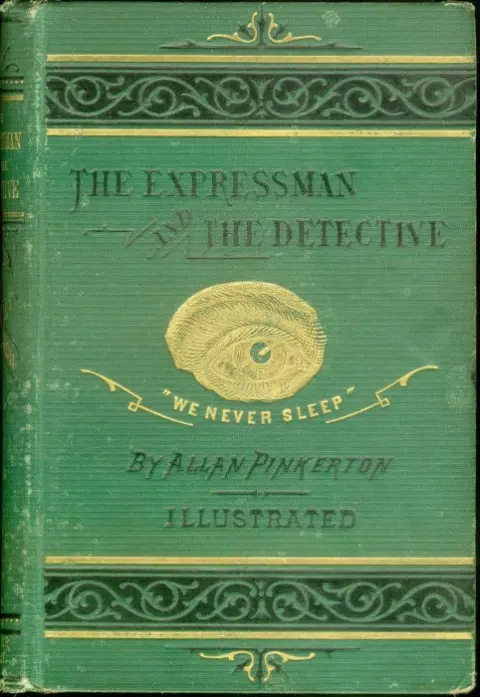
Allan Pinkerton
BEHIND THE BOOK
This eBook is for the use of anyone anywhere in the United States and most other parts of the world at no cost and with almost no restrictions whatsoever. You may copy it, give it away or re-use it under the terms of the Project Gutenberg License included with this eBook or online at www.gutenberg.org. If you are not located in the United States, you will have to check the laws of the country where you are located before using this eBook. Read the source licence.
The original source file, including credits and licence, is retained by this library. Request an original-format copy at no charge. Please include the book title and Project Gutenberg identifier #76641.
KEEP YOUR CURIOSITY GOING
Cécile Tormay

Moritz Busch
John L. Ransom
Frances Wright
Cécile Tormay

Mabel Potter Daggett