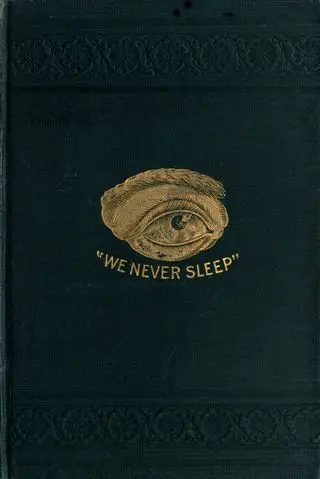
Mississippi Outlaws and the Detectives Don Pedro and the Detectives; Poisoner and the Detectives
Allan Pinkerton
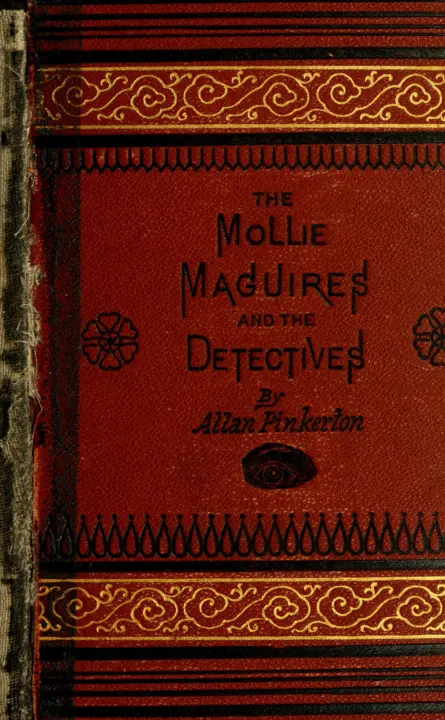
THE CLASSIC COLLECTION · 1877
"The Molly Maguires and the detectives" by Allan Pinkerton is a nonfiction investigative account written in the late 19th century. It chronicles Pinkerton’s covert campaign against the secretive Molly Maguires in Pennsylvania’s anthracite coal region, undertaken at the request of railroad executive Franklin B. Gowen, and follows undercover operative James McParlan (alias James McKenna) as he works to infiltrate the organization amid labor strife, violence, and political intrigue. The opening of the book sets Pinkerton’s pledge to tell a factual, unvarnished story of the coal fields and a violent secret society that, he argues, has evaded justice. Gowen solicits Pinkerton to penetrate the Mollies, whose alibis, intimidation, and sway over local politics have thwarted prosecutions, and Pinkerton accepts with strict conditions of secrecy and a plan to embed an Irish Catholic operative. Pinkerton then selects James McParlan, sketches his background and disguise, and launches him under the alias “James McKenna.” McKenna begins by tramping through towns like Port Clinton, Schuylkillhaven, Tremont, Tower City, and Minersville, posing as a job-seeking laborer while building contacts: he’s refused lodging by a drunken landlord, sheltered by an Irish family (with a comic drunk blocking a door), and quietly probes opinions by discussing scathing newspaper pieces on the Mollies with men like the switchman Fitzgibbons. He cultivates leads through saloon talk (including a former member’s hints that Mahanoy City is fertile ground), descends into a working mine to learn the setting, endures a snowbound stage ride and shabby lodging, and finally settles into a modest boarding house, using evenings in bars and card rooms to deepen his cover and map the society’s haunts.
Introduction adapted from the source catalogue; source summaries may be automatically generated.
Free to read · English · 181,288 words · No account needed
MAKE TIME FOR A GOOD BOOK
On by default. Untick to stop anonymous reading totals. Each page counts after 10 seconds in view. How this works.
Anonymous counting is on unless you have switched it off.
He first dragged out in this ungraceful way a female—Mollie Williams by name—who, stopping accidentally with the landlady over night, had been frightened by the noise the visitors made before entering and secreted herself beneath the low bedstead with a part of the widow’s portable property. An inventory of other things discovered in the apartment would read as follows:
1 Widow Bridget Monaghan—very angry and flushed as to face and
scantily clad.
1 maiden lady, of uncertain age, ditto as to raiment, and badly
scared.
5 goats, scattered about the floor very promiscuously.
37 chickens—including one plucky game-cock.
1 collection of new-washed female raiment, hanging damp on the line.
5 ducks and a drake.
1 goose and a gander.
1 demijohn—contents, whisky.
2 tin pots for drinking purposes—of tin.
1 stove and furniture—badly cracked in places.
1 section of a log, for a chair—not cushioned.
1 collection of miscellaneous articles, on the shelves, intended for
sale.
His comrades drank several times, but McKenna could not stomach the liquor in that den, and, taking a tin dinner pail, which he found, he washed it out and milked one of the goats, swallowing the warm fluid with a relish.
As a natural consequence of the time, place, and opportunity, McKenna was importuned for songs, which he sung, sitting beside the widow, on her bed, with Mollie Williams nigh, perched on the wooden excuse for a chair, and the equally interested men, sitting on their haunches, and in various extraordinary attitudes, around the room. The few following hours until morning were consumed in the relation of sundry soul-harrowing tales of ghosts, haunted houses and church-yards, hobgoblins and spirits, to which all listened in silence, only excepting an occasional interruption by the widow when proffering more liquor, until the young man’s throat and tongue fairly gave out from too much exercise, and he was constrained to beg for a season of rest. The sun was rising when the company, very well soaked in bad liquor, oozed out of Mrs. Monaghan’s cellar and started on a serpentine trail for home. As a consequence of inhaling so much bad air, and from protracted confinement in foul gases, the operative was so ill that, when he received Mr. Franklin’s instructions to leave for Tamaqua, he felt more like keeping his bed and sending for a physician.
The uninitiated reader may be inclined to think my description of Mrs. Monaghan’s groggery an exaggeration. The thought is pardonable, but I assure those who have followed me thus far in this recital, that, instead of being overcolored, the whole truth, in all its details, has not been told. It could not well be revealed without giving offense.
Your reading position is saved on this browser. Take it to another device with a library code. Reading pages adapt to text, rather than matching a printed edition.
Allan Pinkerton
Allan Pinkerton
Allan Pinkerton
Allan Pinkerton
BEHIND THE BOOK
This eBook is for the use of anyone anywhere in the United States and most other parts of the world at no cost and with almost no restrictions whatsoever. You may copy it, give it away or re-use it under the terms of the Project Gutenberg License included with this eBook or online at www.gutenberg.org. If you are not located in the United States, you will have to check the laws of the country where you are located before using this eBook. Read the source licence.
The original source file, including credits and licence, is retained by this library. Request an original-format copy at no charge. Please include the book title and Project Gutenberg identifier #76641.
KEEP YOUR CURIOSITY GOING
Cécile Tormay

Moritz Busch
John L. Ransom
Frances Wright
Cécile Tormay

Mabel Potter Daggett