Mississippi Outlaws and the Detectives Don Pedro and the Detectives; Poisoner and the Detectives
Allan Pinkerton
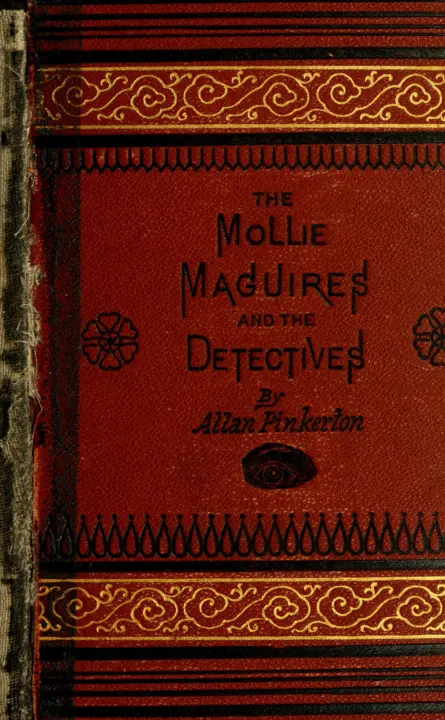
THE CLASSIC COLLECTION · 1877
"The Molly Maguires and the detectives" by Allan Pinkerton is a nonfiction investigative account written in the late 19th century. It chronicles Pinkerton’s covert campaign against the secretive Molly Maguires in Pennsylvania’s anthracite coal region, undertaken at the request of railroad executive Franklin B. Gowen, and follows undercover operative James McParlan (alias James McKenna) as he works to infiltrate the organization amid labor strife, violence, and political intrigue. The opening of the book sets Pinkerton’s pledge to tell a factual, unvarnished story of the coal fields and a violent secret society that, he argues, has evaded justice. Gowen solicits Pinkerton to penetrate the Mollies, whose alibis, intimidation, and sway over local politics have thwarted prosecutions, and Pinkerton accepts with strict conditions of secrecy and a plan to embed an Irish Catholic operative. Pinkerton then selects James McParlan, sketches his background and disguise, and launches him under the alias “James McKenna.” McKenna begins by tramping through towns like Port Clinton, Schuylkillhaven, Tremont, Tower City, and Minersville, posing as a job-seeking laborer while building contacts: he’s refused lodging by a drunken landlord, sheltered by an Irish family (with a comic drunk blocking a door), and quietly probes opinions by discussing scathing newspaper pieces on the Mollies with men like the switchman Fitzgibbons. He cultivates leads through saloon talk (including a former member’s hints that Mahanoy City is fertile ground), descends into a working mine to learn the setting, endures a snowbound stage ride and shabby lodging, and finally settles into a modest boarding house, using evenings in bars and card rooms to deepen his cover and map the society’s haunts.
Introduction adapted from the source catalogue; source summaries may be automatically generated.
Free to read · English · 181,288 words · No account needed
MAKE TIME FOR A GOOD BOOK
On by default. Untick to stop anonymous reading totals. Each page counts after 10 seconds in view. How this works.
Anonymous counting is on unless you have switched it off.
Assuming such safeguards as he might think for the best, McParlan was directed to go to Tamaqua and learn, if possible, who had killed Yost, and there lay the groundwork of a superstructure upon which the prosecution of the assassins might be founded. He was to obtain such information as he could, using his official relation with the order, as far as it might go, and any other artifice, or detective scheme, which should appear useful in gaining the desired results.
The command for a change of his base of operations reached McKenna on the fifteenth of July, and he at once prepared to obey.
Linden also received instructions to second McKenna, but to refrain from making his appearance in Tamaqua until requested by the other detective to do so.
The Superintendent’s letter to McKenna did not find him in the enjoyment of the best of spirits for a most dangerous and difficult undertaking, from reasons which I will proceed to explain. The previous day, Frank McAndrew having moved into a house at Indian Ridge Breaker—or Davis’ Breaker, as it was familiarly called—engaged with a number of Mollies in a great carousal, which lasted until midnight, and, having inveigled McKenna into the affair, succeeded in keeping him up and employed, there and elsewhere, all night. This, with a return of a chronic sore throat, from which he was suffering, made him almost ill again.
Indian Ridge Breaker is situated on the road by Lanagan’s Patch, leading to Mahanoy City, from Shenandoah, and not far from the shebeen shop of Mrs. Bridget Monaghan, twice a widow, but far from ancient at that, although “fat, fair, and forty” was applicable as an imperfect description of the lady. She occupied the stone basement of a tumbledown, three-story wooden building, the upper floors of which were devoted to the midnight gambols of predatory cats and daily incursions of migratory rats—the hallways filled with webs of spiders that, with the mice, made nests in the corners of the vacant rooms—and her subterranean abode was, like that of handsome Micky Cuff, the habitation of geese, ducks, chickens, goats, and pigs, among which Mrs. Bridget walked, “monarch of all she surveyed.” This was a favorite and frequent place of resort for McAndrew and other Mollies, and the stories that gained circulation concerning the flitting of spirits, clad all in white, through the upper corridors of the structure, at the dead hour of night, and the gleams of an occasional flame—burning pale, sickly, blue and ghastly, as some benighted miner was fain to report to his superstitious household—all may have been due to the meetings of the society in the otherwise untenanted place, and the failure of the impromptu janitor to put up a curtain close enough to prevent a ray of the single candle, lighting their deliberations, from escaping. It was a famous place for the telling of ghost stories, and McKenna, who was an adept at the relation of mysterious events, as well as singing songs and dancing flings and jigs, frequently held the Mollies spell-bound for hours, while he chronicled the scenes he had seen and the ghosts and ghouls he had heard about in the old country. His legends were in great demand, and sometimes he indulged in the narration of one in the presence of the widow, who, meanwhile, would draw herself up close to the story-teller—story-teller in more respects than one, it is to be feared—and declare that the company positively should not leave her “hotel” until daylight, if she had to supply the drinks and other comfortables at her own expense. It was not difficult to win over the Mollies to remain and “keep off the banshee,” if she only put out the overflowing noggin with a generous hand. And this she did. To the credit of the widow be it said, the love of drink and indulgence in gossip were among the worst of her failings. In every other regard she was considered a respectable and honorable member of her kind of society.
Your reading position is saved on this browser. Take it to another device with a library code. Reading pages adapt to text, rather than matching a printed edition.
Allan Pinkerton
Allan Pinkerton
Allan Pinkerton
Allan Pinkerton
BEHIND THE BOOK
This eBook is for the use of anyone anywhere in the United States and most other parts of the world at no cost and with almost no restrictions whatsoever. You may copy it, give it away or re-use it under the terms of the Project Gutenberg License included with this eBook or online at www.gutenberg.org. If you are not located in the United States, you will have to check the laws of the country where you are located before using this eBook. Read the source licence.
The original source file, including credits and licence, is retained by this library. Request an original-format copy at no charge. Please include the book title and Project Gutenberg identifier #76641.
KEEP YOUR CURIOSITY GOING
Cécile Tormay

Moritz Busch
John L. Ransom
Frances Wright
Cécile Tormay

Mabel Potter Daggett