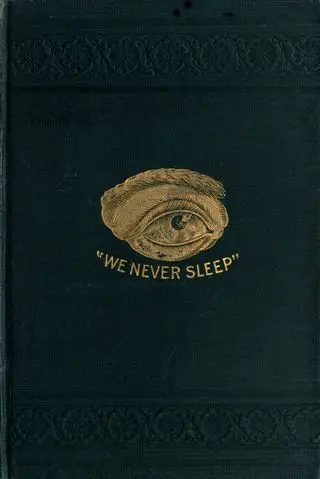
Mississippi Outlaws and the Detectives Don Pedro and the Detectives; Poisoner and the Detectives
Allan Pinkerton
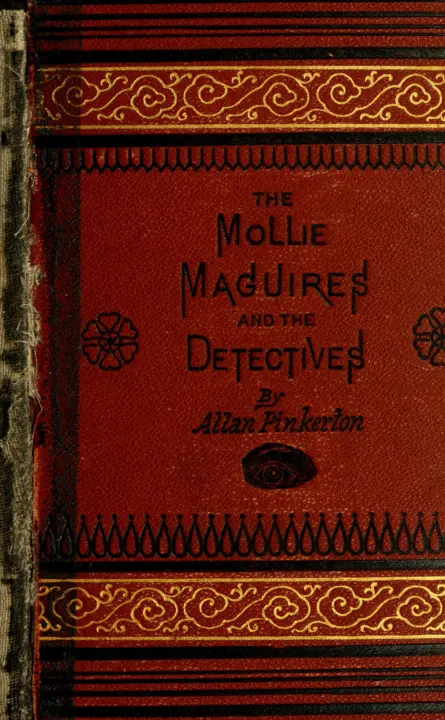
THE CLASSIC COLLECTION · 1877
"The Molly Maguires and the detectives" by Allan Pinkerton is a nonfiction investigative account written in the late 19th century. It chronicles Pinkerton’s covert campaign against the secretive Molly Maguires in Pennsylvania’s anthracite coal region, undertaken at the request of railroad executive Franklin B. Gowen, and follows undercover operative James McParlan (alias James McKenna) as he works to infiltrate the organization amid labor strife, violence, and political intrigue. The opening of the book sets Pinkerton’s pledge to tell a factual, unvarnished story of the coal fields and a violent secret society that, he argues, has evaded justice. Gowen solicits Pinkerton to penetrate the Mollies, whose alibis, intimidation, and sway over local politics have thwarted prosecutions, and Pinkerton accepts with strict conditions of secrecy and a plan to embed an Irish Catholic operative. Pinkerton then selects James McParlan, sketches his background and disguise, and launches him under the alias “James McKenna.” McKenna begins by tramping through towns like Port Clinton, Schuylkillhaven, Tremont, Tower City, and Minersville, posing as a job-seeking laborer while building contacts: he’s refused lodging by a drunken landlord, sheltered by an Irish family (with a comic drunk blocking a door), and quietly probes opinions by discussing scathing newspaper pieces on the Mollies with men like the switchman Fitzgibbons. He cultivates leads through saloon talk (including a former member’s hints that Mahanoy City is fertile ground), descends into a working mine to learn the setting, endures a snowbound stage ride and shabby lodging, and finally settles into a modest boarding house, using evenings in bars and card rooms to deepen his cover and map the society’s haunts.
Introduction adapted from the source catalogue; source summaries may be automatically generated.
Free to read · English · 181,288 words · No account needed
MAKE TIME FOR A GOOD BOOK
On by default. Untick to stop anonymous reading totals. Each page counts after 10 seconds in view. How this works.
Anonymous counting is on unless you have switched it off.
Later still, the month saw a row at Raven Run, when a Mollie by the name of Barnett received two bullets in his body, and Phil. Nash one through the left wrist, as he informed the detective, laying bare the wound. He said he took the pistol from a man in the opposing crowd of Sheet Irons, broke the weapon, and played havoc generally. After being shot, he employed his own pocket-knife to cut out the ball, which job he successfully accomplished. Barnett was dangerously injured, and it was doubtful if he would survive.
On the seventh of September, 1874, the resumption of the collieries had, for a time, a pacifying effect upon the irrepressibles of the coal country, and quiet seemed about restored. But Shenandoah Division grew in strength and numbers meanwhile. At a meeting held on the fifth of the month, Andrew Murphy, of Loss Creek, John Dean, John Carey, and John Walsh were accepted and duly initiated. A brother of the Bodymaster was rejected, at the suggestion of McAndrew in person, as he urged that the man proposed was continually in trouble and would surely bring disgrace upon the honorable brotherhood.
During the latter part of September occurred the decease of old Mr. Raines, a crippled miner, who for several years, through rheumatism and hurts received under a falling pillar, had been unable to perform any labor. From the same causes his body and limbs were bent forward into the shape of an irregular crescent. There was to be a loud wake, and McKenna having nearly recovered his health and good spirits—but being not yet cured of his adopted habit of drinking—received an invitation to be present. He was ready for a spree, or anything else, and went. The Raines place was near the Rappahannock works, on the road from Loss Creek to Girardville, where were situated a number of “patches” belonging to different collieries. The family was large, its range of acquaintance extended, and over a hundred men and women gathered to do honor, in their usual way, to the departed. The corpse was laid out in the largest and best room of the house, with candles at its head and feet. There was a dilapidated table in the center of the apartment, which for many seasons had seen service in parlor, dining-room, and kitchen, and now supported pipes, tobacco, and two bottles of liquor, with a generous supply of lucifer matches. At one end of the room was a cookstove, but as the weather was yet genial, no fire shone through its door. Benches and blocks of wood served as seats for the men and women, who were ranged about the walls and table, the majority of the men wearing their hats, and the ladies, with lace caps or without them, as accorded with their respective ages and circumstances in life. An old-fashioned pendulum clock, with weights, and a face as smoky as the surrounding walls, hung against the plastering at the other side of the place; there were a few pictures; and the last almanac issued by Dr. Jayne swung from a nail under an ancient square-framed looking-glass, which was inclining forward just above. But the principal thing to attract the eye of the detective, when he and his companions—Hurley and Monaghan—entered, was the corpse, to honor which all the people had assembled. The coffin could not yet be used—and for a good reason—the body would not fit into it, but the plain, walnut case rested in another room. Stretched out on a sheet spread over a rough board, which was supported at either end by a common chair, reposed all that was mortal of old Mr. Raines, clad in shroud and grave-clothes, and the head resting on a pillow. In order to overcome the difficulty accruing from the bent and contorted condition of the body and limbs of the deceased, which would not assume a straight position, even in death, a light panel door, taken from an unoccupied room, had been put on top of the defunct and loaded down with rocks and a heavy piece of iron, the latter being, apparently, part of a cylinder to a disabled coal-breaker. This, it was hoped, would relax the contracted muscles, and the curved spine and limbs, so that, on the morrow, there would be no trouble in placing the corpse in its casket.
Your reading position is saved on this browser. Take it to another device with a library code. Reading pages adapt to text, rather than matching a printed edition.
Allan Pinkerton
Allan Pinkerton
Allan Pinkerton
Allan Pinkerton
BEHIND THE BOOK
This eBook is for the use of anyone anywhere in the United States and most other parts of the world at no cost and with almost no restrictions whatsoever. You may copy it, give it away or re-use it under the terms of the Project Gutenberg License included with this eBook or online at www.gutenberg.org. If you are not located in the United States, you will have to check the laws of the country where you are located before using this eBook. Read the source licence.
The original source file, including credits and licence, is retained by this library. Request an original-format copy at no charge. Please include the book title and Project Gutenberg identifier #76641.
KEEP YOUR CURIOSITY GOING
Cécile Tormay

Moritz Busch
John L. Ransom
Frances Wright
Cécile Tormay

Mabel Potter Daggett