Mississippi Outlaws and the Detectives Don Pedro and the Detectives; Poisoner and the Detectives
Allan Pinkerton
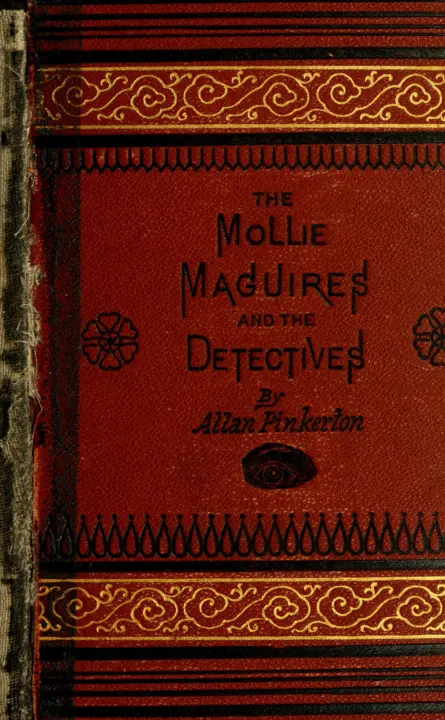
THE CLASSIC COLLECTION · 1877
"The Molly Maguires and the detectives" by Allan Pinkerton is a nonfiction investigative account written in the late 19th century. It chronicles Pinkerton’s covert campaign against the secretive Molly Maguires in Pennsylvania’s anthracite coal region, undertaken at the request of railroad executive Franklin B. Gowen, and follows undercover operative James McParlan (alias James McKenna) as he works to infiltrate the organization amid labor strife, violence, and political intrigue. The opening of the book sets Pinkerton’s pledge to tell a factual, unvarnished story of the coal fields and a violent secret society that, he argues, has evaded justice. Gowen solicits Pinkerton to penetrate the Mollies, whose alibis, intimidation, and sway over local politics have thwarted prosecutions, and Pinkerton accepts with strict conditions of secrecy and a plan to embed an Irish Catholic operative. Pinkerton then selects James McParlan, sketches his background and disguise, and launches him under the alias “James McKenna.” McKenna begins by tramping through towns like Port Clinton, Schuylkillhaven, Tremont, Tower City, and Minersville, posing as a job-seeking laborer while building contacts: he’s refused lodging by a drunken landlord, sheltered by an Irish family (with a comic drunk blocking a door), and quietly probes opinions by discussing scathing newspaper pieces on the Mollies with men like the switchman Fitzgibbons. He cultivates leads through saloon talk (including a former member’s hints that Mahanoy City is fertile ground), descends into a working mine to learn the setting, endures a snowbound stage ride and shabby lodging, and finally settles into a modest boarding house, using evenings in bars and card rooms to deepen his cover and map the society’s haunts.
Introduction adapted from the source catalogue; source summaries may be automatically generated.
Free to read · English · 181,288 words · No account needed
MAKE TIME FOR A GOOD BOOK
On by default. Untick to stop anonymous reading totals. Each page counts after 10 seconds in view. How this works.
Anonymous counting is on unless you have switched it off.
The sick-room was small, with reasonably high walls, lighted by two windows, fronting the public road and at the side of the invalid’s bed. Its furniture was poor and scant. There was an old-fashioned chest of drawers, not as high as a bureau, but taller than a trunk, made of pine, painted a dark red, on the lid of which stood some medicine bottles and an empty tumbler and spoon. Near by was a bit of cracker, which the sick man had nibbled with his teeth when besought to take some nourishment. The bedstead had high posts, and the bed and coverings were barely comfortable. Near the foot of the bed stood a high-backed, splint-bottom rocking-chair, with neat tidy over the top. Two or three other chairs and a small table completed the furniture of the apartment. No carpet concealed the floor, the boards of which were scrubbed white and clean. Plain bleached cotton formed the looped-up window curtains, and along the wall were nails, on which hung a soldier’s overcoat, a hat, a heavy teamster’s whip, and then several articles of female costume. At the head of the couch was a cheap print of St. Patrick, without a frame, and on the opposite wall a cross, entwined with real shamrock, the emblems worked with a needle in red worsted upon some gilt paste-board. A door led into the hall, at the head of the stairs. At one side of the center of the room was a sheet-iron heater, fed through a pipe from the apartments below, which came up through the floor by a tin thimble, or protector, and kept the atmosphere warm and equable. A small hat-stand supported the bottles of beer and a couple of common flaring beer tumblers.
Mrs. Mulligan, a motherly, kind-hearted woman, with blue eyes and plentiful iron-gray hair, a cap, and becomingly clad in black, stood at the side and partly toward the foot of the bed, knitting work in hand, a pitying glance resting upon her suffering husband. The lady caller, her bonnet and cloak unremoved, sat not far away, while McKenna was at that moment in the act of helping himself to a tumbler of beer, which he had not yet poured from the bottle. This was the condition of affairs, when the detective heard a heavy and hasty step upon the staircase, the door of the chamber was rudely thrust open, and big Dick Flynn, with pistol presented in one hand and a long knife brandished recklessly in the other, strode in and paused before the entrance. His aim was directed upon the sick man in the bed. Mulligan uttered a despairing wail, and, nervously throwing up the coverings, drew his head beneath them. Mrs. Mulligan, almost paralyzed with fright, dropped her knitting, raised her hands and screamed “murder!” at the top of her voice, while the lady visitor, without pausing to say “good-by,” flew past the intruder and down the stairs like a frightened deer. McKenna, who had paused in the work of decanting the contents of the bottle, heard Lawler hobbling, with crutch and stick, over the floor below, and, looking from the corner of his eye, soon saw the brave Bodymaster making rather rapid time, for a lame man, toward the gate, where his horse and buggy were standing. Then the agent had no doubt he was left to cope, single-handed, with the savage brute before him. He took in this idea in much less time than it has consumed to record the fact, and arrived at the conclusion that only calmness and the exertion of ingenuity could save his life. Dick did not shoot the sick man, who he was quite sure was Mike Lawler, but stood ready to fire. McKenna finished pouring out his beer, took up the second glass and the bottle, and with supreme impudence advanced a step toward Flynn, saying, not even forgetting his assumption of the brogue that he had used while in the country:
Your reading position is saved on this browser. Take it to another device with a library code. Reading pages adapt to text, rather than matching a printed edition.
Allan Pinkerton
Allan Pinkerton
Allan Pinkerton
Allan Pinkerton
BEHIND THE BOOK
This eBook is for the use of anyone anywhere in the United States and most other parts of the world at no cost and with almost no restrictions whatsoever. You may copy it, give it away or re-use it under the terms of the Project Gutenberg License included with this eBook or online at www.gutenberg.org. If you are not located in the United States, you will have to check the laws of the country where you are located before using this eBook. Read the source licence.
The original source file, including credits and licence, is retained by this library. Request an original-format copy at no charge. Please include the book title and Project Gutenberg identifier #76641.
KEEP YOUR CURIOSITY GOING
Cécile Tormay

Moritz Busch
John L. Ransom
Frances Wright
Cécile Tormay

Mabel Potter Daggett