The Enchanted Burro And Other Stories as I Have Known Them from Maine to Chile and California
Charles Fletcher Lummis
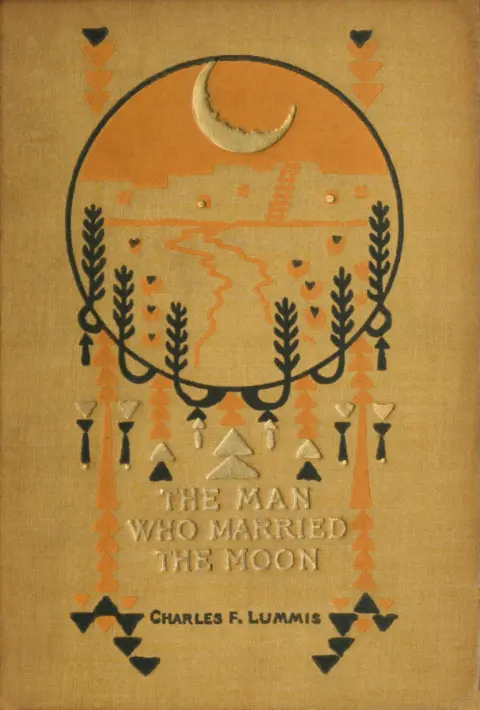
THE CLASSIC COLLECTION · 1891
The Man Who Married the Moon, and Other Pueblo Indian Folk-Stories by Charles F. Lummis is a collection of folk-stories written in the late 19th century. Drawn from evenings among Isleta Tée-wahn storytellers, it gathers hero myths, animal fables, and origin tales that explain nature and Pueblo customs. Central figures include the culture hero Nah-chu-rú-chu and the trickster Coyote, alongside maidens, animals, and sacred beings.
The opening of the collection sets the scene in Isleta, describing Pueblo towns, laws, work, and the winter tradition of elders telling stories to boys by the hearth. It then presents early tales: the Antelope Boy, raised by a herd and winning a world-circling race with a Mole’s magic cigarettes and rain; quick Coyote episodes that explain his feuds with Crows and Blackbirds and his comic contests with Bear; and the mice’s war-dance that shames unarmed warriors. A longer myth shows Nah-chu-rú-chu bewitched into a coyote and later avenging himself by turning the traitor into the first rattlesnake, fated to rattle a warning. The title legend begins as the Moon-maiden wins Nah-chu-rú-chu by casting the finest meal on his pearl dipper, is drowned by the jealous Yellow-Corn-Maidens, and is revived through ritual before the witches are turned into harmless cliff snakes. A brief lyric explains why night exists and why the Moon has one eye, and a section on horned toads and “thunder-knives” frames a cautionary chase that establishes taboos on smoking before manhood and on love-thoughts during the scalp-dance, before the text breaks off with the start of the Stone-Moving Song.
Introduction adapted from the source catalogue; source summaries may be automatically generated.
Free to read · English · 51,527 words · No account needed
MAKE TIME FOR A GOOD BOOK
On by default. Untick to stop anonymous reading totals. Each page counts after 10 seconds in view. How this works.
Anonymous counting is on unless you have switched it off.
ONCE upon a time a Coyote lived near an open wood. As he went to walk one day near the edge of the wood, he heard the Blackbirds (the Indian name means “seeds of the prairie”) calling excitedly:
“Bring my bag! Bring my bag! It is going to hail!”
The Coyote, being very curious, came near and saw that they all had buckskin bags to which they were tying lassos, the other ends of which were thrown over the boughs of the trees. Very much surprised, the Coyote came to them and asked:
“Blackbird-friends, what are you doing?”
“Oh, friend Coyote,” they replied, “we are making ourselves ready, for soon there will be a very hard hail-storm, and we do not wish to be pelted to death. We are going to get into these bags and pull ourselves up under the branches, where the hail cannot strike us.”
“That is very good,” said the Coyote, “and I would like to do so, too, if you will let me join you.”
“Oh, yes! Just run home and get a bag and a lasso, and come back here and we will help you,” said the Pah-táhn, never smiling.
So the Coyote started running for home, and got a large bag and a lasso, and came back to the Blackbirds, who were waiting. They fixed the rope and bag for him, putting the noose around the neck of the bag so that it would be closed tight when the rope was pulled. Then they threw the end of the lasso over a strong branch and said:
“Now, friend Coyote, you get into your bag first, for you are so big and heavy that you cannot pull yourself up, and we will have to help you.”
The Coyote crawled into the bag, and all the Blackbirds taking hold of the rope, pulled with all their might till the bag was swung clear up under the branch. Then they tied the end of the lasso around the tree so the bag could not come down, and ran around picking up all the pebbles they could find.
“Mercy! How the hail comes!” they cried excitedly, and began to throw stones at the swinging bag as hard as ever they could.
“Mercy!” howled the Coyote, as the pebbles pattered against him. “But this is a terrible storm, Blackbird-friends! It pelts me dreadfully! And how are you getting along?”
“It is truly very bad, friend Coyote,” they answered, “but you are bigger and stronger than we, and ought to endure it.” And they kept pelting him, all the time crying and chattering as if they, too, were suffering greatly from the hail.
Your reading position is saved on this browser. Take it to another device with a library code. Reading pages adapt to text, rather than matching a printed edition.
BEHIND THE BOOK
This eBook is for the use of anyone anywhere in the United States and most other parts of the world at no cost and with almost no restrictions whatsoever. You may copy it, give it away or re-use it under the terms of the Project Gutenberg License included with this eBook or online at www.gutenberg.org. If you are not located in the United States, you will have to check the laws of the country where you are located before using this eBook. Read the source licence.
The original source file, including credits and licence, is retained by this library. Request an original-format copy at no charge. Please include the book title and Project Gutenberg identifier #77804.
KEEP YOUR CURIOSITY GOING

Maurice Baring
Francis Greenleaf Allinson & Anne C. E. (Anne Crosby Emery) Allinson
Stuart Dodgson Collingwood
Percy Keese Fitzhugh
Mary Macleod & Edmund Spenser

Cooke Don-Carlos