The Enchanted Burro And Other Stories as I Have Known Them from Maine to Chile and California
Charles Fletcher Lummis
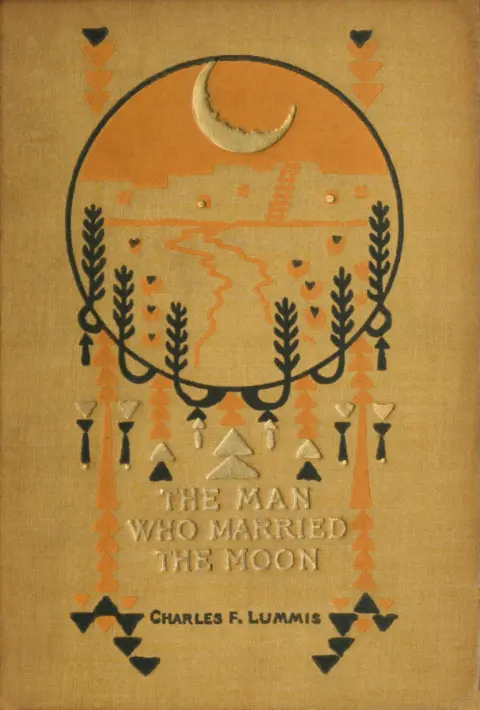
THE CLASSIC COLLECTION · 1891
The Man Who Married the Moon, and Other Pueblo Indian Folk-Stories by Charles F. Lummis is a collection of folk-stories written in the late 19th century. Drawn from evenings among Isleta Tée-wahn storytellers, it gathers hero myths, animal fables, and origin tales that explain nature and Pueblo customs. Central figures include the culture hero Nah-chu-rú-chu and the trickster Coyote, alongside maidens, animals, and sacred beings.
The opening of the collection sets the scene in Isleta, describing Pueblo towns, laws, work, and the winter tradition of elders telling stories to boys by the hearth. It then presents early tales: the Antelope Boy, raised by a herd and winning a world-circling race with a Mole’s magic cigarettes and rain; quick Coyote episodes that explain his feuds with Crows and Blackbirds and his comic contests with Bear; and the mice’s war-dance that shames unarmed warriors. A longer myth shows Nah-chu-rú-chu bewitched into a coyote and later avenging himself by turning the traitor into the first rattlesnake, fated to rattle a warning. The title legend begins as the Moon-maiden wins Nah-chu-rú-chu by casting the finest meal on his pearl dipper, is drowned by the jealous Yellow-Corn-Maidens, and is revived through ritual before the witches are turned into harmless cliff snakes. A brief lyric explains why night exists and why the Moon has one eye, and a section on horned toads and “thunder-knives” frames a cautionary chase that establishes taboos on smoking before manhood and on love-thoughts during the scalp-dance, before the text breaks off with the start of the Stone-Moving Song.
Introduction adapted from the source catalogue; source summaries may be automatically generated.
Free to read · English · 51,527 words · No account needed
MAKE TIME FOR A GOOD BOOK
On by default. Untick to stop anonymous reading totals. Each page counts after 10 seconds in view. How this works.
Anonymous counting is on unless you have switched it off.
ONCE on a time many Káh-ahn lived in the edge of some woods. A little out into the plain stood a very large tree, with much sand under it. One day a Coyote was passing, and heard the Crows singing and dancing under this tree, and came up to watch them. They were dancing in a circle, and each Crow had upon his back a large bag.
“Crow-friends, what are you doing?” asked the Coyote, who was much
interested.
“Oh, we are dancing with our mothers,” said the Crows.
“How pretty! And will you let me dance, too?” asked the Coyote of the too-whit-lah-wid-deh crow (captain of the dance).
“Oh, yes,” replied the Crow. “Go and put your mother in a bag and
come to the dance.”
The Coyote went running home. There his old mother was sitting in the corner of the fireplace. The stupid Coyote picked up a stick and struck her on the head, and put her in a bag, and hurried back to the dance with her.
The Crows were dancing merrily, and singing: “Ai nana, que-ée-rah, que-ée-rah.” (“Alas, Mama! you are shaking, you are shaking!”) The Coyote joined the dance, with the bag on his back, and sang as the Crows did:
“Ai nana, que-ée-rah, que-ée-rah.”[14]
[14] Ai nana is an exclamation always used by mourners.
But at last the Crows burst out laughing, and said, “What do you
bring in your bag?”
“My mother, as you told me,” replied the Coyote, showing them.
Then the Crows emptied their bags, which were filled with nothing but sand, and flew up into the tree, laughing.
The Coyote then saw that they had played him a trick, and started home, crying “Ai nana!” When he got home he took his mother from the bag and tried to set her up in the chimney-corner, always crying, “Ai nana, why don’t you sit up as before?” But she could not, for she was dead. When he found that she could not sit up any more, he vowed to follow the Crows and eat them all the rest of his life; and from that day to this he has been hunting them, and they are always at war.
As Desiderio concludes, the old men hitch their blankets around their shoulders. “No more stories to-night?” I ask; and Lorenso says:
“In-dáh (no). Now it is to go to bed. Tóo-kwai (come),” to the boys. “Good night, friends. Another time, perhaps.”
And we file out through the low door into the starry night.
Your reading position is saved on this browser. Take it to another device with a library code. Reading pages adapt to text, rather than matching a printed edition.
BEHIND THE BOOK
This eBook is for the use of anyone anywhere in the United States and most other parts of the world at no cost and with almost no restrictions whatsoever. You may copy it, give it away or re-use it under the terms of the Project Gutenberg License included with this eBook or online at www.gutenberg.org. If you are not located in the United States, you will have to check the laws of the country where you are located before using this eBook. Read the source licence.
The original source file, including credits and licence, is retained by this library. Request an original-format copy at no charge. Please include the book title and Project Gutenberg identifier #77804.
KEEP YOUR CURIOSITY GOING

Maurice Baring
Francis Greenleaf Allinson & Anne C. E. (Anne Crosby Emery) Allinson
Stuart Dodgson Collingwood
Percy Keese Fitzhugh
Mary Macleod & Edmund Spenser

Cooke Don-Carlos