THE CLASSIC COLLECTION✦Primitive Psycho-Therapy and QuackeryCLASSIC FREE BOOKS
Primitive Psycho-Therapy and Quackery
Robert Means Lawrence
THE CLASSIC COLLECTION · 1898
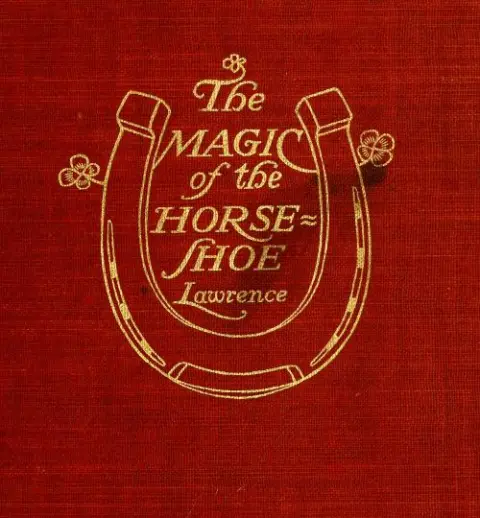
"The Magic of the Horse-Shoe, with Other Folk-Lore Notes" by Robert Means Lawrence is a collection of folk-lore explorations written in the late 19th century. The work delves into the origins and significances of various superstitions and popular beliefs, with a particular focus on the cultural history and magical connotations surrounding the horse-shoe as a talisman. It examines how such symbols have influenced human behavior and cultural practices over time, making it a rich resource for those interested in folklore and superstitious traditions. At the start of the text, the author introduces the study of popular customs and beliefs as a window into early human thought. The preface sets the tone for the exploration by discussing the evolution of the horse-shoe from a practical item to a symbol imbued with luck and supernatural properties, detailing historical practices and anecdotes, including a tale of Queen Elizabeth I and the tradition of giving horse-shoes as tokens of reverence. The author emphasizes the horse-shoe's dual significance: as a pragmatic tool for horses’ welfare and as a guardian against malevolent forces, showcasing the depth of cultural traditions attached to this seemingly simple object.
Introduction adapted from the source catalogue; source summaries may be automatically generated.
Free to read · English · 78,485 words · No account needed
MAKE TIME FOR A GOOD BOOK
On by default. Untick to stop anonymous reading totals. Each page counts after 10 seconds in view. How this works.
Anonymous counting is on unless you have switched it off.
[434] Gerald Massey, The Natural Genesis, vol. ii. p. 298.
[435] Moritz Busch, Deutscher Volksglaube.
[436] Rogers, vol. iii. p. 278.
[437] Lady Wilde, Ancient Legends, Mystic Charms, and Superstitions of
Ireland, p. 136.
[438] Lady Wilde, Ancient Cures, Charms, and Usages of Ireland.
[439] P. G. Heims, Seespuk, p. 135.
[440] Wilhelm Kolbe, Hessische Volks-Sitten und Gebräuche.
[441] Shropshire Folk-Lore, p. 260.
[442] “Wily Beguiled,” Hawkins’s English Drama, vol. iii. p. 356.
[443] Dr. Adolf Wuttke, Der deutsche Volksaberglaube. Berlin, 1869.
[444] E. L. Rochholz, Alt-deutsches Bürgerleben, pp. 52, 53.
[445] Wlislocki, Aus dem Volksleben der Magyaren, p. 68.
[446] Zeitschrift des Vereins für Volkskunde, vol. iv. p. 307. 1894.
[447] Giuseppe Pitré, Usi e costumi, credenze e pregiudizi del popolo
Siciliano. 1889.
[448] M. Jean-François Bladé, Contes populaires de la Gascogne. Paris,
1886.
[449] M. l’Abbé Migne, Dictionnaire des superstitions populaires.
[450] Giuseppe Pitré, Il venerdi nelle tradizioni popolari italiane.
[451] Busch, op. cit.
[452] A World of Wonders, edited by Albany Poyntz.
[453] Zeitschrift für deutsche Mythologie, iv. 147.
[454] Boston Herald, May 1, 1898.
[455] W. R. S. Ralston, M. A., Russian Folk-Tales.
[456] Larousse, Grand dictionnaire universel.
[457] M. D. Conway, Demonology and Devil-Lore.
[458] Fr. Noel, Dictionnaire de la fable.
[459] Danet’s Dictionary of Greek and Roman Antiquities. London, 1700.
[460] Andrew Lang, Custom and Myth.
[461] Ermete Pierotti, Customs and Traditions of Palestine.
[462] Journal of American Folk-Lore, vol. x. No. 39, p. 274. 1897.
[463] Leland’s Gypsy Sorcery.
[464] Brewer’s Dictionary of Miracles.
[465] Rev. Walter Gregor, M. A., Notes on the Folk-Lore of the Northeast
of Scotland.
[466] Hulme, Natural History Lore and Legend, p. 241.
[467] Thorpe, ii. p. 84.
[468] Schuyler, Turkestan, p. 30.
[469] Edward Jewitt Robinson, Tales and Poems of South India, p. 378.
[470] E. Rolland, Faune populaire de la France. Paris, 1877.
[471] Wuttke, p. 118.
[472] Wuttke, p. 276.
[473] Dr. Joseph Virgil Grohmann, Aberglauben und Gebräuche aus Böhmen
und Mähren, p. 232.
[474] Encyclopédie theologique, tome, “Sciences occultes.”
[475] John Thrupp, The Anglo-Saxon Home. London, 1852.
[476] Leechdoms, Wortcunning, and Starcraft, edited by the Rev. Oswald
Cockayne.
[477] Francis Lenormant, Chaldean Magic and Sorcery.
[478] Francis Rous, Archæologiæ Atticæ. London, 1635.
[479] Grohmann, Apollo Smintheus, p. 60.
[480] Grohmann, Aberglauben, vol. i. p. 59.
[481] Grohmann, Aberglauben, vol. i. p. 61.
[482] Thomas Gage, A New Survey of the West Indies. London, 1677.
[483] Rev. Hilderic Friend, Flowers and Flower-Lore, p. 554.
[484] John Henry Gray, M. A., LL. D., China, p. 169.
[485] Martin Frederick Blumber, A History of Amulets.
[486] Richard Folkard, Jr., Plant-Lore, p. 160.
[487] The Buddhism of Tibet.
[488] The Nation. June 15, 1866.
[489] R. T. Hampson, Medii Ævi Kalendarium. See, also, article by W. W. Newell in Journal of American Folk-Lore, vol. v. No. 14.
[490] Anthon’s Classical Dictionary.
[491] Garnett, p. 340.
[492] Lucy M. J. Garnett, The Women of Turkey, p. 286.
[493] Jean Frederic Bernard, Superstitions anciennes et modernes, tome
i. p. 101. 1733.
[494] Scot’s Discoverie of Witchcraft.
[495] The Folk-Lorist, vol. i. July, 1893.
[496] William Jones, Credulities Past and Present.
[497] J. B. Thiers, Traité des superstitions.
[498] W. Crooke, B. A., North Indian Folk-Lore.
[499] Folk-Lore. June, 1896.
Your reading position is saved on this browser. Take it to another device with a library code. Reading pages adapt to text, rather than matching a printed edition.
BEHIND THE BOOK
This eBook is for the use of anyone anywhere in the United States and most other parts of the world at no cost and with almost no restrictions whatsoever. You may copy it, give it away or re-use it under the terms of the Project Gutenberg License included with this eBook or online at www.gutenberg.org. If you are not located in the United States, you will have to check the laws of the country where you are located before using this eBook. Read the source licence.
The original source file, including credits and licence, is retained by this library. Request an original-format copy at no charge. Please include the book title and Project Gutenberg identifier #57411.
KEEP YOUR CURIOSITY GOING
Cécile Tormay

Moritz Busch
John L. Ransom

Maurice Baring
Frances Wright
Cécile Tormay