THE CLASSIC COLLECTION✦Primitive Psycho-Therapy and QuackeryCLASSIC FREE BOOKS
Primitive Psycho-Therapy and Quackery
Robert Means Lawrence
THE CLASSIC COLLECTION · 1898
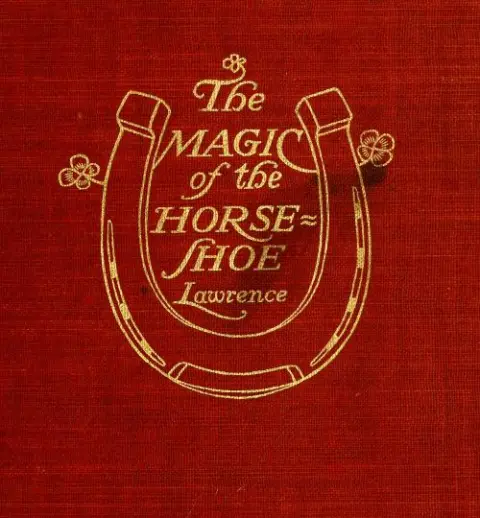
"The Magic of the Horse-Shoe, with Other Folk-Lore Notes" by Robert Means Lawrence is a collection of folk-lore explorations written in the late 19th century. The work delves into the origins and significances of various superstitions and popular beliefs, with a particular focus on the cultural history and magical connotations surrounding the horse-shoe as a talisman. It examines how such symbols have influenced human behavior and cultural practices over time, making it a rich resource for those interested in folklore and superstitious traditions. At the start of the text, the author introduces the study of popular customs and beliefs as a window into early human thought. The preface sets the tone for the exploration by discussing the evolution of the horse-shoe from a practical item to a symbol imbued with luck and supernatural properties, detailing historical practices and anecdotes, including a tale of Queen Elizabeth I and the tradition of giving horse-shoes as tokens of reverence. The author emphasizes the horse-shoe's dual significance: as a pragmatic tool for horses’ welfare and as a guardian against malevolent forces, showcasing the depth of cultural traditions attached to this seemingly simple object.
Introduction adapted from the source catalogue; source summaries may be automatically generated.
Free to read · English · 78,485 words · No account needed
MAKE TIME FOR A GOOD BOOK
On by default. Untick to stop anonymous reading totals. Each page counts after 10 seconds in view. How this works.
Anonymous counting is on unless you have switched it off.
[376] D. G. Brinton, Myths of the New World, p. 307.
[377] Andree, Ethnographische Parallelen, p. 177.
[378] Herbert Spencer, Principles of Sociology, vol. iii. p. 186.
[379] Rev. William Wyatt Gill, B. A., Myths and Songs from the South
Pacific.
[380] L. Maria Child, The Progress of Religious Ideas, vol. i. p. 276.
[381] Schuyler, Turkistan, p. 29.
[382] Isabella L. Bishop, Among the Tibetans, p. 104.
[383] Rev. J. A. Graham, M. A., On the Threshold of Three Closed Lands,
p. 76.
[384] G. Maspero, The Dawn of Civilization. 1894.
[385] Professor E. P. Evans, Popular Science Monthly, November, 1895.
[386] W. Crooke, B. A., Popular Religion and Folk-Lore of Northern
India.
[387] S. Baring Gould, Legends of the Patriarchs and Prophets.
[388] The Catholic World, vol. iii. 1866.
[389] Brand’s Popular Antiquities of Great Britain.
[390] Encyclopædia of Arts and Sciences. Philadelphia, 1798.
[391] Pedro Mexio, The Treasurie of Auncient and Moderne Times. 1613.
[392] Legends of Iceland, collected by Jón Arnason, 2d series, p. 646.
[393] Edward B. Tylor, Primitive Culture.
[394] Temple Bar, vol. 43. 1875.
[395] Dictionnaire des sciences occultes.
[396] William S. Walsh, Handy-Book of Literary Curiosities.
[397] Edward William Lane, The Modern Egyptians.
[398] James Owen Dorsey, “A Study of Siouan Cults,” Eleventh Annual Report of the Bureau of Ethnology, Washington, D. C.
[399] Lady Wilde’s Ancient Cures, Charms, and Usages of Ireland.
[400] M. l’Abbé Bertram, Dictionnaire de toutes les religions.
[401] Cornhill Magazine, vol. 76.
[402] Brand, vol. i. p. 361.
[403] C. F. Gordon-Cumming, At Home in Fiji, p. 105.
[404] E. Henry Carnay, Litterature orale de la Picardie. Paris, 1883.
[405] Ernst Meier, Deutsche Sagen, Sitten und Gebräuche aus Schwaben.
Stuttgart, 1852.
[406] François Lenormant, Chaldean Magic.
[407] Adolf Erman, Life in Ancient Egypt, p. 351.
[408] F. Chabas, Le calendrier des jours fastes et néfastes et de l’année egyptienne, p. 124.
[409] M. Court de Gebelin, Monde primitif, vol. iv. Paris, 1776.
[410] Jean Baptiste Thiers, Traité des superstitions. Paris, 1679.
[411] Historia litteraria, vol. ii. London, 1731.
[412] Monsieur Danet, A Dictionary of Greek and Roman Antiquities.
London, 1700.
[413] Chabas, p. 124.
[414] Rev. Edward Cockayne, M. A., Leechdoms, Wortcunning, and Starcraft
of Early England.
[415] Brand’s Popular Antiquities.
[416] Dr. C. Edward Sachan, The Chronology of Ancient Nations. London,
1879.
[417] Israel Abrahams, M. A., Jewish Life in the Middle Ages, p. 184.
[418] Bowring, Siam, vol. i. p. 158.
[419] Mallet’s Northern Antiquities.
[420] Mallet, p. 426.
[421] Clifford Howard, Sex Worship, p. 119.
[422] Mélusine, tome iv. 1888-89.
[423] Cockayne, vol. iii. p. 163.
[424] “Popular Superstitions,” Gentleman’s Magazine Library, vol. i.
[425] William Jones, Credulities Past and Present.
[426] T. F. Thiselton Dyer, British Popular Customs.
[427] Isaac Disraeli, Curiosities of Literature, vol. i. p. 280.
[428] Sir William Muir, K. C. S. I., The Life of Mahomet.
[429] John J. Pool, Studies in Mohammedanism, p. 103.
[430] M. l’Abbé Bertrand, Dictionnaire universel de toutes les
religions.
[431] Thomas Patrick Hughes, B. D., M. R. A. S., A Dictionary of Islam.
[432] S. S. Thorburn, Bannú.
[433] Israel Abrahams, M. A., Jewish Life in the Middle Ages, p. 186.
Your reading position is saved on this browser. Take it to another device with a library code. Reading pages adapt to text, rather than matching a printed edition.
BEHIND THE BOOK
This eBook is for the use of anyone anywhere in the United States and most other parts of the world at no cost and with almost no restrictions whatsoever. You may copy it, give it away or re-use it under the terms of the Project Gutenberg License included with this eBook or online at www.gutenberg.org. If you are not located in the United States, you will have to check the laws of the country where you are located before using this eBook. Read the source licence.
The original source file, including credits and licence, is retained by this library. Request an original-format copy at no charge. Please include the book title and Project Gutenberg identifier #57411.
KEEP YOUR CURIOSITY GOING
Cécile Tormay

Moritz Busch
John L. Ransom

Maurice Baring
Frances Wright
Cécile Tormay