THE CLASSIC COLLECTION✦Primitive Psycho-Therapy and QuackeryCLASSIC FREE BOOKS
Primitive Psycho-Therapy and Quackery
Robert Means Lawrence
THE CLASSIC COLLECTION · 1898
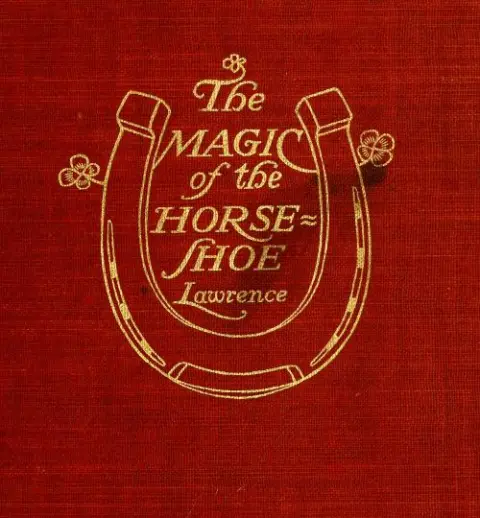
"The Magic of the Horse-Shoe, with Other Folk-Lore Notes" by Robert Means Lawrence is a collection of folk-lore explorations written in the late 19th century. The work delves into the origins and significances of various superstitions and popular beliefs, with a particular focus on the cultural history and magical connotations surrounding the horse-shoe as a talisman. It examines how such symbols have influenced human behavior and cultural practices over time, making it a rich resource for those interested in folklore and superstitious traditions. At the start of the text, the author introduces the study of popular customs and beliefs as a window into early human thought. The preface sets the tone for the exploration by discussing the evolution of the horse-shoe from a practical item to a symbol imbued with luck and supernatural properties, detailing historical practices and anecdotes, including a tale of Queen Elizabeth I and the tradition of giving horse-shoes as tokens of reverence. The author emphasizes the horse-shoe's dual significance: as a pragmatic tool for horses’ welfare and as a guardian against malevolent forces, showcasing the depth of cultural traditions attached to this seemingly simple object.
Introduction adapted from the source catalogue; source summaries may be automatically generated.
Free to read · English · 78,485 words · No account needed
MAKE TIME FOR A GOOD BOOK
On by default. Untick to stop anonymous reading totals. Each page counts after 10 seconds in view. How this works.
Anonymous counting is on unless you have switched it off.
[500] W. W. Newell, Journal of American Folk-Lore, No. 16. 1892.
[501] M. D. Conway, Demonology and Devil-Lore.
[502] James M. Campbell, Notes on the Spirit Basis of Belief and Custom.
[503] Bulletin de la societé d’ethnographie. July, 1887.
[504] Rev. J. G. Wood, M. A., The Uncivilized Races of Men.
[505] The Occult Sciences, from the French of Eusebe Salverte.
[506] Journal of American Folk-Lore, No. 13. 1891.
[507] L. Lalanne, Curiosités des traditions. Paris, 1847.
[508] E. P. Evans, Atlantic Monthly, vol. 54. 1884.
[509] W. Lander Lindsay, M. D., Mind in the Lower Animals.
[510] Banier’s Mythology.
[511] J. B. Thiers, Traité des superstitions.
[512] Louis Duval, Rôle des croyances populaires dans la protection des
animaux. 1889.
[513] The Student and Intellectual Observer, vol. iii. 1869.
[514] Rev. G. Oliver, D. D., The Pythagorean Triangle.
[515] Pliny, Natural History, book xxviii.
[516] Century Dictionary.
[517] Sir John Bowring, F. R. S., The Kingdom and People of Siam, vol.
i. p. 139.
[518] Mallet’s Northern Antiquities, p. 112.
[519] Folkard, p. 377.
[520] Robert Vilvain, of Excester, Enchiridium Epigrammatum, p. 148.
1654.
[521] T. Wain, The Wonderful Number Seven.
[522] Charles De B. Mills, The Tree of Mythology.
[523] The International Cyclopædia, vol. xiii. p. 360.
[524] Smith’s Dictionary of the Bible, art. “Seven.”
[525] F. Lenormant, Chaldean Magic and Sorcery.
[526] Enchiridium Epigrammatum, p. 141. 1654.
[527] T. Wain, The Wonderful Number Seven.
[528] S. Pancoast, M. D., The Kabbala, p. 247.
[529] The National Review, vol. xxi. p. 199. 1893.
[530] D. Person, Varieties.
[531] All the Year Round, vol. iii. 1870.
[532] Cockayne, vol. ii. p. 335.
[533] Crooke, p. 199.
[534] Campbell, Spirit Basis of Custom and Belief, p. 208.
[535] Times’ Whistle.
[536] Fräulein Helene Raff.
[537] Leechdoms, Wortcunning, and Starcraft, edited by the Rev. Oswald
Cockayne.
[538] Archæologia, vol. xxx. p. 427. 1844.
[539] Celtic Magazine, vol. viii. p. 252.
[540] William G. Black, Folk-Medicine.
[541] Social Life in Scotland, vol. iii. p. 227.
[542] C. G. Leland, Gypsy Sorcery.
[543] Das Kloster, Band xii. p. 771; Thorpe’s Northern Mythology, vol. i. p. 227; Grimm’s Teutonic Mythology, vol. i. pp. 272 et seq.
[544] Gerald Massey, Luniolatry, p. 17.
[545] J. B. Salgues, Des erreurs et des préjuges.
[546] Zeitschrift des Vereins für Volkskunde, vol. iv. p. 250. 1894.
[547] Boston Transcript, December 30, 1897.
[548] Surgeon-General Edward Balfour, The Encyclopædia of India.
[549] Journal of American Folk-Lore, No. 17. April, 1892.
[550] Brewers’ Dictionary of Phrase and Fable.
[551] The Century Dictionary.
Above and below the salt, 202-205.
Æsir, the twelve; demigods, 331.
Animals, superstitious dealings with, 279-311.
charms against, 292-297.
spirits assume the forms of black, 284-287.
legal prosecution of, 308-311.
Archangels, 321, 322.
Artisans, dwarfish, 28, 49.
Astrology, 19, 20, 248-253, 255-257.
Auguries derived from the sneeze of a cat, 212, 218, 219.
Augustine, Saint, quoted, 211.
Aureole or nimbus, 120, 121.
Avadanas, or Buddhist parables, 235.
Beelzebub, the fly-god, 283.
Bhúts, or malignant spirits, 160, 227.
Black animals not more vicious than others, 287.
Blacksmiths, credited with supernatural attributes, 40-53. usually able to recognize the Devil, 50.
Board’s end, 202.
British Apollo quoted, 170.
Camels instinctively browse upon saline plants, 187.
Ceremonies associated with sneezing, 231.
Cernabog, the black Slav demon, 285.
Chah-Miran, the serpent-king, 304.
Your reading position is saved on this browser. Take it to another device with a library code. Reading pages adapt to text, rather than matching a printed edition.
BEHIND THE BOOK
This eBook is for the use of anyone anywhere in the United States and most other parts of the world at no cost and with almost no restrictions whatsoever. You may copy it, give it away or re-use it under the terms of the Project Gutenberg License included with this eBook or online at www.gutenberg.org. If you are not located in the United States, you will have to check the laws of the country where you are located before using this eBook. Read the source licence.
The original source file, including credits and licence, is retained by this library. Request an original-format copy at no charge. Please include the book title and Project Gutenberg identifier #57411.
KEEP YOUR CURIOSITY GOING
Cécile Tormay

Moritz Busch
John L. Ransom

Maurice Baring
Frances Wright
Cécile Tormay