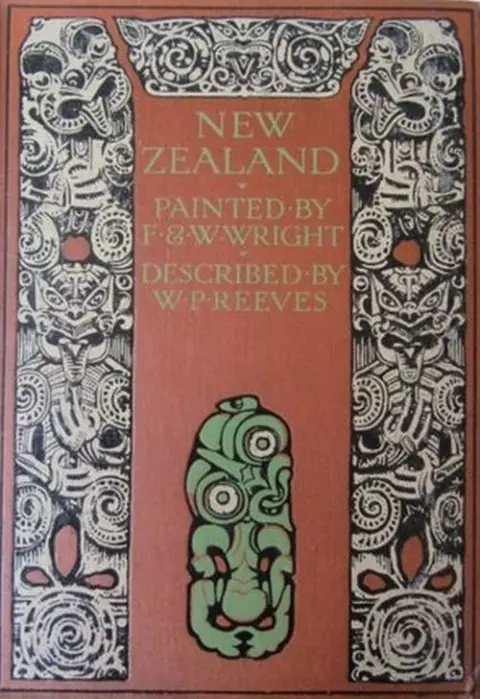
New Zealand
William Pember Reeves
THE CLASSIC COLLECTION · 1898
"The Long White Cloud: 'Ao Tea Roa'" by William Pember Reeves is a historical account written in the late 19th century. It provides an insightful exploration of New Zealand's genesis and development, tracing the island's history from the arrival of its earliest Polynesian settlers, the Maoris, to its status as a British colony. The work highlights the cultural, political, and natural aspects of New Zealand, aiming to shed light on its landscape and the complexities of its colonization. At the start of the book, Reeves establishes the backdrop of New Zealand's early European encounters. He notes the isolation and distinctiveness of the islands, contrasting their features with those of Britain and Australia. The opening portion delves into the arrival of the Maoris, their efforts in navigating the ocean to find New Zealand, and the rich, yet challenging landscape they encountered. Reeves also addresses the inadvertent impact of European settlers on the indigenous population and environment, setting the stage for a nuanced exploration of New Zealand's evolution through its unique struggles and successes.
Introduction adapted from the source catalogue; source summaries may be automatically generated.
Free to read · English · 102,986 words · No account needed
MAKE TIME FOR A GOOD BOOK
On by default. Untick to stop anonymous reading totals. Each page counts after 10 seconds in view. How this works.
Anonymous counting is on unless you have switched it off.
Nearly fifty chiefs signed the treaty there and then, and within six months--so energetically did the missionaries and Government agents carry it throughout the tribes--it had been signed by five hundred and twelve. Only about one chief of first-class rank and importance refused to sign it. This was that fine barbarian, Te Heu Heu, whose home lay at the foot of the great volcanoes by Lake Taupo on the plateau in the centre of the North Island. Te Heu Heu was the last of the old heathen warriors. Singularly fair-skinned, and standing fully six feet high, he looked what he was, a patriarch and leader of his people. Scoffing at the White men and their religion, he defied Governor and missionaries alike until his dramatic end, which came in 1846, when he and his village were swallowed up in a huge landslide. At present, as he could neither be coerced nor persuaded, he was let alone. For the rest, it may fairly be claimed that the Maori race accepted the Treaty of Waitangi.
They had very good reason to do so. To this day they regard it as the Magna Charta of their liberties. They were fully aware that under it the supreme authority passed to the Queen; but they were quite able to understand that their tribal lands were guaranteed to them. In other words, they were recognised as the owners in fee simple of the whole of New Zealand. As one of them afterwards expressed it, "The shadow passes to the Queen, the substance stays with us."
At the same time Governor Hobson had announced to the white settlers by proclamation that the Government would not recognise the validity of any of their land titles not given under the Queen's authority. It is not easy to see how else he could have dealt with the land-sharks, of whom there had been an ugly rush from Sydney on the news of the coming annexation, and most of whom as promptly retreated on finding the proclamation to be a reality. But at the same time his treaty and his proclamation were bound to paralyse settlement, to exasperate the entire white population, and to plunge the infant colony into a sea of troubles. Outside the missionaries and the officials every one was uneasy and alarmed. All the settlers were either landowners, land claimants, or would-be land purchasers. Yet they found themselves at one and the same time left without titles to all that they thought they possessed, and debarred from the right of buying anything more except from the Crown. And as the Governor was without funds, and the Crown, therefore, could not buy from the natives, there was a deadlock. Space will not admit here of a full discussion of the vexed question of the land clause in the Treaty of Waitangi. As a rule civilized nations do not recognise the right of scattered handfuls of barbarians to the ownership of immense tracts of soil, only a fraction of which they cultivate or use. However, from the noblest and most philanthropic motives an exception to this rule was made in the case of New Zealand, and by treaty some sixty to seventy thousand Maoris were given a title guaranteed by England--the best title in the world--to some sixty-six million acres of valuable land. Putting aside the question of equity, it may be observed that, had not this been done, the Maoris, advised by the missionaries, would certainly have refused their assent to the Treaty. The millions sterling which have had to be spent in New Zealand, directly and indirectly, in acquiring Maori land for settlement, supply of course no argument whatever against the equity of the Treaty. When honour is in the scale, it outweighs money. Yet had Captain Hobson been able to conceive what was entailed in the piecemeal purchase of a country held under tribal ownership, it is difficult to think that he would have signed the Treaty without hesitation. He could not, of course, imagine that he was giving legal force to a system under which the buying of a block of land would involve years of bargaining even when a majority of its owners wished to sell; that the ascertainment of a title would mean tedious and costly examination by courts of experts of a labyrinth of strange and conflicting barbaric customs; that land might be paid for again and again, and yet be declared unsold; that an almost empty wilderness might be bought first from its handful of occupants, then from the conquerors who had laid it waste, and yet after all be reclaimed by returned slaves or fugitives who had quitted it years before, and who had been paid for the land on which they had been living during their absence. Governor Hobson could not foresee that cases would occur in which the whole purchase money of broad lands would be swallowed up in the costs of sale, or that a greedy tribe of expert middlemen would in days to come bleed Maori and settler alike. Yet it would have been but reasonable for the Colonial Office to exert itself to palliate the effects of the staggering blows it thus dealt the pioneer colonists of New Zealand. They were not all land-sharks; most of them were nothing of the sort. It was but natural that they felt with extreme bitterness that the Queen's Government only appeared on the scene as the friend and protector of the aborigines. For the Whites the Government had for years little but suspicion and restraint.
Your reading position is saved on this browser. Take it to another device with a library code. Reading pages adapt to text, rather than matching a printed edition.
William Pember Reeves
BEHIND THE BOOK
This eBook is for the use of anyone anywhere in the United States and most other parts of the world at no cost and with almost no restrictions whatsoever. You may copy it, give it away or re-use it under the terms of the Project Gutenberg License included with this eBook or online at www.gutenberg.org. If you are not located in the United States, you will have to check the laws of the country where you are located before using this eBook. Read the source licence.
The original source file, including credits and licence, is retained by this library. Request an original-format copy at no charge. Please include the book title and Project Gutenberg identifier #12411.
KEEP YOUR CURIOSITY GOING
Cécile Tormay

Moritz Busch
John L. Ransom
Frances Wright
Cécile Tormay

Mabel Potter Daggett