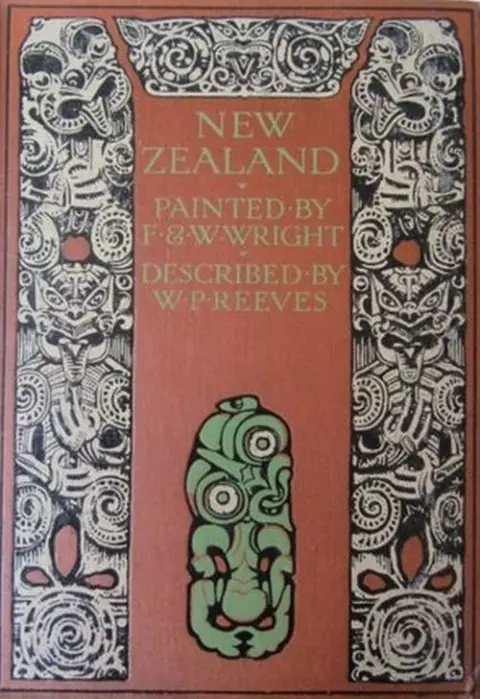
New Zealand
William Pember Reeves
THE CLASSIC COLLECTION · 1898
"The Long White Cloud: 'Ao Tea Roa'" by William Pember Reeves is a historical account written in the late 19th century. It provides an insightful exploration of New Zealand's genesis and development, tracing the island's history from the arrival of its earliest Polynesian settlers, the Maoris, to its status as a British colony. The work highlights the cultural, political, and natural aspects of New Zealand, aiming to shed light on its landscape and the complexities of its colonization. At the start of the book, Reeves establishes the backdrop of New Zealand's early European encounters. He notes the isolation and distinctiveness of the islands, contrasting their features with those of Britain and Australia. The opening portion delves into the arrival of the Maoris, their efforts in navigating the ocean to find New Zealand, and the rich, yet challenging landscape they encountered. Reeves also addresses the inadvertent impact of European settlers on the indigenous population and environment, setting the stage for a nuanced exploration of New Zealand's evolution through its unique struggles and successes.
Introduction adapted from the source catalogue; source summaries may be automatically generated.
Free to read · English · 102,986 words · No account needed
MAKE TIME FOR A GOOD BOOK
On by default. Untick to stop anonymous reading totals. Each page counts after 10 seconds in view. How this works.
Anonymous counting is on unless you have switched it off.
"The hills like giants at a hunting lay,
Chin upon hand, to see the game at bay."
[Footnote 1: Tupara (two-barrel), the Maori name for the short double-barrelled guns which were their handiest weapons against us in bush warfare.]
In 1860 the Taranaki settlement was growing to be what it now is--a very pleasant corner of the earth. Curving round the seashore under the lofty, lonely, symmetrical cone of Egmont, it is a green land of soft air and many streams. After long delays and much hope deferred, the colonists--mostly English of the south-west counties--had begun to prosper and to line the coast with their little homesteads standing among peach orchards, grassy fields, and sometimes a garden gay with the flowers of old Devon. Upon this quiet little realm the Maoris swept down, and the labour of twenty years went up in smoke. The open country was abandoned; the settlers took refuge in their town, New Plymouth. Some 600 of their women and children were shipped off to Nelson; about twice as many more who could not be induced to leave stayed huddled up in the little town, and the necessity of keeping a strong force in the place to defend them from a sudden dash by the Maoris hampered the conduct of the campaign. Martial law was proclaimed--destined not to be withdrawn for five years. After a time the town was protected by redoubts and a line of entrenchment. Crowded and ill-drained, it became as unhealthy as uncomfortable. Whereas for sixteen months before the war there had not been a funeral in the district, they were now seen almost daily. On the alarm of some fancied Maori attack, noisy panics would break out, and the shrieks of women and cries of children embarrassed husbands and brothers on whom they called for help, and whose duty as militiamen took them to their posts. The militia of settlers, numbering between four and five hundred, were soon but a minor portion of the defenders of the settlement. When fighting was seen to be inevitable, the Government sent for aid to Australia, and drew thence all the Imperial soldiers that could be spared. The Colony of Victoria, generous in the emergency, lent New Zealand the colonial sloop-of-war Victoria, and allowed the vessel not only to transport troops across the Tasman Sea, but to serve for many months off the Taranaki coast, asking payment for nothing except her steaming coal. By the end of the year there were some 3,000 Europeans in arms at the scene of operations, and they probably outnumbered several times over the fluctuating forces of the natives. The fighting was limited to the strip of sea-coast bounded by the Waitara on the north and the Tataramaika plain on the south, with the town of New Plymouth lying about midway between. The coast was open and surf-beaten, the land seamed by ravines or "gulleys," down which the rainfall of Egmont streamed to the shore. Near the sea the soil was--except in the settlers' clearings--covered with tough bracken from two to six feet high, and with other troublesome growths. Inland the great forest, mantling the volcano's flanks, and spreading its harassing network like a far-stretching spider's web, checked European movements. From the first the English officers in command in this awkward country made up their minds that their men could do nothing in the meshes of the bush, and they clung to the more open strip with a caution and a profound respect for Native prowess which epithets can hardly exaggerate, and which tended to intensify the self-esteem of the Maori, never the least self-confident of warriors. A war carried on in such a theatre and in such a temper was likely to drag. There was plenty of fighting, mostly desultory. The Maoris started out of the bush or the bracken to plunder, to cut off stragglers, or to fight, and disappeared again when luck was against them. Thirteen tiresome months saw much marching and counter-marching, frequent displays of courage--more courage than co-operation sometimes,--one or two defeats, and several rather barren successes. For the first eight months the advantage inclined to the insurgents. After that their overweening conceit of their Waikato contingent enabled our superior strength to assert itself. The Maoris, for all their courage and knowledge of the country, were neither clever guerillas nor good marksmen. Their tribal wars had always been affairs of sieges or hand-to-hand encounters. Half the skill displayed by them in intrenching, half the pluck they showed behind stockades, had they been devoted to harassing our soldiers on the march or to loose skirmishing by means of jungle ambuscades, might, if backed by reasonably straight shooting, have trebled our losses and difficulties.
Your reading position is saved on this browser. Take it to another device with a library code. Reading pages adapt to text, rather than matching a printed edition.
William Pember Reeves
BEHIND THE BOOK
This eBook is for the use of anyone anywhere in the United States and most other parts of the world at no cost and with almost no restrictions whatsoever. You may copy it, give it away or re-use it under the terms of the Project Gutenberg License included with this eBook or online at www.gutenberg.org. If you are not located in the United States, you will have to check the laws of the country where you are located before using this eBook. Read the source licence.
The original source file, including credits and licence, is retained by this library. Request an original-format copy at no charge. Please include the book title and Project Gutenberg identifier #12411.
KEEP YOUR CURIOSITY GOING
Cécile Tormay

Moritz Busch
John L. Ransom
Frances Wright
Cécile Tormay

Mabel Potter Daggett