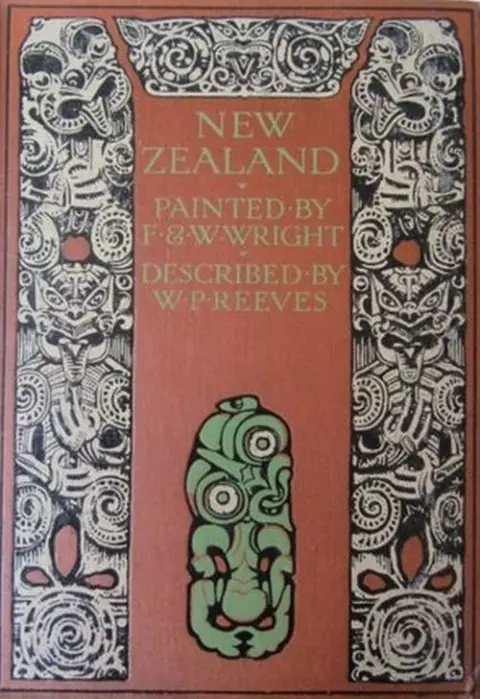
New Zealand
William Pember Reeves
THE CLASSIC COLLECTION · 1898
"The Long White Cloud: 'Ao Tea Roa'" by William Pember Reeves is a historical account written in the late 19th century. It provides an insightful exploration of New Zealand's genesis and development, tracing the island's history from the arrival of its earliest Polynesian settlers, the Maoris, to its status as a British colony. The work highlights the cultural, political, and natural aspects of New Zealand, aiming to shed light on its landscape and the complexities of its colonization. At the start of the book, Reeves establishes the backdrop of New Zealand's early European encounters. He notes the isolation and distinctiveness of the islands, contrasting their features with those of Britain and Australia. The opening portion delves into the arrival of the Maoris, their efforts in navigating the ocean to find New Zealand, and the rich, yet challenging landscape they encountered. Reeves also addresses the inadvertent impact of European settlers on the indigenous population and environment, setting the stage for a nuanced exploration of New Zealand's evolution through its unique struggles and successes.
Introduction adapted from the source catalogue; source summaries may be automatically generated.
Free to read · English · 102,986 words · No account needed
MAKE TIME FOR A GOOD BOOK
On by default. Untick to stop anonymous reading totals. Each page counts after 10 seconds in view. How this works.
Anonymous counting is on unless you have switched it off.
Those who know anything of politics anywhere, will not need to be told that the changes and experiments here sketched have been viewed with suspicion, alarm, contempt, or anger, by a large class of wealthy and influential New Zealanders. It is but fair that, in a sketch like this, some emphasis should be laid upon their dissent and protests. Into the personal attacks of which very much of their criticism has consisted this is not the place to enter. A summary of the Conservative view of the progressive work ought, however, to have a place. Disqualified as I might be thought to be from attempting it, I prefer to make use of an account written and published in 1896 by an English barrister, who, in the years 1894-95, spent many months in the Colony studying with attention its politics and public temper. As his social acquaintanceships lay chiefly among the Conservatives, he had no difficulty in getting frank expressions of their views. In the following sentences he sums up the more moderate and impersonal of these, as he heard and analysed them:--
"... It must not be supposed that the Conservatives of New Zealand, any more than those of the mother country, are apologists for 'sweating.' Indeed, as Mr. Reeves himself has acknowledged, the labour legislation with which he is associated was inaugurated by the Government's predecessors, and in carrying his Bills he had the cordial support of Captain Russell, the leader of the Opposition. At the same time it is urged that this protective legislation has been carried to an unreasonable extent, and people allege, no doubt with a certain amount of exaggeration, that they feel themselves regulated in all the relations of life. The measure which has created the most irritation seems to be the Shop Assistants Act. Employers say that Mr. Reeves has made every man 'a walking lawsuit,' and that they are chary of having one about their premises. Moreover, this constant succession of labour laws, and the language of some of their supporters, have created, so they say, in the minds of the working classes the impression that the squatters, manufacturers, and the classes with which they associate, are tyrants and oppressors, and their lives are embittered by the feeling that they are regarded as enemies of the people. Further, they say that the administrative action of the Government tends to keep up the price of labour, that the price of labour is unreasonably high, and that this fact, coupled with the necessity of keeping all the provisions of the labour laws in mind, and the spirit which they have generated, makes them disinclined to employ labour in the improvement of their lands. As to the Government's land policy, while it is admitted that small settlers are desirable, it is not admitted that large properties are necessarily a curse. What is resented more fiercely than anything else is the fact that they are liable to have their own properties appropriated at the arbitrary will of the Minister of lands, and though the Government promises to work the law reasonably, neither this nor any other of their declarations is regarded with confidence. It is asserted that the Government is flooding the country with incompetent settlers, who imagine that anyone can get a living out of the land; that the resumed properties have been purchased and cut up in such a way that a cry for a reduction of rents will soon become inevitable, and that the Cheap Money Scheme has created a class of debtors, who, in conceivable circumstances, might be able to apply effectual political pressure for the reduction of their interest. In point of fact they do not share the Progressist idea, that much can be done by legislation to ameliorate the condition of the masses of the population, nor do they see that in a country like New Zealand, where labour is dear, food cheap, and the climate mild and equable, their condition need necessarily be so deplorable. They still cherish the old theories of individualism. The humanitarian ideals of Mr. Reeves, not being idealists, they regard with little interest. What they see is the Government of their Colony, which they had been accustomed to control, in the hands of men whose characters they despise or detest, and the House of Representatives, which was once the most dignified and distinguished assembly in the Colonies, now become (in their circle at any rate) a byword of reproach--full of men who vote themselves for a three months' session salaries which many of them would be unable to earn in any other walk of life."
Your reading position is saved on this browser. Take it to another device with a library code. Reading pages adapt to text, rather than matching a printed edition.
William Pember Reeves
BEHIND THE BOOK
This eBook is for the use of anyone anywhere in the United States and most other parts of the world at no cost and with almost no restrictions whatsoever. You may copy it, give it away or re-use it under the terms of the Project Gutenberg License included with this eBook or online at www.gutenberg.org. If you are not located in the United States, you will have to check the laws of the country where you are located before using this eBook. Read the source licence.
The original source file, including credits and licence, is retained by this library. Request an original-format copy at no charge. Please include the book title and Project Gutenberg identifier #12411.
KEEP YOUR CURIOSITY GOING
Cécile Tormay

Moritz Busch
John L. Ransom
Frances Wright
Cécile Tormay

Mabel Potter Daggett