
The lost dirigible
Ralph Henry Barbour
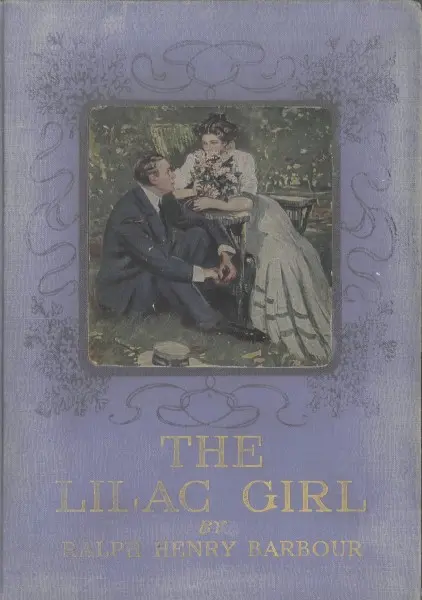
THE CLASSIC COLLECTION · 1909
"The Lilac Girl" by Ralph Henry Barbour is a novel likely written during the early 20th century. The story begins with a lively depiction of two men, Wade and Ed, camping in the mountains of Colorado, hinting at themes of adventure, camaraderie, and romance. The narrative shifts between their rustic outdoor life and Wade's encounters with Evelyn Walton, the girl who symbolizes love and beauty against the backdrop of nature. The opening of the book introduces Wade, who finds himself captivated by Evelyn when he glimpses her on a train platform. Their brief yet electric interaction is marked by youthful passion and charm, as they exchange names and promises, hinting at the deeper connection that will unfold. Following this, the story transitions to Wade five years later, exploring his new life in the quaint Eden Village, replete with its lilac fragrances and charming homes. Throughout this section, there are hints of intertwining destinies and family legacies, particularly concerning Wade's connection to Evelyn through Ed Craig. This mix of romance with a touch of nostalgia sets the stage for a compelling narrative about love, loss, and new beginnings.
Introduction adapted from the source catalogue; source summaries may be automatically generated.
Free to read · English · 38,363 words · No account needed
MAKE TIME FOR A GOOD BOOK
On by default. Untick to stop anonymous reading totals. Each page counts after 10 seconds in view. How this works.
Anonymous counting is on unless you have switched it off.
They said good night again a few minutes later and a little nearer the house. And again after that.
At a quarter to one Wade came to himself after a fashion at the end of the village street, smiling insanely at a white gate-post. With a happy sigh he turned homeward, his hands in his pockets, his head thrown back, and his lips pursed for a tune that forgot to come. A few steps brought him opposite the Doctor's house and the imp of mischief whispered in his ear. Wade laughed aloud. Then he crossed the street under the dark canopy of the elms and-pulled the office bell till it jangled wildly. A head came out of a window above.
"What's wanted?" asked the Doctor's sleepy voice. "Who is it?"
"It's Herrick. Come down, please."
After a moment the key turned and the Doctor, arrayed in a vast figured dressing-gown stood in the open door.
"Is it you?" he asked. "What's wrong? Who's ill"?"
"No one's ill, Doctor," said Herrick. "I just wanted to know if you had any remedy for happiness?"
Perhaps Wade's radiant, laughing face gave the Doctor his cue, for, after studying it a moment, he asked, with a chuckle:
"Have you tried marriage?"
"No, but I'm going to. Oh, I'm not crazy, Doctor. I was out for a stroll and thought I'd just drop by and tell you that I'd taken your advice and had decided not to leave to-morrow."
"Humph; nor the next day, either, I guess! Lad, is it all right? Have
you seen her?"
"Yes, I've seen her and it's all right! Everything's all right! Look at this world, Doctor. Did you ever see a more beautiful one? For Heaven's sake reel off some poetry for me!"
"Go to bed," laughed the Doctor, "go to bed!"
"Bed!" scoffed Wade.
"H'm, you're right," said the Doctor. "Stay up and be mad as you can, my lad. Bay to the moon! Sing under her window! Act the happy fool! Lord, if I wasn't so old I'd come out and help you. Youth, youth! Now go away before I hate you for it!"
"You couldn't hate anything, you old fraud," laughed Wade. "Go back to bed if you won't sing or dance with me or recite verses. But first, congratulations, please."
"My dear fellow," said the Doctor as he clasped Wade's hand, "you don't need any one's good wishes, but I give mine just the same. It's good news to me, the best of news."
"Thanks, Doctor. Good night. I'm off to bay the moon."
"Good night, good night!"
Your reading position is saved on this browser. Take it to another device with a library code. Reading pages adapt to text, rather than matching a printed edition.
Ralph Henry Barbour
Ralph Henry Barbour

Ralph Henry Barbour

Ralph Henry Barbour
BEHIND THE BOOK
This eBook is for the use of anyone anywhere in the United States and most other parts of the world at no cost and with almost no restrictions whatsoever. You may copy it, give it away or re-use it under the terms of the Project Gutenberg License included with this eBook or online at www.gutenberg.org. If you are not located in the United States, you will have to check the laws of the country where you are located before using this eBook. Read the source licence.
The original source file, including credits and licence, is retained by this library. Request an original-format copy at no charge. Please include the book title and Project Gutenberg identifier #12858.
KEEP YOUR CURIOSITY GOING
Coulson Kernahan

Maurice Baring
Frances Wright
Cécile Tormay

Frederic Jesup Stimson

W. H. P. (William Henry Pope) Jarvis