
The lost dirigible
Ralph Henry Barbour
THE CLASSIC COLLECTION · 1909
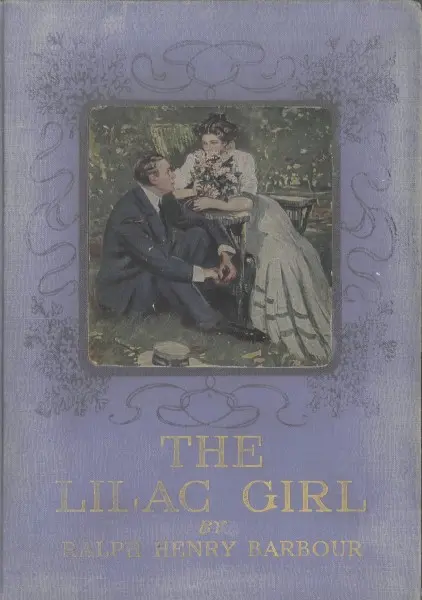
"The Lilac Girl" by Ralph Henry Barbour is a novel likely written during the early 20th century. The story begins with a lively depiction of two men, Wade and Ed, camping in the mountains of Colorado, hinting at themes of adventure, camaraderie, and romance. The narrative shifts between their rustic outdoor life and Wade's encounters with Evelyn Walton, the girl who symbolizes love and beauty against the backdrop of nature. The opening of the book introduces Wade, who finds himself captivated by Evelyn when he glimpses her on a train platform. Their brief yet electric interaction is marked by youthful passion and charm, as they exchange names and promises, hinting at the deeper connection that will unfold. Following this, the story transitions to Wade five years later, exploring his new life in the quaint Eden Village, replete with its lilac fragrances and charming homes. Throughout this section, there are hints of intertwining destinies and family legacies, particularly concerning Wade's connection to Evelyn through Ed Craig. This mix of romance with a touch of nostalgia sets the stage for a compelling narrative about love, loss, and new beginnings.
Introduction adapted from the source catalogue; source summaries may be automatically generated.
Free to read · English · 38,363 words · No account needed
MAKE TIME FOR A GOOD BOOK
On by default. Untick to stop anonymous reading totals. Each page counts after 10 seconds in view. How this works.
Anonymous counting is on unless you have switched it off.
"Think of that! And I was sure you didn't remember at all. And now, after all that time, I've got you again, dear! It's wonderful!"
"Not so fast, please," she said, sternly. "You forgot me once--"
"I never forgot you."
"And you may do it again."
"I didn't forget you, dear. I still have that lilac you threw me. I--"
"You mean the one I dropped?" she asked, innocently.
"It was a week later that we found gold, Eve, and I named the mine for you. I worked hard that year, and--well, I'll be honest; I didn't forget you; you were always a sort of vision of loveliness in my memory; but--there was so much to do--and--"
"And you changed your mind. I see. And you never thought of poor me, waiting for you all these years!"
"I guess you forgot me quick enough," said Wade, ruefully. "When that other fellow came along, I mean."
"Stupid!" she whispered. "That was you."
"Me?"
"Yes, the you I met out there on the mountain, the you that made love to me and set my silly little girl's heart a-fluttering. Don't you think now it was wicked of you? Why, Wade--oh!"
"That's my name," he laughed.
"It's a funny name, isn't it?" she murmured, shyly.
"I suppose it is."
"But I like it. Oh, dear, I must go! It must be midnight!"
"No, only twenty minutes of," he answered, holding his watch to the light. "Don't go yet. There's so much I want to say!"
"To-morrow," she answered, smiling up at him. "Do you know that you're
still holding my hands?"
"I don't know what I know," he answered, softly. "Only that I love you and that I'm the happiest man alive."
"Are you? Why?"
"Because you're going to marry me."
"I haven't said so," she objected.
"But you're going to?"
"To-morrow--perhaps."
"No, to-night--surely."
"To-morrow."
"To-night."
"Am I?" she sighed. "We-ell--do you want me to?"
"Yes," he answered, tremulously. He drew her to him, unresistingly. The moon made silver pools of her eyes. Her mouth, slightly parted, was like a crimson rosebud.
"Eve!" he whispered, hoarsely.
Her eyes closed and her head dropped happily back against his arm. The moonlight was gone now from her face.
Ages later--or was it only a few moments?--they were standing apart again, hands still linked, looking at each other across the little space of magic light.
"I must go now," she said softly. "Good night."
"Please, not yet!"
"But think of the time! Besides, it's quite--quite awful, anyway!
Suppose Carrie heard of it!"
"Let her! You're mine, aren't you?"
"Good night."
"Aren't you?"
"Every little bit of me, dear, for ever and ever," she answered.
Your reading position is saved on this browser. Take it to another device with a library code. Reading pages adapt to text, rather than matching a printed edition.
Ralph Henry Barbour
Ralph Henry Barbour

Ralph Henry Barbour

Ralph Henry Barbour
BEHIND THE BOOK
This eBook is for the use of anyone anywhere in the United States and most other parts of the world at no cost and with almost no restrictions whatsoever. You may copy it, give it away or re-use it under the terms of the Project Gutenberg License included with this eBook or online at www.gutenberg.org. If you are not located in the United States, you will have to check the laws of the country where you are located before using this eBook. Read the source licence.
The original source file, including credits and licence, is retained by this library. Request an original-format copy at no charge. Please include the book title and Project Gutenberg identifier #12858.
KEEP YOUR CURIOSITY GOING
Coulson Kernahan

Maurice Baring
Frances Wright
Cécile Tormay

Frederic Jesup Stimson

W. H. P. (William Henry Pope) Jarvis