
The lost dirigible
Ralph Henry Barbour
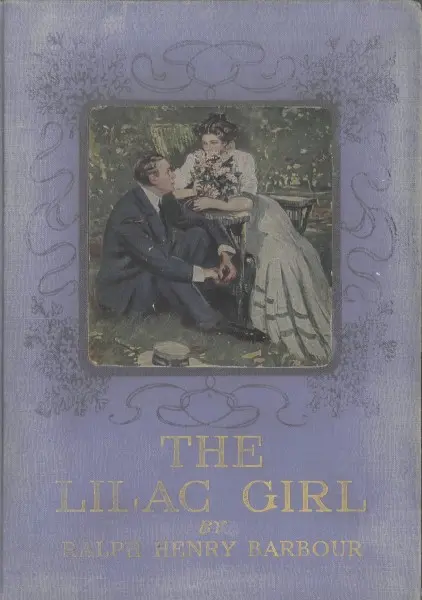
THE CLASSIC COLLECTION · 1909
"The Lilac Girl" by Ralph Henry Barbour is a novel likely written during the early 20th century. The story begins with a lively depiction of two men, Wade and Ed, camping in the mountains of Colorado, hinting at themes of adventure, camaraderie, and romance. The narrative shifts between their rustic outdoor life and Wade's encounters with Evelyn Walton, the girl who symbolizes love and beauty against the backdrop of nature. The opening of the book introduces Wade, who finds himself captivated by Evelyn when he glimpses her on a train platform. Their brief yet electric interaction is marked by youthful passion and charm, as they exchange names and promises, hinting at the deeper connection that will unfold. Following this, the story transitions to Wade five years later, exploring his new life in the quaint Eden Village, replete with its lilac fragrances and charming homes. Throughout this section, there are hints of intertwining destinies and family legacies, particularly concerning Wade's connection to Evelyn through Ed Craig. This mix of romance with a touch of nostalgia sets the stage for a compelling narrative about love, loss, and new beginnings.
Introduction adapted from the source catalogue; source summaries may be automatically generated.
Free to read · English · 38,363 words · No account needed
MAKE TIME FOR A GOOD BOOK
On by default. Untick to stop anonymous reading totals. Each page counts after 10 seconds in view. How this works.
Anonymous counting is on unless you have switched it off.
There was a bench outside the kitchen door at The Cedars, a slant-legged, unpainted bench which at one time had been used to hold milk-cans. Wade settled himself on this in company with several dozen glasses of currant jelly. From his position he could look in at the kitchen door upon Eve and Miss Mullett, who, draped from chin to toes in blue-checked aprons, were busy over the summer preserving. A sweet, spicy fragrance was wafted out to him from the bubbling kettles, and now and then Eve, bearing a long agate-ware spoon and adorned on one cheek with a brilliant streak of currant juice, came to the threshold and smiled down upon him in a preoccupied manner, glancing at the jelly tumblers anxiously.
"If you spill them," she said, "Carrie will never forgive you, Mr.
Herrick."
"Nonsense," declared Miss Mullett from the kitchen. "I'd just send you for more, Mr. Herrick, and make you help me put them up."
"I think I'd like that," answered Wade.
"It must be rather good fun messing about with sugar and currants and
things."
"Messing about!" exclaimed Eve, indignantly. "It's quite evident that you've never done any of it!"
"Well, I stewed some dried apricots once," said Wade, "and they weren't half bad. I suppose you're going to be busy all the morning, aren't you?" he asked, forlornly.
"I'm afraid so."
"Indeed you're not," said Miss Mullett, decisively. "You're going to stop as soon as we get this kettleful off. I can do the rest much better without you, dear."
"Did you ever hear such ingratitude?" laughed Eve. "Here I've been hard at work since goodness only knows what hour of the morning, and now I'm informed that my services are valueless! I shall stay and help just to spite you, Carrie."
"I wanted you to take a walk," said Wade, boldly. "It's a great morning, too fine to be spent indoors."
"Is it?" Eve looked up at the fleecy sky critically. "Don't you think it
looks like rain?"
"Not a bit," he answered, stoutly. "We're in for a long drought. Zephania told me so not half an hour ago."
"Is Zephania a weather prophet?"
"She's everything. She knows so much that she makes me ashamed of myself. And she never makes a mistake about the weather."
Wade waited anxiously.
"We-ll," said Eve, finally, "if you're sure it isn't going to rain, and Carrie really doesn't want me--"
"I do not," said Miss Mullett, crisply. "A walk will do you good. She stayed up until all hours last night, Mr. Herrick, writing. I wish you'd say something to her; she pays no attention to me."
Your reading position is saved on this browser. Take it to another device with a library code. Reading pages adapt to text, rather than matching a printed edition.
Ralph Henry Barbour
Ralph Henry Barbour

Ralph Henry Barbour

Ralph Henry Barbour
BEHIND THE BOOK
This eBook is for the use of anyone anywhere in the United States and most other parts of the world at no cost and with almost no restrictions whatsoever. You may copy it, give it away or re-use it under the terms of the Project Gutenberg License included with this eBook or online at www.gutenberg.org. If you are not located in the United States, you will have to check the laws of the country where you are located before using this eBook. Read the source licence.
The original source file, including credits and licence, is retained by this library. Request an original-format copy at no charge. Please include the book title and Project Gutenberg identifier #12858.
KEEP YOUR CURIOSITY GOING
Coulson Kernahan

Maurice Baring
Frances Wright
Cécile Tormay

Frederic Jesup Stimson

W. H. P. (William Henry Pope) Jarvis