THE CLASSIC COLLECTION✦An outlaw’s diary: the CommuneCLASSIC FREE BOOKS
An outlaw’s diary: the Commune
Cécile Tormay
THE CLASSIC COLLECTION · 1916
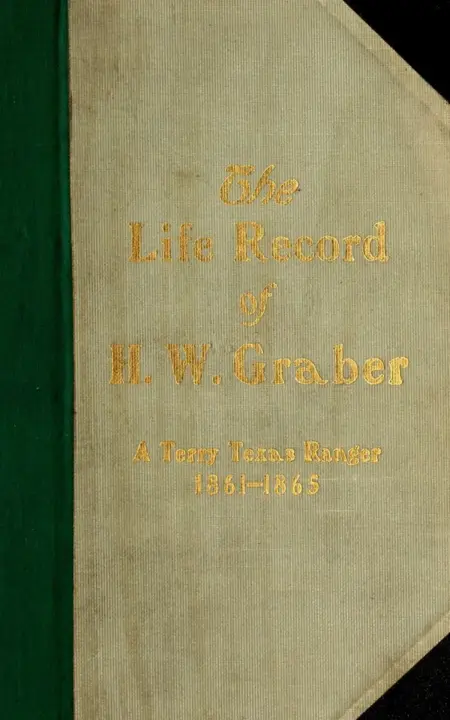
"The Life Record of H. W. Graber" by H. W. Graber is a personal memoir written in the early 20th century. The work recounts the author’s experiences during the tumultuous years of the American Civil War and his life in Texas, touching upon various adventures, hardships, and reflections on his military service. It promises an intimate and historical glimpse into the life of a soldier and settler amid significant national turmoil. The opening of this memoir introduces H. W. Graber, who shares his earliest memories of life in Germany before moving to Texas. He describes the challenges his family faced, including the loss of his parents and the responsibilities he assumed as the eldest sibling. Graber’s narrative journeys through his childhood, working various jobs, and the formative experiences that led him to serve in the war. Early chapters set the stage for his later military endeavors, showcasing his resilience and adaptability in a rapidly changing world as he navigates both his family obligations and the dangers of frontier life.
Introduction adapted from the source catalogue; source summaries may be automatically generated.
Free to read · English · 105,816 words · No account needed
MAKE TIME FOR A GOOD BOOK
On by default. Untick to stop anonymous reading totals. Each page counts after 10 seconds in view. How this works.
Anonymous counting is on unless you have switched it off.
I forgot to explain that through the issuance of the bonds, it was agreed that the town should be issued stock to the amount, thus every taxpayer became a stockholder and was entitled to vote in the organization. While at Austin, in company with some members of the Legislature, I called on General Braxton Bragg, who had just come to Texas with a party of civil engineers, with the intention of making this his home—he was anxious to get a first job and promised me he would undertake the location of our road at his actual cost (estimated not to exceed 500 dollars). As soon as organized I took up a correspondence with him, and entered into a contract to run three preliminary lines and cross section the line adopted, furnish plans and specifications of a first-class road. He surveyed one line to Ennis, one to Palmer and one to the nearest point on the H. & T. C., which was adopted. We next advertised for bids for the whole work complete, contractor furnishing the road complete, ready for operation, except equipment, and another for the grading only. We had a bid on each, one from John McCarthy of Kansas City, who was returning from Galveston, where he had in a bid for a large contract with the Gulf, Colorado & Santa Fe and had lost out. He carefully examined our assets, which were one hundred and eighty-five sections (estimated) of land certificates to be issued by the State (the line being 11 45-100 miles long), $75,000 of Waxahachie bonds and about $13,000 of farmers’ stock subscriptions which I had secured by hard labor, and in which I had valuable assistance from Judge Anson Rainey, who was then a young lawyer in Judge Ferris’ office. Mr. McCarthy, satisfied with our assets, submitted a proposition to deliver us the road complete as per General Bragg’s specification, except to substitute fifty-six pounds of good second-hand iron approved by General Bragg, which was considered sufficient for our purpose, in consideration for our entire assets, and complete the same in two years. We also had a proposal from Roach Brothers & Tierney for the grade only at thirteen cents per yard. As John McCarthy’s bid was the best for us we awarded him the contract, and immediately notified him by wire at Kansas City, to which we received a reply from his wife, by letter, saying Mr. McCarthy was not at home, but we would hear from him as soon as he returned. In the meantime I wired General Bragg at Galveston, who was the chief engineer of the G., C. & S. F. for a report on Mr. McCarthy, but had his answer, “Drop him.” This in connection with an indefinite letter finally received from McCarthy, made me conclude it best to let him alone. In the meantime, I had induced Mr. Roach to hold his bid open (which was 13 cents per yard, one-third cash, one-third in bonds and one-third in provisions and forage he expected to use to feed his teams and men) until we heard definitely from John McCarthy and in case of his failure to make us a good bond, and furnish us ample evidence of his ability and good intentions, we would give him the contract for the grade, as in his bid. After our decision to drop Mr. John McCarthy, we entered into a contract with Roach Brothers & Tierney for the grade, to go to work at once—as he had his outfit at Fort Worth already. He was on the ground sooner than expected, and gave us only a few days to prepare for a formal beginning of the work. We wanted to celebrate the event with a great barbecue. On account of the short time for notifying the farmers, the board of directors opposed my plans of having the celebration, but I determined to have it anyway, and sent out invitations to all interested in the building of the Waxahachie Tap, to join us in celebrating the commencement of the work. I solicited a few of our best farmers to donate the meats, which they did cheerfully in the greatest abundance. The day set apart for the celebration, the farmers began to arrive in the early morning in large numbers—not only our own Ellis County people, but a large number from Hill and adjoining counties, and by one o’clock the crowd was variously estimated at from 1500 to 2000 men, women and children. Such a large enthusiastic gathering had never been known in this part of the State. The board of directors had in the meantime concluded to join in with us, and, although they had told me they would have nothing to do with it, had ordered carriages, and I was invited to a seat with Mr. John C. Gibson, who informed me they had not prepared any program, which I had asked them to do in the morning. I asked Mr. Gibson his age, and found he was the oldest man on the board. When everything was ready, I was handed a spade by Mr. Roach, who stated that it devolved on me to turn the first dirt. I climbed on top of a wagon bed with the spade and addressed the crowd in a few words which I remember about as follows:
Your reading position is saved on this browser. Take it to another device with a library code. Reading pages adapt to text, rather than matching a printed edition.
BEHIND THE BOOK
This eBook is for the use of anyone anywhere in the United States and most other parts of the world at no cost and with almost no restrictions whatsoever. You may copy it, give it away or re-use it under the terms of the Project Gutenberg License included with this eBook or online at www.gutenberg.org. If you are not located in the United States, you will have to check the laws of the country where you are located before using this eBook. Read the source licence.
The original source file, including credits and licence, is retained by this library. Request an original-format copy at no charge. Please include the book title and Project Gutenberg identifier #68143.
KEEP YOUR CURIOSITY GOING
Cécile Tormay

Moritz Busch
John L. Ransom
Frances Wright
Cécile Tormay

Mabel Potter Daggett