THE CLASSIC COLLECTION✦An outlaw’s diary: the CommuneCLASSIC FREE BOOKS
An outlaw’s diary: the Commune
Cécile Tormay
THE CLASSIC COLLECTION · 1916
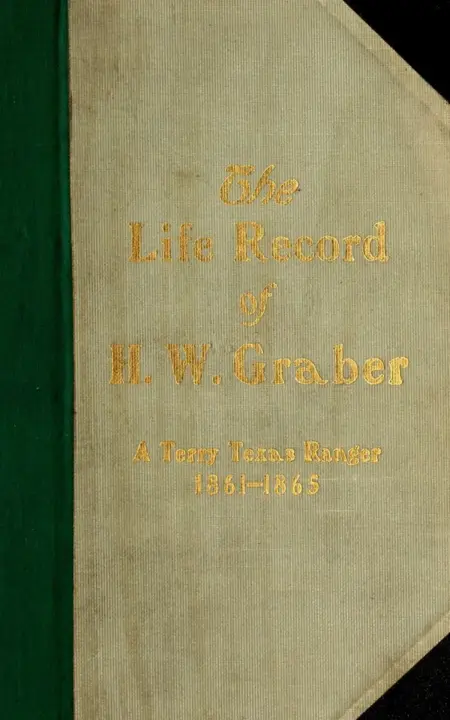
"The Life Record of H. W. Graber" by H. W. Graber is a personal memoir written in the early 20th century. The work recounts the author’s experiences during the tumultuous years of the American Civil War and his life in Texas, touching upon various adventures, hardships, and reflections on his military service. It promises an intimate and historical glimpse into the life of a soldier and settler amid significant national turmoil. The opening of this memoir introduces H. W. Graber, who shares his earliest memories of life in Germany before moving to Texas. He describes the challenges his family faced, including the loss of his parents and the responsibilities he assumed as the eldest sibling. Graber’s narrative journeys through his childhood, working various jobs, and the formative experiences that led him to serve in the war. Early chapters set the stage for his later military endeavors, showcasing his resilience and adaptability in a rapidly changing world as he navigates both his family obligations and the dangers of frontier life.
Introduction adapted from the source catalogue; source summaries may be automatically generated.
Free to read · English · 105,816 words · No account needed
MAKE TIME FOR A GOOD BOOK
On by default. Untick to stop anonymous reading totals. Each page counts after 10 seconds in view. How this works.
Anonymous counting is on unless you have switched it off.
I now began planning for railroad connection, and when I had my plans sufficiently matured, I submitted them to a meeting of the business men, who expressed grave doubt about the possibility of the undertaking, and I only induced them to enter into it by suggesting that an effort, even though a failure, would have the result of throwing Ennis on the defensive and induce them to drop their county seat agitation. They then told me to go ahead and get my plans fully matured, which I submitted at a subsequent meeting, and which were as follows: To get a charter for a Waxahachie tap road with a State land grant of sixteen sections to the mile and have the town issue bonds to the limit of the law, which proved to be $75,000, then augment this amount with farmers’ stock subscription of $25,000 more; to sell these bonds at par to the business men of Waxahachie and commission merchants of Galveston and New York who were doing business with Waxahachie—thus giving us $100,000 cash and the State land grant to build the road with. I stated this could only be done by the adoption of second-hand iron, which I believed could be had, and which would answer the purpose. To buy new iron would cost several times the amount of our cash asset, as it was then quoted at $85.00 a ton at the mills. There was serious doubt about the Legislature passing a bond bill at the time as they had up the repudiation of international bond bill granted under a fraudulent charter, and the International Railroad Company had Galusha Grow of Pennsylvania and John H. Burnett of Galveston at Austin, trying to bulldoze Governor Coke and his Legislature into the issuance of their bonds; hence both the Governor and Legislature were committed against the issue of bonds of the State in aid of railroads. But I believed that Judge J. W. Ferris, who was then one of the most eminent lawyers in the State, and who, through his International bond decision while acting as special Supreme Judge in the case had endeared himself to the Governor and Legislature, as well as the entire people of the State, would be able to overcome this objection, as we were only asking permission to tax our own town. It was then determined to send Judge Ferris to Austin for the purpose of obtaining a charter and bond bill. The committee appointed to make the request of the judge met his positive refusal, but he stated at the same time that if it was attempted to build the road, he would back the enterprise with his money. I was now urged and finally persuaded to go to Austin and endeavor to obtain the necessary legislation. I called a meeting of the taxpayers of Waxahachie, and explained to them that it was of the utmost importance to get up a petition to the Governor and Legislature, asking permission to tax themselves, and I succeeded in obtaining every taxpayer’s name to the petition. I then had the county clerk examine the tax rolls and certify that he found every taxpayer’s name to the same. I then proceeded to Austin, armed with this petition, a letter from Judge Ferris to Governor Coke, and from Dr. Aldredge to friends in the Senate. On my arrival at Austin, I met John H. Burnett and Galusha Grow at the hotel, who proposed to me, if I would assist them, they would assist me, which I declined, telling them that I was opposed to the issuance of their bonds, thus at the outset defining my position with the Legislature. The next morning I sought and obtained an audience with Governor Coke, presented my letter from Judge Ferris and petition from the taxpayers, and after reading this, the Governor said, “Mr. Graber, I will promise you this, if the Legislature passes your bills I will sign them. The question involved in the International bill is the taxing of the whole State to benefit the section through which the road runs, but in your request the good people of Waxahachie are only asking to tax themselves to save their town.” I thanked the Governor for his kind assurance and asked permission to make the statement to the members of the Legislature, which he readily gave. Though I had never before looked inside a legislative hall I soon felt perfectly at home and had the privilege of the House and Senate. In my canvass of the House and Senate I found little opposition to the bond bill after reading our petition, but considerable objection to the further donation of land in aid of railroads, which, however, I was able to overcome by satisfying them we would never be able to build our road without it. As many of the influential members were old army friends to whom I became indebted for valuable assistance, I was able to return home in three weeks, both bills having been signed by Governor Coke a few weeks later. It would not be inappropriate here to mention a little incident to show a proper appreciation of my services at that time. I had wired my wife that I would be home on Saturday, but detained en route, I failed to make it, which saved me considerable embarrassment, as the stage was met a short distance from town by the mayor, city council and concourse of citizens, with a brass band, intending to give me an enthusiastic reception. On the next Saturday a mass meeting was held for the purpose of organizing under our charter, and electing officers. At this meeting I explained to them that I had taken the liberty of stating to members of the Legislature that Judge Ferris would be the president of the company, and asked his election, telling them that it was all-important the enterprise should be headed by the most influential man in the community. Judge Ferris being present, stated he could not under any circumstances consider the acceptance of the position as he did not have the time to give it the attention necessary to make it a success, and placed my name in nomination, which created great enthusiasm, and it was attempted to be carried through without further consideration. I tried to check this movement, by telling them I had as little time to spare from my business as Judge Ferris, had already given them three weeks of most valuable time away from my business and was unable to do anything more than act on the board of directors, if they saw fit to use me in that capacity; but the meeting would not have it that way, and plainly told me if I wanted the road built, I would have to serve, and promised to sustain me with all the means and power at their command. Under this assurance I was finally persuaded to accept, and, after completing the organization with Judge Ferris as vice-president, the meeting adjourned subject to the call of the president.
Your reading position is saved on this browser. Take it to another device with a library code. Reading pages adapt to text, rather than matching a printed edition.
BEHIND THE BOOK
This eBook is for the use of anyone anywhere in the United States and most other parts of the world at no cost and with almost no restrictions whatsoever. You may copy it, give it away or re-use it under the terms of the Project Gutenberg License included with this eBook or online at www.gutenberg.org. If you are not located in the United States, you will have to check the laws of the country where you are located before using this eBook. Read the source licence.
The original source file, including credits and licence, is retained by this library. Request an original-format copy at no charge. Please include the book title and Project Gutenberg identifier #68143.
KEEP YOUR CURIOSITY GOING
Cécile Tormay

Moritz Busch
John L. Ransom
Frances Wright
Cécile Tormay

Mabel Potter Daggett