THE CLASSIC COLLECTION✦An outlaw’s diary: the CommuneCLASSIC FREE BOOKS
An outlaw’s diary: the Commune
Cécile Tormay
THE CLASSIC COLLECTION · 1916
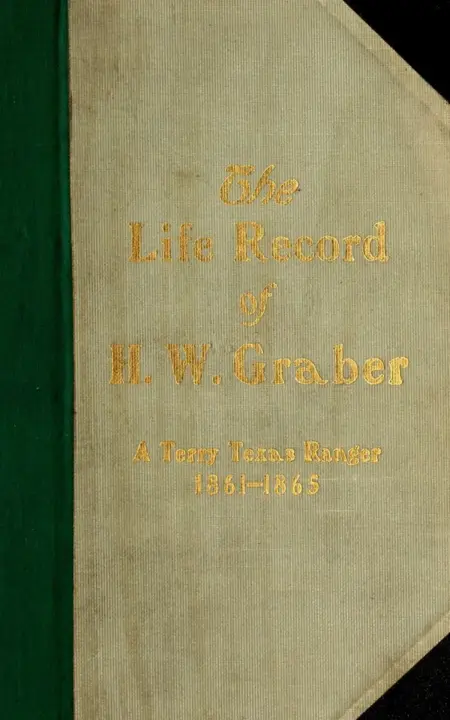
"The Life Record of H. W. Graber" by H. W. Graber is a personal memoir written in the early 20th century. The work recounts the author’s experiences during the tumultuous years of the American Civil War and his life in Texas, touching upon various adventures, hardships, and reflections on his military service. It promises an intimate and historical glimpse into the life of a soldier and settler amid significant national turmoil. The opening of this memoir introduces H. W. Graber, who shares his earliest memories of life in Germany before moving to Texas. He describes the challenges his family faced, including the loss of his parents and the responsibilities he assumed as the eldest sibling. Graber’s narrative journeys through his childhood, working various jobs, and the formative experiences that led him to serve in the war. Early chapters set the stage for his later military endeavors, showcasing his resilience and adaptability in a rapidly changing world as he navigates both his family obligations and the dangers of frontier life.
Introduction adapted from the source catalogue; source summaries may be automatically generated.
Free to read · English · 105,816 words · No account needed
MAKE TIME FOR A GOOD BOOK
On by default. Untick to stop anonymous reading totals. Each page counts after 10 seconds in view. How this works.
Anonymous counting is on unless you have switched it off.
We now took up our line of march for Ritters, a point on the Louisville & Nashville Pike, between Cave City and Woodsonville, with Hindman’s Brigade of infantry and a battery of four pieces, camped at Cave City, a few miles in our rear, and established our permanent camp, for the purpose of scouting and picketing. This camp at Ritters in winter proved to be a very trying one to us, raised in Texas in a mild and genial climate. We had a great deal of snow and rain and the exposure on scouts and picket duty soon developed pneumonia, measles and other troubles, necessitating our patients to abandon camp life. They were sent to the hospital at Nashville, where the ladies of Nashville were daily awaiting trains. They would not permit patients to be carried to the hospital but would take them to their private homes for personal care and treatment. They showed a partiality for the Texas Rangers, no doubt largely through sympathy, as we had left our distant, comfortable homes, burning all bridges behind us, to fight for them and their country. Our regiment soon dwindled down from a membership of one thousand to not more than about four hundred for duty; many of the sick were permanently rendered unable to return, while a great many died.
After serving nearly a month in the capacity of picket and scouts, General Hindman, anxious to bring on an engagement with the enemy, who were camped on Green River at Woodsonville and Mumfordsville, conceived the idea of moving his camp. Instead of avoiding a collision, as he had orders to do, he moved right toward the enemy’s lines, ordering Colonel Terry, with our regiment, to move about a mile in his advance.
I was on picket duty, with part of a company, at Horse Cave, about three miles south of the main pike from Bowling Green to Louisville, when Captain Ferrell of the regiment, with part of his company, came by and took us along, moving towards Woodsonville on a dirt road running parallel with the pike on which were Hindman’s Brigade of infantry; with the Louisville & Nashville Railroad running between the two. Just as we came in sight of Rowlett Station, a point on a high ridge this side of Woodsonville, we discovered the regiment, with Colonel Terry and General Hindman about fifty feet in advance, moving in the direction of Rowlett Station. Colonel Terry and General Hindman then discovered a Federal line of infantry lying down behind a rail fence in front of them. Hindman’s infantry were at least a mile behind, coming on, when they discovered the enemy. General Hindman ordered Colonel Terry to withdraw the regiment and let him bring up the artillery and infantry, and dislodge them from their position. In the meantime, Captain Ferrell, in command of the party I was with, had discovered the enemy in our front, which was just across a railroad cut, spanned by the pike bridge. Colonel Terry, in place of obeying the order of General Hindman to withdraw, answered, “General Hindman, this is no place for you; go back to your infantry,” and called on Captain Walker, who was in the rear with the balance of the regiment, to come on, form into line and charge. Simultaneously with his charge on the west side of the railroad, we, under Ferrell, charged the enemy in front of us, behind the rail fence. As soon as we moved forward, other Federals, behind trees and rocks, on small hills on both sides, opened fire on us. Their troops behind the fence held their fire until we got within fifty yards of them, then turned loose. In less time than it takes to tell it, we charged them, delivering our fire of double-barreled shotguns, breaking down the fence and getting among them with our six-shooters. In a few minutes we had run over them, although they numbered two to one, and to save themselves many of them “possumed” on us, and feigned being dead, and by that means saved their lives, though the main portion of them fled towards Woodsonville, where, down in the edge of the timber, they were met by heavy reinforcements. In this charge we lost a number of our best men, killed and wounded. Among the killed was Colonel Terry, which proved an irreparable loss, as no doubt, considering his fearlessness and dash, as also his ability as a commander, he would have proven another Forrest, a Napoleon of cavalry. General Hindman brought up his infantry and artillery, a battery of four pieces, with which he opened on their fort at Mumfordsville, and also on their line of infantry in the woods about a half mile below us. The fort responded, but largely overshot us and our battery. This proved our first baptism by fire. General Hindman was notified by a scout that the enemy was crossing Green River in very heavy force, near the Mammoth Cave, moving in our rear, which necessitated falling back to Cave City. We brought off the bodies of our dead and wounded, the remains of Colonel Terry being sent to Texas in charge of Captain Walker, who was wounded, and the balance of the wounded were sent to hospitals at Nashville.
Your reading position is saved on this browser. Take it to another device with a library code. Reading pages adapt to text, rather than matching a printed edition.
BEHIND THE BOOK
This eBook is for the use of anyone anywhere in the United States and most other parts of the world at no cost and with almost no restrictions whatsoever. You may copy it, give it away or re-use it under the terms of the Project Gutenberg License included with this eBook or online at www.gutenberg.org. If you are not located in the United States, you will have to check the laws of the country where you are located before using this eBook. Read the source licence.
The original source file, including credits and licence, is retained by this library. Request an original-format copy at no charge. Please include the book title and Project Gutenberg identifier #68143.
KEEP YOUR CURIOSITY GOING
Cécile Tormay

Moritz Busch
John L. Ransom
Frances Wright
Cécile Tormay

Mabel Potter Daggett