THE CLASSIC COLLECTION✦The Night ClubCLASSIC FREE BOOKS
The Night Club
Herbert George Jenkins
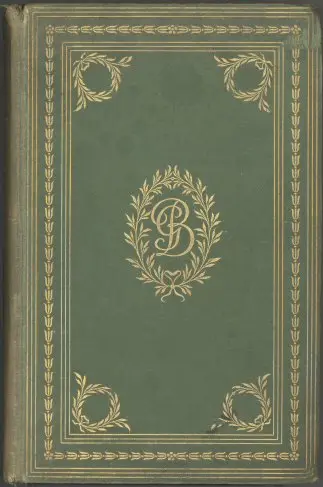
THE CLASSIC COLLECTION · 1912
"The Life of George Borrow" by Herbert George Jenkins is a biographical account written in the early 20th century. This work explores the life and career of George Borrow, with particular attention to his experiences between the late 18th century and early 19th century. The narrative emphasizes Borrow's development from a struggling writer to a significant figure known for his missionary work and literary contributions, especially within the context of his time in Spain. The opening of the book sets the stage for Borrow's intriguing life, starting with the background of his father, Thomas Borrow, and the family's circumstances that shaped George's early years. Jenkins paints a vivid picture of young Borrow's tumultuous upbringing amidst the backdrop of historical events, military life, and his striking duality as both an introverted child and a spirited student. The introduction examines key moments, such as his early combativeness and his burgeoning interest in languages, which foreshadow his later pursuits as a linguist and writer. It establishes that Borrow's life was not only defined by his literary ambitions but also by his complex personality and the societal expectations of his family, setting the stage for further explorations of his remarkable journey.
Introduction adapted from the source catalogue; source summaries may be automatically generated.
Free to read · English · 161,465 words · No account needed
MAKE TIME FOR A GOOD BOOK
On by default. Untick to stop anonymous reading totals. Each page counts after 10 seconds in view. How this works.
Anonymous counting is on unless you have switched it off.
{155a} Dr Knapp states that upon this expedition he was accompanied by Captain John Rowland Heyland of the 35th Regiment of Foot, whose acquaintance he had made on the voyage out.—Life of George Borrow, i., page 234.
{155b} Letter to Rev. J. Jowett, 30th Nov. 1835.
{155c} Letter to Rev. A. Brandram, 15th Dec. 1835.
{159a} Letter to Dr Bowring, 26th December 1835.
{159b} The Bible in Spain, page 67.
{159c} Dated 8th and 10th January 1836, giving an account of his journey
to Evora.
{160a} The Bible in Spain, page 78.
{160b} The Bible in Spain, pages 77–8.
{161a} The Bible in Spain, page 87.
{161b} The Bible in Spain, page 88.
{162a} The Bible in Spain, page 99.
{162b} Lavengro, page 191.
{162c} The Bible in Spain, pages 97–8.
{162d} Not 5th Jan., as given in The Bible in Spain.
{162e} The Bible in Spain, page 103.
{164a} The Bible in Spain, Preface, page vi.
{164b} The Gypsies of Spain, page 179.
{164c} “Throughout my life the Gypsy race has always had a peculiar interest for me. Indeed I can remember no period when the mere mention of the name Gypsy did not awaken within me feelings hard to be described. I cannot account for this—I merely state it as a fact.”—The Gypsies of Spain, page 1.
{165a} The Gypsies of Spain, pages 184–5.
{165b} The Gypsies of Spain, page 186.
{166a} The Bible in Spain, page 109.
{166b} Dr Knapp states that the wedding described in The Gypsies of Spain took place during these three days.—Life of George Borrow, by Dr Knapp, i., page 242.
{167a} The Bible in Spain, page 162.
{167b} “I am not partial to Madrid, its climate, or anything it can offer, if I except its unequalled gallery of pictures.”—Letter to Rev. A. Brandram, 22nd March 1836.
{167c} 24th February 1836.
{167d} Letter to his mother, 24th February 1836.
{168a} Letter to his mother, 24th February 1836
{168b} Ibid.
{168c} Ibid.
{168d} Ibid.
{169} The Bible in Spain, page 173.
{170a} Born 1790, commissariat contractor in 1808 during the French invasion, he was of great assistance to his country. In 1823 he fled from the despotism of Ferdinand VII.; he returned twelve years later as Minister of Finance under Toreno. He resigned in 1837, was again in power in 1841, and died in 1853.
{170b} George William Villiers, afterwards 4th Earl of Clarendon, born 12th Jan. 1800; created G.C.B., 19th Oct. 1837; succeeded his uncle as Earl of Clarendon, 1838; K.G., 1849. He twice refused a Marquisate, also the Governor-generalship of India. He refused the Order of the Black Eagle (Prussia) and the Legion of Honour. Lord Privy Seal, 1839–41; Chancellor of the Duchy of Lancaster, 1840–1, 1864–5; Lord-Lieutenant of Ireland, 1847–52. Secretary of State for Foreign Affairs, 1853–8, 1865–6, 1868–9. Died 27th June 1870.
{171} The Bible in Spain, page 165.
{173a} Extracts accompanying letter to Rev. A. Brandram, 22nd March
1836.
Your reading position is saved on this browser. Take it to another device with a library code. Reading pages adapt to text, rather than matching a printed edition.
Herbert George Jenkins
Herbert George Jenkins
Herbert George Jenkins
Herbert George Jenkins
BEHIND THE BOOK
This eBook is for the use of anyone anywhere in the United States and most other parts of the world at no cost and with almost no restrictions whatsoever. You may copy it, give it away or re-use it under the terms of the Project Gutenberg License included with this eBook or online at www.gutenberg.org. If you are not located in the United States, you will have to check the laws of the country where you are located before using this eBook. Read the source licence.
The original source file, including credits and licence, is retained by this library. Request an original-format copy at no charge. Please include the book title and Project Gutenberg identifier #3481.
KEEP YOUR CURIOSITY GOING
John L. Ransom

Herman W. Mudgett

Harriet Monroe
Daniel Dulany Addison
Charles Lanman

Harold Rosher