THE CLASSIC COLLECTION✦The Night ClubCLASSIC FREE BOOKS
The Night Club
Herbert George Jenkins
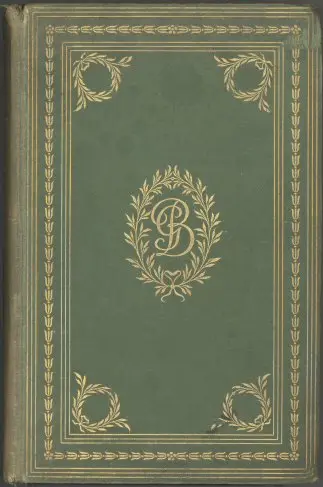
THE CLASSIC COLLECTION · 1912
"The Life of George Borrow" by Herbert George Jenkins is a biographical account written in the early 20th century. This work explores the life and career of George Borrow, with particular attention to his experiences between the late 18th century and early 19th century. The narrative emphasizes Borrow's development from a struggling writer to a significant figure known for his missionary work and literary contributions, especially within the context of his time in Spain. The opening of the book sets the stage for Borrow's intriguing life, starting with the background of his father, Thomas Borrow, and the family's circumstances that shaped George's early years. Jenkins paints a vivid picture of young Borrow's tumultuous upbringing amidst the backdrop of historical events, military life, and his striking duality as both an introverted child and a spirited student. The introduction examines key moments, such as his early combativeness and his burgeoning interest in languages, which foreshadow his later pursuits as a linguist and writer. It establishes that Borrow's life was not only defined by his literary ambitions but also by his complex personality and the societal expectations of his family, setting the stage for further explorations of his remarkable journey.
Introduction adapted from the source catalogue; source summaries may be automatically generated.
Free to read · English · 161,465 words · No account needed
MAKE TIME FOR A GOOD BOOK
On by default. Untick to stop anonymous reading totals. Each page counts after 10 seconds in view. How this works.
Anonymous counting is on unless you have switched it off.
{173b} Ibid.
{173c} Ibid.
{174} Letter of 22nd March 1837.
{175a} Letter to Rev. A. Brandram, 22nd May 1836.
{175b} Letter to Rev. A. Brandram, 22nd May 1836.
{175c} Letter dated 6th April 1836.
{175d} Letter to Rev. A. Brandram, 20th April 1836.
{175e} Ibid.
{176a} Letter to Rev. A. Brandram, 20th April 1836.
{176b} Ibid. Borrow’s destitution was entirely accidental, and immediately that his letter was received at Earl Street the sum of twenty-five pounds was forwarded to him.
{177} Letter to Rev. A. Brandram, 20th April 1836.
{178a} Letter of 9th May 1836.
{178b} Letter to Rev. A. Brandram, 30th June 1836.
{178c} Ibid.
{178d} Ibid.
{179a} The Duke’s secretary who had shown so profound a respect for the decrees of the Council of Trent.
{179b} Late of the Royal Navy, who for sheer love of the work distributed the Scriptures in Spain, and who later was to come into grave conflict with Borrow.
{180} Letter to Rev. A. Brandram, 30th June 1836.
{181a} Letter to Rev. A. Brandram, 7th July 1836.
{181b} Ibid.
{181c} Ibid.
{181d} Ibid.
{182a} Dr Usoz was a Spaniard of noble birth, a pupil of Mezzofanti, and one of the editors of El Español. He occupied the chair of Hebrew at Valladolid. He was deeply interested in the work of the Bible Society, and was fully convinced that in nothing but the reading of the Bible could the liberty in Spain be found.
{182b} Letter to Rev. A. Brandram, 25th December 1837.
{182c} La Granja was a royal palace some miles out of Madrid, to which the Queen Regent had withdrawn. On the night of 12th August, two sergeants had forced their way into the Queen Regent’s presence, and successfully demanded that she should restore the Constitution of 1812. This incident was called the Revolution of La Granja.
{183a} The Bible in Spain, pages 197–206.
{183b} 30th July 1836.
{183c} Letter to Rev. A. Brandram, 10th August 1836.
{184} 17th October 1836.
{185a} The Bible in Spain, pages 209–11.
{185b} Ibid., page 211.
{186} The Rev. Wentworth Webster in The Journal of Gypsy Lore Society, vol. i., July 1888–Oct. 1889.
{187} Letter from Rev. A. Brandram, 6th Jan. 1837.
{188} Isidor Just Severin, Baron Taylor (1789–1879), was a naturalised Frenchman and a great traveller. In 1821 he, with Charles Nodier, wrote the play Bertram, which was produced with great success at Paris in 1821. Later he was made Commissaire du Théâtre Français, and authorised the production of Hernani and Le Mariage de Figaro. Later he became Inspecteur-Général des Beaux Arts (1838). When seen by Borrow in Seville he was collecting Spanish pictures for Louis-Philippe.
{189} The Bible in Spain, page 221.
{190a} The Bible in Spain, page 237.
{190b} Letter to Rev. A. Brandram, 26th Dec. 1836.
Your reading position is saved on this browser. Take it to another device with a library code. Reading pages adapt to text, rather than matching a printed edition.
Herbert George Jenkins
Herbert George Jenkins
Herbert George Jenkins
Herbert George Jenkins
BEHIND THE BOOK
This eBook is for the use of anyone anywhere in the United States and most other parts of the world at no cost and with almost no restrictions whatsoever. You may copy it, give it away or re-use it under the terms of the Project Gutenberg License included with this eBook or online at www.gutenberg.org. If you are not located in the United States, you will have to check the laws of the country where you are located before using this eBook. Read the source licence.
The original source file, including credits and licence, is retained by this library. Request an original-format copy at no charge. Please include the book title and Project Gutenberg identifier #3481.
KEEP YOUR CURIOSITY GOING
John L. Ransom

Herman W. Mudgett

Harriet Monroe
Daniel Dulany Addison
Charles Lanman

Harold Rosher