THE CLASSIC COLLECTION✦The Night ClubCLASSIC FREE BOOKS
The Night Club
Herbert George Jenkins
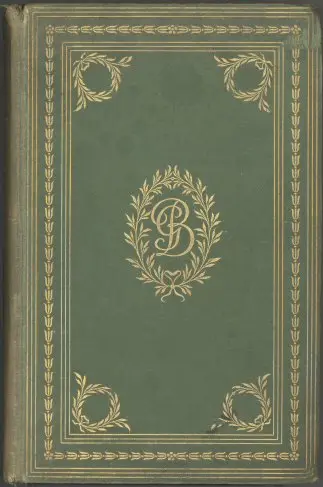
THE CLASSIC COLLECTION · 1912
"The Life of George Borrow" by Herbert George Jenkins is a biographical account written in the early 20th century. This work explores the life and career of George Borrow, with particular attention to his experiences between the late 18th century and early 19th century. The narrative emphasizes Borrow's development from a struggling writer to a significant figure known for his missionary work and literary contributions, especially within the context of his time in Spain. The opening of the book sets the stage for Borrow's intriguing life, starting with the background of his father, Thomas Borrow, and the family's circumstances that shaped George's early years. Jenkins paints a vivid picture of young Borrow's tumultuous upbringing amidst the backdrop of historical events, military life, and his striking duality as both an introverted child and a spirited student. The introduction examines key moments, such as his early combativeness and his burgeoning interest in languages, which foreshadow his later pursuits as a linguist and writer. It establishes that Borrow's life was not only defined by his literary ambitions but also by his complex personality and the societal expectations of his family, setting the stage for further explorations of his remarkable journey.
Introduction adapted from the source catalogue; source summaries may be automatically generated.
Free to read · English · 161,465 words · No account needed
MAKE TIME FOR A GOOD BOOK
On by default. Untick to stop anonymous reading totals. Each page counts after 10 seconds in view. How this works.
Anonymous counting is on unless you have switched it off.
{141b} None of these translations ever appeared, owing to the refusal of the Russian Government to grant permission. John Hasfeldt wrote to Borrow, June 1837, apropos of the project: “You know the Russian priesthood cannot suffer foreigners to mix themselves up in the affairs of the Orthodox Church. The same would have happened to the New Testament itself. You may certainly print in the Manchu-Tartar or what the d-l you choose, only not in Russian, for that the long-bearded he-goats do not like.”
{142a} Letter to Rev. F. Cunningham, 27th/29th Nov. 1834.
{142b} The principal interest in Targum lies in the number of languages and dialects from which the poems are translated; for it must be confessed that Borrow’s verse translations have no very great claim to attention on account of their literary merit. The “Thirty Languages” were, in reality, thirty-five, viz.:—
Ancient British. Gaelic. Portuguese. “ Danish. German. Provençal “ Irish. Greek. Romany. “ Norse. Hebrew. Russian. Anglo-Saxon. Irish. Spanish. Arabic. Italian. Suabian. Cambrian British. Latin. Swedish. Chinese. Malo-Russian. Tartar. Danish. Manchu. Tibetan. Dutch. Modern Greek. Turkish. Finnish. Persian. Welsh. French. Polish.
{143a} A copy was presented by John Hasfeldt to Pushkin, who expressed in a note to Borrow his gratification at receiving the book, and his regret at not having met the translator.
{143b} These two volumes were printed in one and published at a later date by Messrs Jarrold & Son, London & Norwich.
{143c} 5th March 1836.
{143d} From a letter to Borrow from Dr Gordon Hake.
{143e} Borrow’s Report to the Committee of the Bible Society, received
23rd September 1835.
{144a} Borrow’s Report to the Committee of the Bible Society, received
23rd September 1835.
{144b} Ibid.
{145a} Kak my tut kamasa.
{145b} Borrow’s Report to the Committee of the Bible Society, received 23rd September 1835. He gives an account of the episode in The Gypsies of Spain, page 6.
{146a} The Thirty-First Annual Report.
{146b} Athenæum, 5th March 1836.
{147} Borrow’s Report to the Committee of the Bible Society, received
23rd September 1835.
{148} 18th/30th June 1834.
{149} 27th October 1835.
{150a} His salary was paid continuously, and included the period of rest between the Russian and Peninsula expeditions.
{150b} Letter to Rev. J. Jowett, 26th October 1835.
{150c} In a letter dated 27th October 1835.
{151} Minutes of the General Committee of the Bible Society, 2nd Nov.
1835.
{153} In his first letter from Spain, addressed to Rev. J. Jowett (30th Nov. 1835), Borrow tells of this incident in practically the same words as it appears in The Bible in Spain, pages 1–3.
{154a} The Bible in Spain, pages 73–4.
{154b} Letter to the Rev. J. Jowett, 30th Nov. 1835.
Your reading position is saved on this browser. Take it to another device with a library code. Reading pages adapt to text, rather than matching a printed edition.
Herbert George Jenkins
Herbert George Jenkins
Herbert George Jenkins
Herbert George Jenkins
BEHIND THE BOOK
This eBook is for the use of anyone anywhere in the United States and most other parts of the world at no cost and with almost no restrictions whatsoever. You may copy it, give it away or re-use it under the terms of the Project Gutenberg License included with this eBook or online at www.gutenberg.org. If you are not located in the United States, you will have to check the laws of the country where you are located before using this eBook. Read the source licence.
The original source file, including credits and licence, is retained by this library. Request an original-format copy at no charge. Please include the book title and Project Gutenberg identifier #3481.
KEEP YOUR CURIOSITY GOING
John L. Ransom

Herman W. Mudgett

Harriet Monroe
Daniel Dulany Addison
Charles Lanman

Harold Rosher