THE CLASSIC COLLECTION✦The New NationCLASSIC FREE BOOKS
The New Nation
Frederic L. (Frederic Logan) Paxson
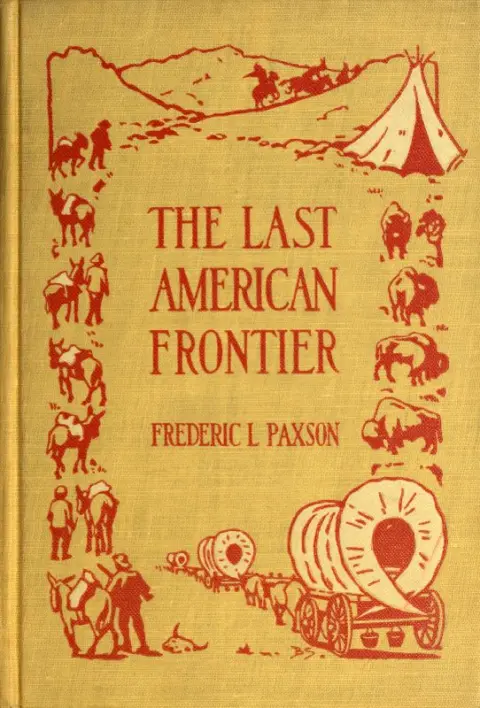
THE CLASSIC COLLECTION · 1910
"The Last American Frontier" by Frederic L. Paxson is a historical account written in the early 20th century. The book explores the final stages of westward expansion in the United States, examining the forces that shaped American history beyond the Mississippi River. It delves into the interactions between settlers, Native Americans, and various political forces, providing a comprehensive view of this pivotal era in American history. At the start of the narrative, the author sets the stage by discussing the concept of the frontier as a dynamic force in American life, defining it as a series of shifting boundaries that have allowed for continuous settlement and expansion. Paxson outlines the historical context of these frontiers, beginning with early settlers facing wilderness and Indigenous nations, emphasizing how each wave of migration has contributed to shaping the nation’s identity. The opening chapters introduce the themes of exploration, conflict, and the societal changes driven by these expanding frontiers, providing an engaging overview of the complexities surrounding the final American frontier.
Introduction adapted from the source catalogue; source summaries may be automatically generated.
Free to read · English · 96,481 words · No account needed
MAKE TIME FOR A GOOD BOOK
On by default. Untick to stop anonymous reading totals. Each page counts after 10 seconds in view. How this works.
Anonymous counting is on unless you have switched it off.
Inkpaduta's massacre, 51.
Inman, Colonel Henry, quoted, 285.
Iowa, Indian lands out of which formed, 26;
territory of, organized, 45.
Iowa Indians, 127.
Jackson, Helen Hunt, work by, 344.
Jefferson, early name of state of Colorado, 147, 149, 151, 153, 155.
Johnston, Albert Sidney, commands army against Mormons, 102; escapes to the South, on opening of the Civil War, 226-227.
Jones and Russell, firm of, 181.
Judah, Theodore D., 219, 220, 326.
Julesburg, station on overland mail route, 182, 331.
Kanesville, Iowa, founding of, 95.
Kansa Indians, 19, 20, 24.
Kansas, reasons for settlement of, 124-125;
creation of territory of, 129;
the slavery struggle in, 129-131;
squatters on Indian lands in, 131-132;
further contests between abolition and pro-slave parties, 132-136;
admission to the union in 1861, 136;
boundaries of, 138;
during the Civil War, 230-233.
Kansas-Nebraska bill, 128-129.
Kansas Pacific Railway, 340.
Kaskaskia Indians, 30, 127.
Kaw Indians. See Kansa Indians.
Kearny, Stephen W., 65-66, 78.
Kendall, Superintendent of Indian department, quoted, 165.
Keokuk, Indian chief, 25.
Kickapoo Indians, 24, 127.
Kiowa Indians, 252, 253, 263, 267, 268, 292, 306.
Kirtland, Ohio, temporary headquarters of Mormons, 88.
Labor question in railway construction, 326-327.
Lake-to-Gulf railway scheme, 217.
Land, allotment of, to Indians as individuals, 354-357.
Land grants in aid of railways, 215-218, 222, 325, 329, 336, 375.
Land titles, pioneers' difficulties over, 46-47.
Larimer, William, 147, 152.
Last Chance Gulch, Idaho, mining district, 169.
Lawrence, Amos A., 130.
Lawrence, Kansas, settlement of, 130-131;
visit of Missouri mob to, 134;
Quantrill's raid on, 232.
Lead mines about Dubuque, 34-35.
Leavenworth, J. H., Indian agent, 306, 308-309.
Leavenworth and Pike's Peak Express Company, 181.
Leavenworth constitution, 135-136.
Lecompton constitution, 135-136.
Lewiston, Washington, founding of, 164.
Linn, Senator, 72-73.
Liquor question in Oregon, 81-82.
Little Big Horn, battle of the, 362.
Little Blue Water, defeat of Brulé Sioux at, 266.
Little Crow, Sioux chief, 235-239.
Little Raven, Indian chief, 306.
Long, Major Stephen H., 11.
McClellan, George B., survey for Pacific railway by, 199.
Madison, Wisconsin, development of, 44, 45.
Mails, carriage of, to frontier points, 174 ff.
Manypenny, George W., 126, 266.
Marsh, O. C., bad treatment of Indians revealed by, 360-361.
Marshall, James W., 108-109.
Massachusetts Emigrant Aid Society, 130.
Medicine Lodge Creek, conference with Indians at, 292-293.
Menominee Indians, 27.
Methodist missionaries to western Indians, 72.
Mexican War, Army of the West in the, 65-66.
Miami Indians, 30, 127.
Michigan, territory and state of, 39-40.
Miles, General Nelson A., as an Indian fighter, 366, 370.
Milwaukee, founding of, 44.
Mines, trails leading to, 169-170.
Miniconjou Indians, 265.
Mining, lead, 34-35, 42;
gold, 108-113, 141-142, 156-157, 359-361;
silver, 157 ff.
Mining camps, description of, 170-173.
Minnesota, organization of, as a territory, 48-49;
Sioux war in, in 1862, 234 ff.
Missionaries, pioneer, 72;
civilization and education of Indians by, 345-346.
Missoula County, Washington Territory, 168.
Missouri Indians, 127.
Modoc Indians, last war of the, 367.
Modoc Jack, 367.
Mojave branch of Southern Pacific Railway, 381-382.
Monroe's policy toward Indians, 18-19;
end of, 357.
Montana, creation of territory of, 169.
Montana settlement, Colorado, 142.
Monteith, Indian Agent, 365.
Mormons, the, 86 ff., 102.
Mowry, Sylvester, 159, 161.
Mullan Road, the, 167, 170.
Murphy, Thomas, Indian superintendent, 312.
Nauvoo, Mormon settlement of, 91-94.
Navaho Indians, 243, 368.
Your reading position is saved on this browser. Take it to another device with a library code. Reading pages adapt to text, rather than matching a printed edition.
Frederic L. (Frederic Logan) Paxson
BEHIND THE BOOK
This eBook is for the use of anyone anywhere in the United States and most other parts of the world at no cost and with almost no restrictions whatsoever. You may copy it, give it away or re-use it under the terms of the Project Gutenberg License included with this eBook or online at www.gutenberg.org. If you are not located in the United States, you will have to check the laws of the country where you are located before using this eBook. Read the source licence.
The original source file, including credits and licence, is retained by this library. Request an original-format copy at no charge. Please include the book title and Project Gutenberg identifier #45699.
KEEP YOUR CURIOSITY GOING
Cécile Tormay

Moritz Busch
John L. Ransom
Frances Wright
Cécile Tormay

Mabel Potter Daggett