THE CLASSIC COLLECTION✦The New NationCLASSIC FREE BOOKS
The New Nation
Frederic L. (Frederic Logan) Paxson
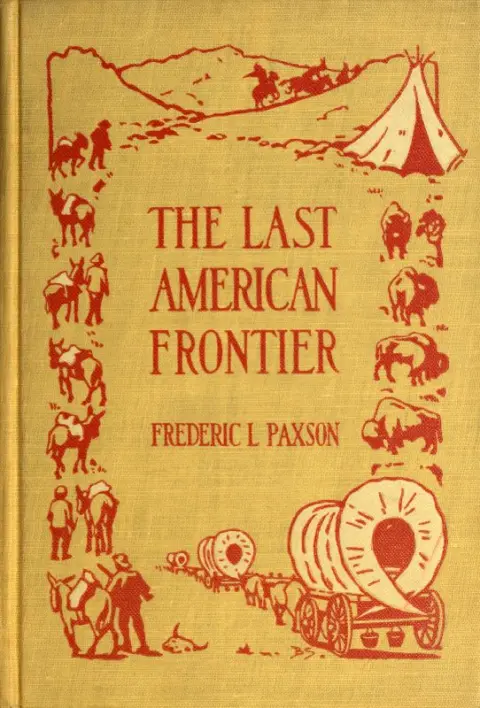
THE CLASSIC COLLECTION · 1910
"The Last American Frontier" by Frederic L. Paxson is a historical account written in the early 20th century. The book explores the final stages of westward expansion in the United States, examining the forces that shaped American history beyond the Mississippi River. It delves into the interactions between settlers, Native Americans, and various political forces, providing a comprehensive view of this pivotal era in American history. At the start of the narrative, the author sets the stage by discussing the concept of the frontier as a dynamic force in American life, defining it as a series of shifting boundaries that have allowed for continuous settlement and expansion. Paxson outlines the historical context of these frontiers, beginning with early settlers facing wilderness and Indigenous nations, emphasizing how each wave of migration has contributed to shaping the nation’s identity. The opening chapters introduce the themes of exploration, conflict, and the societal changes driven by these expanding frontiers, providing an engaging overview of the complexities surrounding the final American frontier.
Introduction adapted from the source catalogue; source summaries may be automatically generated.
Free to read · English · 96,481 words · No account needed
MAKE TIME FOR A GOOD BOOK
On by default. Untick to stop anonymous reading totals. Each page counts after 10 seconds in view. How this works.
Anonymous counting is on unless you have switched it off.
Nebraska, movement for a territory of, 125;
creation of territory of, 129;
boundaries of, 138.
Neutral Line, the, 21.
Nevada, beginnings of, 156-158;
territory of, organized, 158.
New Mexico, the early trade to, 53-69;
boundaries of, in 1854, 139;
during the Civil War, 229-230.
New Ulm, Minnesota, fight with Sioux Indians at, 236-237.
Nez Percé Indians, 164, 363-365;
precipitation of war with, in 1877, 365-366;
defeat and disposal of tribe, 366-367.
Niles, Hezekiah, 60, 79.
Noland, Fent, 42-43.
No Man's Land, 357.
Northern Pacific Railway, 375, 376, 377, 382-383.
Oglala Sioux, 281, 291, 360.
Oklahoma, 357, 386.
Omaha, cause of growth of, 334.
Omaha Indians, 25.
Oregon, fur traders and early pioneers, in, 70-72;
emigration to, in 1844-1847, 75-76;
provisional government organized by settlers in, 79-80;
region included under name, 83-84;
territory of, organized (1848), 85;
population in 1850, 117;
boundaries of, in 1854, 139;
territory of Washington cut from, 163;
railway lines in, 382-383.
Oregon trail, 70-85;
course of the, 78-79;
the Mormons on the, 86 ff.
Osage Indians, 19, 20.
Oto Indians, 127.
Ottawa Indians, 27.
Overland mail, the, 174 ff.
Owyhee mining district, 165.
Paiute Indians, murder of Captain Gunnison by, 205.
Palmer, General William J., 383.
Panic, of 1837, 43-44;
of 1857, 51-52;
of 1873, 377-379.
Parke, Lieut. J. G., survey for Pacific railway by, 207-208.
Peace Commission of 1867, to conclude Cheyenne and Sioux wars,
289-290;
Medicine Lodge treaties concluded by, 292-293;
report of, quoted, 296-298.
Pennsylvania Portage Railway, 325.
Peoria Indians, 30, 127.
Piankashaw Indians, 30, 127.
Pike, Zebulon M., 19, 34, 55.
Pike's Peak, discovery of gold about, 141-142;
the rush to, 142-145;
reaction from boom, 145-146;
origin of Colorado Territory in the Pike's Peak boom, 146-155.
"Pike's Peak Guide," the, 144.
Plum Creek massacre, 250.
Pony express, 158, 182-185.
Pope, Captain John, survey by, 207.
Popular sovereignty, doctrine of, 128.
Poston, Charles D., 159.
Potawatomi Indians, 26-27.
Powder River expedition, 273-274.
Powder River war with Indians, 276-283.
Powell, Major James, 283.
Prairie du Chien, treaty made with Indians at, 20-21;
second treaty of (1830), 25.
Prairie schooners, 64.
Pratt, R. H., education of Indians attempted by, 351.
Price's Missouri expedition, 233.
Quantrill's raid into Kansas, 231-232.
Quapaw Indians, 29.
Railways, early craze for building, 40; advance of, in the fifties, 51; first thoughts about a Pacific road, 192 ff.; surveys for Pacific, 192 ff., 197-203; bearing of slavery question on transcontinental, 211-214; Senator Douglas's bill, 213-214; land grants in aid of, 215-218, 222, 325, 329, 336, 375; Indian hostilities caused by advance of the, 283; description of construction of Central Pacific and Union Pacific roads, 325-335; scandals connected with building of roads, 335; description of formal junction of Central Pacific and Union Pacific, 336-337; effect of roads in bringing peace upon the plains, 347; charter acts of the Northern Pacific, Atlantic and Pacific, Texas Pacific, and Southern Pacific, 375; slow development of the later Pacific roads, 376; the five new continental routes and their connections, 379-382; Northern Pacific, 382-383; Chicago, Burlington, and Quincy, 383; Denver and Rio Grande, 383-384; disappearance of frontier through extension of lines of, and conquest of Great American Desert, 384-386.
Ration system, pauperization of Indians by, 352.
Your reading position is saved on this browser. Take it to another device with a library code. Reading pages adapt to text, rather than matching a printed edition.
Frederic L. (Frederic Logan) Paxson
BEHIND THE BOOK
This eBook is for the use of anyone anywhere in the United States and most other parts of the world at no cost and with almost no restrictions whatsoever. You may copy it, give it away or re-use it under the terms of the Project Gutenberg License included with this eBook or online at www.gutenberg.org. If you are not located in the United States, you will have to check the laws of the country where you are located before using this eBook. Read the source licence.
The original source file, including credits and licence, is retained by this library. Request an original-format copy at no charge. Please include the book title and Project Gutenberg identifier #45699.
KEEP YOUR CURIOSITY GOING
Cécile Tormay

Moritz Busch
John L. Ransom
Frances Wright
Cécile Tormay

Mabel Potter Daggett