THE CLASSIC COLLECTION✦The New NationCLASSIC FREE BOOKS
The New Nation
Frederic L. (Frederic Logan) Paxson
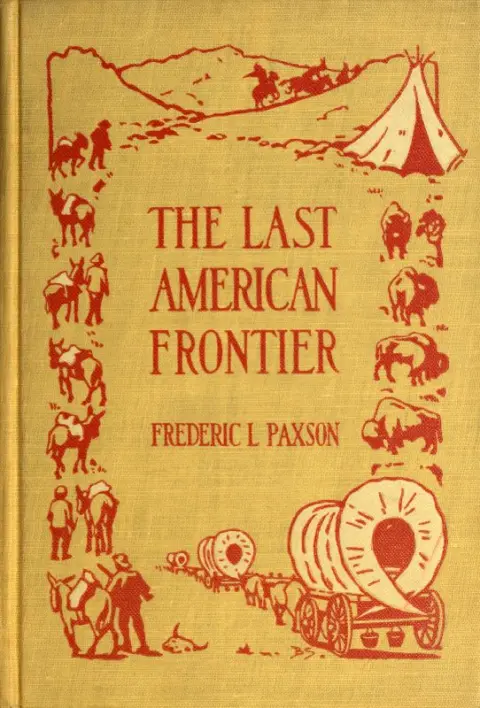
THE CLASSIC COLLECTION · 1910
"The Last American Frontier" by Frederic L. Paxson is a historical account written in the early 20th century. The book explores the final stages of westward expansion in the United States, examining the forces that shaped American history beyond the Mississippi River. It delves into the interactions between settlers, Native Americans, and various political forces, providing a comprehensive view of this pivotal era in American history. At the start of the narrative, the author sets the stage by discussing the concept of the frontier as a dynamic force in American life, defining it as a series of shifting boundaries that have allowed for continuous settlement and expansion. Paxson outlines the historical context of these frontiers, beginning with early settlers facing wilderness and Indigenous nations, emphasizing how each wave of migration has contributed to shaping the nation’s identity. The opening chapters introduce the themes of exploration, conflict, and the societal changes driven by these expanding frontiers, providing an engaging overview of the complexities surrounding the final American frontier.
Introduction adapted from the source catalogue; source summaries may be automatically generated.
Free to read · English · 96,481 words · No account needed
MAKE TIME FOR A GOOD BOOK
On by default. Untick to stop anonymous reading totals. Each page counts after 10 seconds in view. How this works.
Anonymous counting is on unless you have switched it off.
Gilpin, William, first governor of Colorado Territory, 155;
quoted, 225;
responsibility assumed by, during the Civil War, 228-229.
Gold, discovery of, in California, 108-113;
in Pike's Peak region, 141-142;
in the Black Hills, 359-361.
Grattan, Lieutenant, 265.
Great American desert. See Desert.
Great Salt Lake. See Salt Lake.
Great Salt Lake Valley Carrying Company, 176.
Greeley, Horace, western adventures of, 145, 179, 182.
Gregg, Josiah, 61-62.
Grosventre Indians, treaties of 1851 with, 123-124.
Guerrilla conflicts during the Civil War, 230-233.
Gunnison, Captain J. W., 204-205.
Hancock, General W. S., 306-311.
Hand-cart incident in Mormon emigration, 100-101.
Harney, General, 266.
Harte, Bret, verses by, 338.
Hayt, E. A., Indian Commissioner, 350.
Hazen, General W. B., 320-321.
Helena, growth of city of, 169.
Highland settlement, Colorado, 142.
Holladay, Ben, 186-190, 284;
losses from Indians by, 250.
Hopkins, Mark, 220.
Howard, General O. O., 365-366.
Hungate family, murder of, by Indians, 253.
Hunkpapa Indians, 264.
Hunter, General, in charge of Department of Kansas during Civil War,
230-231.
Huntington, Collis P., 220.
Idaho, proposed name for Colorado, 151, 154;
establishment of territory of, 166-167.
Idaho Springs, settlement of, 145.
Illinois, opening of, to whites, 21.
Illinois Central Railroad, 210, 216-218.
Independence, town of, 63;
outfitting post of traders, 71;
Mormons at, 89-90.
Indian agents, position of, in regard to Indian affairs, 304-305; question regarding, as opposed to military control of Indians, 342-343.
Indian Bureau, creation of, 31;
transference from War Department to the Interior, 123;
history of the, 341 ff.
Indian Commissioners, Board of, created in 1869, 345.
Indian Intercourse Act, 31.
Indian Territory, position of Indians in, during the Civil War,
240-241;
breaking up of, following allotment of lands to individual Indians,
357.
Indians, numbers of, in United States, 14; governmental policy regarding, 16 ff.; Monroe's policy of removal of, to western lands, 18-19; treaties of 1825 with, 19-20; allotment of territory among, on western frontier, 20-30; troubles with, resulting from Oregon, California, and Mormon emigrations, 119-123; fresh treaties with at Upper Platte agency in 1851, 123-124; further cession of lands in Indian Country by, in 1854, 127; treatment of, by Arizona settlers, 162-163; danger to overland mail and express business from, 187-188, 250; Digger Indians, 203-204; the Sioux war in Minnesota, 234 ff.; effect of the Civil War on, 240-242; causes of restlessness of, during Civil War, 234 ff.; antagonism of, aroused by advance westward of whites, 244-252; conditions leading to Sioux war, 264 ff.; war with plains Sioux (1866), 273-283; the discussion as to proper treatment of, 284-288; appointment of Peace Commissioner of 1867 to end Cheyenne and Sioux troubles, 289-290; Medicine Lodge treaties concluded with, 292-293; report and recommendations of Peace Commission, 296-298; interval of peace with, 302-303; continued troubles with, and causes, 304 ff.; war begun by Arapahoes and Cheyenne in 1868, 313; war of 1868, 313-318; President Grant appoints board of civilian Indian commissioners, 323, 341 ff.; railway builders' troubles with, 328-329; question of civilian or military control of, 342-344; Board of Commissioners, appointed for (1869), 345; Congress decides to make no more treaties with, 348; mistaken policy of treaties, 348-349; census of, in 1880, 351; agricultural fairs for, 352-353; individual ownership of land by, 354-357; effect of allotment of lands among, on Indian reserves, 356-357; end of Monroe's policy, 357; last struggles of the Sioux, Nez Percés, and Apaches, 361-371.
Your reading position is saved on this browser. Take it to another device with a library code. Reading pages adapt to text, rather than matching a printed edition.
Frederic L. (Frederic Logan) Paxson
BEHIND THE BOOK
This eBook is for the use of anyone anywhere in the United States and most other parts of the world at no cost and with almost no restrictions whatsoever. You may copy it, give it away or re-use it under the terms of the Project Gutenberg License included with this eBook or online at www.gutenberg.org. If you are not located in the United States, you will have to check the laws of the country where you are located before using this eBook. Read the source licence.
The original source file, including credits and licence, is retained by this library. Request an original-format copy at no charge. Please include the book title and Project Gutenberg identifier #45699.
KEEP YOUR CURIOSITY GOING
Cécile Tormay

Moritz Busch
John L. Ransom
Frances Wright
Cécile Tormay

Mabel Potter Daggett