The City of Comrades
Basil King
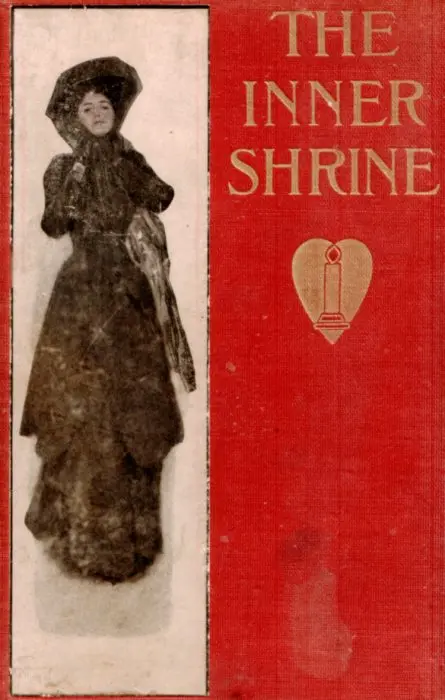
THE CLASSIC COLLECTION · 1908
"The Inner Shrine" by Basil King is a novel written during the early 20th century, around the time of its publication in 1909. The book delves into the complexities of human relationships, focusing primarily on Mrs. Eveleth, a mother harboring deep anxieties about the welfare of her son, George, and his marriage to Diane. The narrative revolves around themes of love, betrayal, and the societal pressures faced by individuals within the context of their family roles and social expectations. The opening of the novel introduces Mrs. Eveleth, who is anxiously awaiting the return of her son George and his wife Diane after a night out in Paris. Her restlessness is fueled by a vague sense of impending disaster, despite the outward appearance of normalcy in their lives. As the story unfolds, Mrs. Eveleth's fears are materialized when she learns that George has been involved in a duel, leading to tragic consequences. The stage is set for exploring the aftermath of this event, highlighting the contrasting grief between Mrs. Eveleth and Diane as they navigate the complexities of their lives in the wake of loss, setting in motion an intricate tale of redemption and societal critique.
Introduction adapted from the source catalogue; source summaries may be automatically generated.
Free to read · English · 79,040 words · No account needed
MAKE TIME FOR A GOOD BOOK
On by default. Untick to stop anonymous reading totals. Each page counts after 10 seconds in view. How this works.
Anonymous counting is on unless you have switched it off.
"I couldn't tell him it would be out of the question always, because I didn't know. As long as he didn't ask me for a definite answer, I didn't feel obliged to give him one."
"I think you might have committed yourself as far as that."
"I prefer not to commit myself at all. I'm very young and
inexperienced--"
"I'm glad you see that."
"Though neither so inexperienced nor so young as mamma was when she married you. And you were only twenty-one yourself, father, while Carli is nearly twenty-three."
"I wouldn't compare the two instances if I were you."
"I don't. I merely state the facts. I want to make it plain that, though we're both very young, we're not so young as to make the case exceptional."
"But I understood you to say that there was no--case."
"There is to this extent: that while I'm free, Carli considers himself bound. That's the way we've left it."
"That is to say, he's engaged, but you aren't."
"That's what Carli thinks."
"Then I refuse to consent to it."
"But, father dear," Dorothea asked, arching her pretty eyebrows, "do you have to consent to what Carli thinks about himself? Can't he do that just as he likes?"
"He can't become a hanger-on of my family without my permission."
"He says he's not going to hang on, but to stand off. He's going to allow me full liberty of action and fair play."
"That's very kind of him."
"Only, when I choose to come back to him I shall find him waiting."
"I might suggest that you never go back to him at all, only that there's a better way of meeting the situation. That is to put a stop to the nonsense now; and I shall take steps to do it."
Dorothea preserved her self-control, but two tiny hectic spots began to burn in her cheeks, while she kept her eyes persistently lowered, as though to veil the spirit of determination glowing there.
"Hadn't you better leave that to me?" she asked, after a brief pause.
"I will, if you promise to put it through."
"You see," she answered, in a reasoning tone, "my whole object is not to promise anything--yet. I should think the advantage of that would strike you, if only from the point of view of business. It's like having the refusal of a picture or a piece of property. You may never want them; but it does no harm to know that nobody else can get them till you decide."
"Neither does it do any harm to let somebody else have a chance, when you know that you can't take them."
Your reading position is saved on this browser. Take it to another device with a library code. Reading pages adapt to text, rather than matching a printed edition.
BEHIND THE BOOK
This eBook is for the use of anyone anywhere in the United States and most other parts of the world at no cost and with almost no restrictions whatsoever. You may copy it, give it away or re-use it under the terms of the Project Gutenberg License included with this eBook or online at www.gutenberg.org. If you are not located in the United States, you will have to check the laws of the country where you are located before using this eBook. Read the source licence.
The original source file, including credits and licence, is retained by this library. Request an original-format copy at no charge. Please include the book title and Project Gutenberg identifier #14393.
KEEP YOUR CURIOSITY GOING
Coulson Kernahan

Maurice Baring
Frances Wright
Cécile Tormay

Frederic Jesup Stimson

W. H. P. (William Henry Pope) Jarvis