The City of Comrades
Basil King
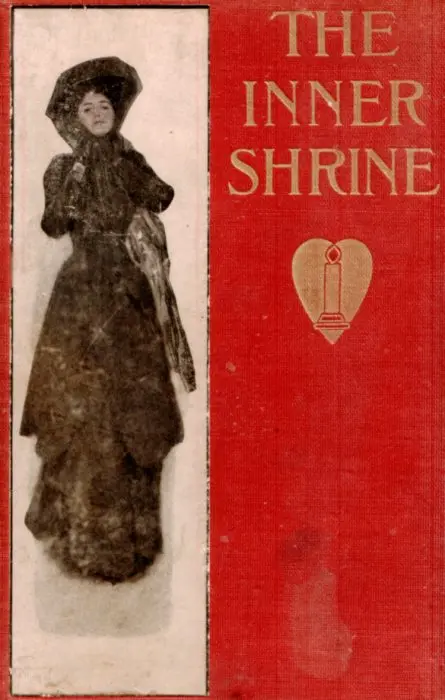
THE CLASSIC COLLECTION · 1908
"The Inner Shrine" by Basil King is a novel written during the early 20th century, around the time of its publication in 1909. The book delves into the complexities of human relationships, focusing primarily on Mrs. Eveleth, a mother harboring deep anxieties about the welfare of her son, George, and his marriage to Diane. The narrative revolves around themes of love, betrayal, and the societal pressures faced by individuals within the context of their family roles and social expectations. The opening of the novel introduces Mrs. Eveleth, who is anxiously awaiting the return of her son George and his wife Diane after a night out in Paris. Her restlessness is fueled by a vague sense of impending disaster, despite the outward appearance of normalcy in their lives. As the story unfolds, Mrs. Eveleth's fears are materialized when she learns that George has been involved in a duel, leading to tragic consequences. The stage is set for exploring the aftermath of this event, highlighting the contrasting grief between Mrs. Eveleth and Diane as they navigate the complexities of their lives in the wake of loss, setting in motion an intricate tale of redemption and societal critique.
Introduction adapted from the source catalogue; source summaries may be automatically generated.
Free to read · English · 79,040 words · No account needed
MAKE TIME FOR A GOOD BOOK
On by default. Untick to stop anonymous reading totals. Each page counts after 10 seconds in view. How this works.
Anonymous counting is on unless you have switched it off.
In the private office of the great Franco-American banking-house of Van Tromp & Co., the partners, having finished their conference, were about to separate.
"That's all, I think," said Mr. Grimston. He rose with a jerky movement, which gave him the appearance of a little figure shot out of a box.
Mr. van Tromp remained seated at the broad, flat-topped desk, his head bent at an angle which gave Mr. Grimston a view of the tips of shaggy eyebrows, a broad nose, and that peculiar kind of protruding lower lip before which timid people quail. As there was no response, Mr. Grimston looked round vaguely on the sombre, handsome furnishings, fixing his gaze at last on the lithographed portrait of Mr. van Tromp senior, the founder of the house, hanging above the mantelpiece.
"That's all, I think," Mr. Grimston repeated, raising his voice slightly in order to drown the rumble that came through the open windows from the rue Auber.
Suddenly Mr. van Tromp looked up.
"I've just had a letter," he said, in a tone indicating an entirely new order of discussion, "from a person who signs herself Diana--or is it Diane?--Eveleth."
"Oh, Diane! She's written to you, has she?" came from Mr. Grimston, as his partner searched with short-sighted eyes for the letter in question among the papers on the desk.
"You know her, then?"
"Of course I know her. You ought to know her, too. You would, if you didn't shut yourself up in the office, away from the world."
"N-no, I don't recall that I've ever met the lady. Ah, here's the note, just sit down a minute while I read it."
Mr. Grimston shot back into his seat again, while Mr. van Tromp wiped his large, circular glasses.
"'Dear Mr. van Tromp,' she begins, 'I am most anxious to talk to you on very important business, and would take it as a favor if you would let me call on Tuesday morning and see you very privately. Yours sincerely, Diane Eveleth.' That's all. Now, what do you make of it?"
The straight smile, which was all the facial expression Mr. Grimston ever allowed himself, became visible between the lines of his closely clipped mustache and beard. He took his time before speaking, enjoying the knowledge that this was one of those social junctures in which he had his senior partner so conspicuously at a disadvantage.
"It's a bad business, I'm afraid," he said, as though summing up rather
than beginning.
"What does the woman want with me?"
Your reading position is saved on this browser. Take it to another device with a library code. Reading pages adapt to text, rather than matching a printed edition.
BEHIND THE BOOK
This eBook is for the use of anyone anywhere in the United States and most other parts of the world at no cost and with almost no restrictions whatsoever. You may copy it, give it away or re-use it under the terms of the Project Gutenberg License included with this eBook or online at www.gutenberg.org. If you are not located in the United States, you will have to check the laws of the country where you are located before using this eBook. Read the source licence.
The original source file, including credits and licence, is retained by this library. Request an original-format copy at no charge. Please include the book title and Project Gutenberg identifier #14393.
KEEP YOUR CURIOSITY GOING
Coulson Kernahan

Maurice Baring
Frances Wright
Cécile Tormay

Frederic Jesup Stimson

W. H. P. (William Henry Pope) Jarvis