The City of Comrades
Basil King
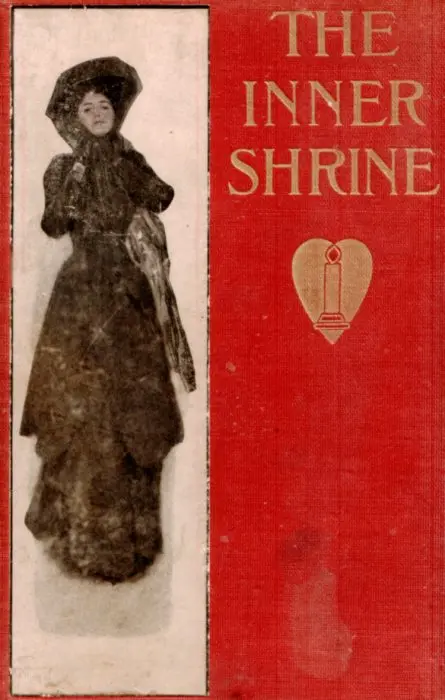
THE CLASSIC COLLECTION · 1908
"The Inner Shrine" by Basil King is a novel written during the early 20th century, around the time of its publication in 1909. The book delves into the complexities of human relationships, focusing primarily on Mrs. Eveleth, a mother harboring deep anxieties about the welfare of her son, George, and his marriage to Diane. The narrative revolves around themes of love, betrayal, and the societal pressures faced by individuals within the context of their family roles and social expectations. The opening of the novel introduces Mrs. Eveleth, who is anxiously awaiting the return of her son George and his wife Diane after a night out in Paris. Her restlessness is fueled by a vague sense of impending disaster, despite the outward appearance of normalcy in their lives. As the story unfolds, Mrs. Eveleth's fears are materialized when she learns that George has been involved in a duel, leading to tragic consequences. The stage is set for exploring the aftermath of this event, highlighting the contrasting grief between Mrs. Eveleth and Diane as they navigate the complexities of their lives in the wake of loss, setting in motion an intricate tale of redemption and societal critique.
Introduction adapted from the source catalogue; source summaries may be automatically generated.
Free to read · English · 79,040 words · No account needed
MAKE TIME FOR A GOOD BOOK
On by default. Untick to stop anonymous reading totals. Each page counts after 10 seconds in view. How this works.
Anonymous counting is on unless you have switched it off.
As Diane entered, Mrs. Wappinger, dishevelled and distraught, was standing in the hail, a slip of yellow paper in her hand.
"Oh, my dear, I'm so glad you've come! I'm just about crazy! Read this!"
Diane took the paper and read:
"D. and I are to be married to-night. Be ready to receive us
to-morrow.
CARLI."
"When did this come?" Diane asked, quickly.
"About half an hour ago. I sent for you at once."
"I see it's dated from Lakefield. Where's that?"
Mrs. Wappinger explained that Lakefield was a small winter health resort some two hours by train from New York. She and Carli had stayed there, more than once, at the Bay Tree Inn. He would naturally go to the same hotel, only, when she had telephoned to it, a few minutes ago, she could find no one of the name in residence. Under the circumstances, Diane suggested, he would probably not give his name at all. There followed a few minutes of silent reflection, during which Mrs. Wappinger gazed at Diane, in the half-tearful helplessness of one not used to coping with unusual situations.
"Won't you come in and sit down?" she asked, with a sudden realization that they were still standing beneath the light in the hail.
"No," Diane answered, with decision; "it isn't worth while. May I have the motor for an hour or so?"
"Why, certainly. But where are you going?"
"I'm going first to Mr. Pruyn's, and afterward to Lakefield."
"To Lakefield? Then I'll go with you. We could go in the car."
Diane negatived both suggestions. The motor might break down, or the chauffeur might lose his way; the train would be safer. If any one went with her, it would have to be Mr. Pruyn.
"But don't go to bed," she added, "or at least have some one to answer the telephone, for I'll ring you up as soon as I have news for you."
"God bless you, dear," Mrs. Wappinger murmured. "I know you'll do your best for me, and them. Keep the auto as long as you like; and if you decide to go down in it, just say so to Laporte."
But Diane seemed to hesitate before going. A flush came into her cheek, and she twisted her fingers in embarrassment.
"I wonder", she faltered, "if--if--you could let me have a little money? I shall need some, and--and I haven't--any."
"Oh, my dear! my poor dear!"
Your reading position is saved on this browser. Take it to another device with a library code. Reading pages adapt to text, rather than matching a printed edition.
BEHIND THE BOOK
This eBook is for the use of anyone anywhere in the United States and most other parts of the world at no cost and with almost no restrictions whatsoever. You may copy it, give it away or re-use it under the terms of the Project Gutenberg License included with this eBook or online at www.gutenberg.org. If you are not located in the United States, you will have to check the laws of the country where you are located before using this eBook. Read the source licence.
The original source file, including credits and licence, is retained by this library. Request an original-format copy at no charge. Please include the book title and Project Gutenberg identifier #14393.
KEEP YOUR CURIOSITY GOING
Coulson Kernahan

Maurice Baring
Frances Wright
Cécile Tormay

Frederic Jesup Stimson

W. H. P. (William Henry Pope) Jarvis